



الصفحة 1
الصفحة 1

Handbook of transdisciplinary research
Transdisciplinary research (TR) is an emerging field of research in the knowledge society.This handbook provides, for the first time, a structured overview of the manifold experiences gained in these fields. Twenty-one projects from all over the world present their research approaches, structured along the three phases of a TR project.

Evolutionary Epistemology, Language and Culture : A Non-Adaptationist, Systems Theoretical Approach
Today we know that natural selection and evolution are far from synonymous and that they do not explain isomorphic phenomena in the world. ‘Taking Darwin seriously’ is the way to go, but today the time has come to take alternative and complementary theories that developed after the Modern Synthesis, equally seriously, and, furthermore, to examine how language and culture can merit from these diverse disciplines.As this volume will make clear, a specific inter- and transdisciplinary approach is one of the next crucial steps that needs to be taken, if we ever want to unravel the secrets of phenomena such as language and culture.

Enabling the City : Interdisciplinary and Transdisciplinary Encounters in Research and Practice
Focuses on how interdisciplinary and transdisciplinary processes of knowledge production may contribute to urban transformation at a local level in the 21st century, striking a balance between enthusiastic support for such transformational potential and a cautious note regarding the persistent challenges to the ethos as well as the practice of inter and transdisciplinarity. The rich stories reflect different research and local practice cultures, exploring issues such as ageing, community, health and dementia, public space, energy, mobility cultures, heritage, housing, re-use, and renewal, as well as more universal questions about urban sustainability and climate change, and perhaps most importantly, education.

Designing sustainable and resilient cities : Small interventions for stronger urban food-water-energy management
Explores the link between the food-water-energy nexus and sustainability, and the extraordinary value that small tweaks to this nexus can achieve for more resilient cities and communities. Using data from Urban Living Labs in six participating cities (Eindhoven, Gdansk, Miami, Southend-on-Sea, Taipei and Uppsala) to co-define context-specific challenges, the results from each city are collated into an Integrated Decision Support System to guide and improve robust decision making on future urban development. The book presents contributions from CRUNCH, a transdisciplinary team of scholars and practitioners whose expertise spans urban climate modelling; food, water and energy management; the design of resilient public space; collecting better urban data; and the development of smart city technology. Whilst previous works on the food-water-energy nexus have focused on large, transnational cases, this book explores local ways to use the food-water-energy nexus to improve urban resilience.

Decision science for future earth : Theory and practice
Provides a theoretical framework and case studies on decision science for regional sustainability by integrating the natural and social sciences. The cases discussed include solution-oriented transdisciplinary studies on the environment, disasters, health, governance and human cooperation.

Cognition, Communication and Interaction : Transdisciplinary Perspectives on Interactive Technology
This book aims to provide a trans-disciplinary research framework and methodology for interaction design. The analysis directs attention to three human capacities that our engagement with interactive technology has made salient and open to constant redefinition.

Co-Creativity and engaged scholarship : Transformative methods in social sustainability research
This book explores creative and collaborative research methods within the social sustainability sciences. The term co-creativity is used in reference to both individual methods and overarching research approaches that, through socially inclusive forms of action and reflection, stimulate alternative understandings of why and how things are, and how they could be. Supported by a wide-ranging series of in-depth—including chapters on militant research and guerrilla narrative, decolonial participative approaches, appreciate inquiry and care-ethics, deep-mapping, photo-voice, community-arts, digital participatory mapping, and living labs—the edited collection critically reviews the potential of creative, collaborative and transdisciplinary forms of research praxis to nurture just and transformative processes of change.

Clinical textbook of mood disorders
Mood disorders affect around 1 in 5 people, but the diagnosis and management of these conditions can be challenging. This practical handbook presents a comprehensive overview of these disorders, as well as detailed guidelines for their treatment. The handbook takes a transdisciplinary approach to mood disorders, focusing not only on the biological aspects but also on psychosocial features of importance for optimal diagnosis and management. Content covers nosological considerations, historical aspects, peculiarities along the lifespan, and the associations between mood disorders and other conditions, with a focus on their implications for the optimal management of patients. Practical and evidence-based information is discussed on the role of guidelines related to treatment in selected population groups, including youth, the elderly, and women. With a practical, reader-friendly approach, this book will be invaluable for mental health professionals involved in the treatment of patients with mood disorders, including trainees from different mental health areas.
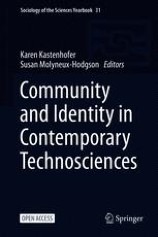
Community and Identity in Contemporary Technosciences
This book provides new thinking on scientific identity formation. It thoroughly interrogates the concepts of community and identity, including both historical and contemporaneous analyses of several scientific fields.
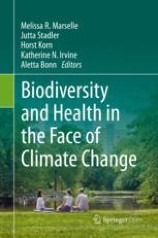
Biodiversity and health in the face of climate change
This book identifies and discusses biodiversity’s contribution to physical, mental and spiritual health and wellbeing. Furthermore, the book identifies the implications of this relationship for nature conservation, public health, landscape architecture and urban planning – and considers the opportunities of nature-based solutions for climate change adaptation. This transdisciplinary book will attract a wide audience interested in biodiversity, ecology, resource management, public health, psychology, urban planning, and landscape architecture. The emphasis is on multiple human health benefits from biodiversity - in particular with respect to the increasing challenge of climate change.
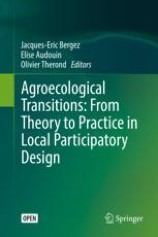
Agroecological transitions : From theory to practice in local participatory design
There is wide agreement on the need to change the prevalent agricultural models, given their negative impacts and their incompatibility with current societal issues. Agroecological transition has been promoted as a potential solution to the ecological, social and economic problems generated by these models. It however involves a systemic, multi-scale and transdisciplinary process. Due to this complexity, the overall picture of what farms and food systems “actually are” and “might be” may not be apparent at the individual level. Yet individuals’ knowledge and values provide complementary insights on how to proceed in deepening ecological modernisation. Expertise can also provide landmarks to be considered in that process. Because local stakeholders’ experience and skills are key resources in the adaptation and adoption of agroecological transition, new conceptual and methodological frameworks and tools have to be developed to support them in the design process of such a complex transition. This book presents feedback from the ‘Territorial Agroecological Transition in Action’- TATA-BOX research project, which was devoted to these specific issues.
