



الصفحة 1
الصفحة 1

Green economy in the transport sector : A case study of Limpopo Province, South Africa
This book provides policy framework on “towards a Green Economy in the Transport Sector” draws inspiration from the UNEP report on Green Economy Modeling (2014), which focused on South Africa with respect to Transport, Natural Resource Management, Agriculture, and Energy sectors. This is because in the last 10 years natural resources, environmental risks and ecological issues have come to the attention of the international community because the subject is fundamentally important for overarching sustainable growth. It is important to note that environmental problems such as greenhouse gas emissions and climate change in different regions of the world including South Africa result in significant problems.

Emerging Economic Models for Sustainable Businesses : A Practical Approach
Analyses economic models that look at value propositions, creation and capture with ‘People, Planet and Profit’ deeply embedded in each stage of the value chain. The contributions bring out the interplay between new standards, evaluation frameworks, technology innovation and other emerging tools to show how they create a sustainable business. For this, they lean on learnings from successful sustainable businesses. Business leaders will find that this book provides deep insights on improving their existing sustainable practices, and speeding up the transition from linear to circular, narrow stakeholder driven to community driven.

Disrupting Finance : FinTech and Strategy in the 21st Century
This Pivot demonstrates how a variety of technologies act as innovation catalysts within the banking and financial services sector. Traditional banks and financial services are under increasing competition from global IT companies such as Google, Apple, Amazon and PayPal whilst facing pressure from investors to reduce costs, increase agility and improve customer retention. Technologies such as blockchain, cloud computing, mobile technologies, big data analytics and social media therefore have perhaps more potential in this industry and area of business than any other. This book defines a fintech ecosystem for the 21st century, providing a state-of-the art review of current literature, suggesting avenues for new research and offering perspectives from business, technology and industry.

Computational Techniques for Dental Image Analysis
With the technology innovations dentistry has witnessed in all its branches over the past three decades, the need for more precise diagnostic tools and advanced imaging methods has become mandatory across the industry. Recent advancements to imaging systems are playing an important role in efficient diagnoses, treatments, and surgeries. Provides innovative insights into computerized methods for automated analysis. The research presented within this publication explores pattern recognition, oral pathologies, and diagnostic processing.
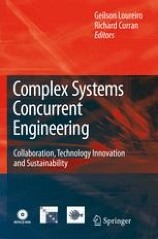
Complex systems concurrent engineering : Collaboration, technology innovation and sustainability
Concurrent engineering is well-established as an approach to engineer product parts. However, the concept has much broader application. Complex Systems Concurrent Engineering: Collaboration, Technology Innovation and Sustainability demonstrates how concurrent engineering can be used to benefit the development of complex systems, to produce results that sustain balanced stakeholder satisfaction over time. Gathered from the 14th ISPE International Conference on Concurrent Engineering, the collected papers cover all aspects of the sustainable and integrated development of complex systems, such as airplanes, satellites, space vehicles, automobiles and ships.

Biopharmaceutical manufacturing progress, trends and challenges
Source of the latest innovative research and technical development in biomanufacturing systems. It is organised into 2 parts: 1) Manufacturing of recombinant therapeutic proteins (e.g. therapeutic antibodies, biosimilars/biogenerics) and 2) Manufacturing aspects of cell and gene therapy. Each with selected chapters on the following topics for both up- and downstream, such as: Advanced process strategies, especially continuous manufacturing, Advanced culture techniques, especially single-use systems, Process transfer, scale-up/scale-down models, Processing advances/Manufacturing productivity/efficiency, Model-assisted process understanding and development/Digital Twins, Process controls and analytics, Quality control, Quality by design, Facility design and full-scale commercial systems, manufacturing technology innovation.
