


تحسين النتائح
ترتيب حسب
من
الى

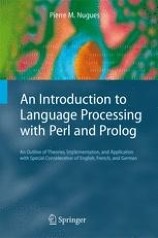
This book teaches the principles of natural language processing, first covering linguistics issues such as encoding, entropy, and annotation schemes; defining words, tokens and parts of speech; and morphology. It then details the language-processing functions involved, including part-of-speech tagging using rules and stochastic techniques; using Prolog to write phase-structure grammars; parsing techniques and syntactic formalisms; semantics, predicate logic and lexical semantics; and analysis of discourse, and applications in dialog systems. The key feature of the book is the author's hands-on approach throughout, with extensive exercises, sample code in Prolog and Perl, and a detailed introduction to Prolog. The reader is supported with a companion website that contains teaching slides, programs, and additional material.
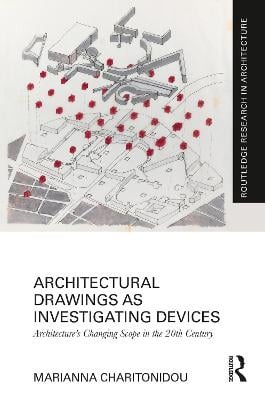
Explores how the changing modes of representation in architecture and urbanism relate to the transformation of how the addressees of architecture and urbanism are conceived. Diagnoses the dominant epistemological debates in architecture and urbanism during the 20th and 21st centuries. It traces their transformations, paying special attention to Le Corbusier and Ludwig Mies van der Rohe’s preference for perspective representation, to the diagrams of Team 10 architects, to the critiques of functionalism, and the upgrade of the artefactual value of architectural drawings in Aldo Rossi, John Hejduk, Peter Eisenman, and Oswald Mathias Ungers, and, finally, to the reinvention of architectural programme through the event in Bernard Tschumi and the Office for Metropolitan Architecture (OMA). Particular emphasis is placed on the spirit of truth and clarity in modernist architecture, the relationship between the individual and the community in post-war era architecture, the decodification of design process as syntactic analogy and the paradigm of autonomy in the 1970s and 1980s architecture, the concern about the dynamic character of urban conditions and the potentialities hidden in architectural programme in the post-autonomy era.
By introducing mathematical objects, it teaches students how to use a computer to perform numerical and symbolic calculations, define a function and calculate its values, plot and explore graphs, and execute simple algorithms. The course is rich in examples, applications, and models, drawn from economics, physics, biology, statistics, and mathematics itself. The analysis of these models constitutes, in a certain sense, the true purpose of the mathematical theory covered. Automatic calculation tools (mathematics software, spreadsheets) are used extensively to explore and illustrate concepts and properties. Mathcad® software, in particular, was used, both as a calculation tool and as a simple yet powerful programming language. Considerable space is devoted to approximation, emphasizing the distinction between numerical and symbolic calculation; to algorithms as a synthesis of the syntactic and semantic aspects of mathematical objects; and to computer simulation, interpreted as a "physical" experiment and a source of conjecture. The ability to use a calculator marks a sort of "democratization" of mathematics: even complex results, which have always required a broad background of knowledge and laborious calculations, are now quickly accessible to anyone who understands the meaning of mathematical objects and knows how to use the syntax.
MASS TERMS, COUNT TERMS, AND SORTAL TERMS Central examples of mass terms are easy to come by. 'Water', 'smoke', 'gold', etc. , differ in their syntactic, semantic, and pragmatic properties from count terms such as 'man', 'star', 'wastebasket', etc. Syntactically, it seems, mass terms do, but singular count terms do not, admit the quantifier phrases 'much', 'an amount of', 'a little', etc. The typical indefinite article for them is 'some' (unstressed)!, and this article cannot be used with singular count terms. Count terms, but not mass terms, use the quantifiers 'each', 'every', 'some', 'few', 'many'; and they use 'a(n)' as the indefinite article. They can, unlike the mass terms, take numerals as prefixes.
Completeness is one of the most important notions in logic and the foundations of mathematics. Many variants of the notion have been de?ned in literature. We shallconcentrateonthesevariants,andaspects,of completenesswhicharede?ned in propositional logic. Completeness means the possibility of getting all correct and reliable sc- mata of inference by use of logical methods. The word ‘all’, seemingly neutral, is here a crucial point of distinction. Assuming the de?nition as given by E. Post we get, say, a global notion of completeness in which the reliability refers only to syntactic means of logic and outside the correct schemata of inference there are only inconsistent ones. It is impossible, however, to leave aside local aspects of the notion when we want to make it relative to some given or invented notion of truth. Completeness understood in this sense is the adequacy of logic in relation to some semantics, and the change of the logic is accompanied by the change of its semantics.
This volume contains detailed introductions to human syntactic processing as well as to German syntax which will be helpful especially for readers less familiar with psycholinguistics and with Germanic.
This book discusses the morpho-syntactic Balkan Sprachbund features in nine languages in which they are most numerous. It contains a wealth of Balkan linguistic material, collected from both the existing literature sources and from the author’s own field work.
The papers in this volume represent the results of a workshop on the syntax, semantics and acquisition of aspect held in 2002 whose purpose was to foment active cross-disciplinary communication. A number of the papers examine the syntactic representation of lexical or situation aspect, while others focus on the syntactic interaction of lexical aspect with grammatical aspect, and of grammatical aspect and tense. Other papers examine the role of aspect in discourse representations, while a third group of papers reports on results of empirical studies on the acquisition of aspect in both first and second language acquisition, and patterns of loss of morphosyntactic reflexes of aspect in language attrition.

سوريا - اتستراد درعا - غباغب
+963-15 2050 - 15 860 380 /1/2/3 - 11 662 3900