



الصفحة 1
الصفحة 1

Mycorrhizae : Sustainable Agriculture and Forestry
This book discusses and goes into detail on a number of topics: the molecular basis of nutrient exchange between arbuscular mycorrhizal (AM) fungi and host plants; the role of AM fungi in disease protection, alleviation of soil stresses and increasing grain production; interactions of AM fungi and beneficial saprophytic mycoflora in terms of plant growth promotion; the role of AM fungi in the restoration of native ecosystems; indirect contributions of AM fungi and soil aggregation to plant growth and mycorrhizosphere effect of multitrophic interaction; the mechanisms by which mycorrhizas change a disturbed ecosystem into productive land; the importance of reinstallation of mycorrhizal systems in the rhizosphere is emphasized and their impact on landscape regeneration, and in bioremediation of contaminated soils; Ectomycorrhizae (ECM) and their importance in forest ecosystems and associations of ECM in tropical rain forests function to maintain tropical monodominance; in vitro mycorrhization of micro-propagated plants, and visualizing and quantifying endorhizal fungi; the use of mycorrhizae, mainly AM and ECM, for sustainable agriculture and forestry.

Molecular Mechanisms of Plant and Microbe Coexistence
Molecular Mechanisms of Plant and Microbe Coexistence presents studies on the complex and manifold interactions of plants and microbes at the population, genomics and proteomics level. The role of soil microbial diversity in enhancing plant health and plant microbe beneficial symbioses is discussed. Microbial communities are shown in the light of evolution. Main topics include genome coexistence and the functional genomics and proteomics of plant-associated microbes, which could form the basis for new environmentally benign strategies to combat infectious plant diseases and regulate plant growth. Further chapters focus on the role of signaling during the different stages of plant microbe coexistence, in symbiotic or pathogenic relationships, in quorum sensing and plant viral infections. Methods for studying the interactions in the root zone complement the book, which will certainly be of relevance in the practical application to agriculture, food security and for maintaining the balance of our ecosystems.
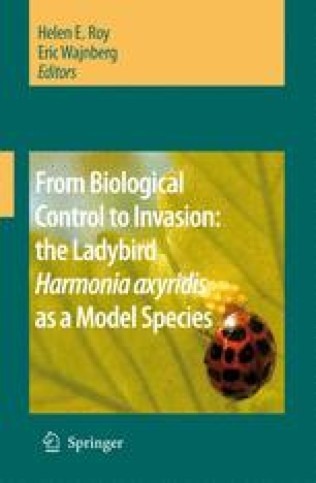
From Biological Control to Invasion : the Ladybird Harmonia axyridis as a Model Species
Harmonia axyridis has been described as the "most invasive ladybird on Earth". It has a long history of use as a classical biological control agent in the USA and more recently in Europe. This beetle has been effective at controlling pest insects in a variety of crop systems but it poses unacceptable risks by impacting on non-target species as both an intraguild predator and competitor.Written by renowned scientists, this book is a synthesis of recent research on H. axyridis and provides informative insights into current perspectives and future directions. Biological control is an essential component of sustainable agriculture but the distinction between a successful biological control agent and an invasive species can be narrow. We hope that lessons can be learnt from H. axyridis.
Building a Resilient and Sustainable Agriculture in Sub-Saharan Africa
What are the challenges and action points for agricultural sustainability in Sub-Saharan Africa? This collection of papers offers technical analyses, policy recommendations and an overview of success stories to date. Each carefully selected paper provides valuable insights for improved policy making and defines relevant strategic priorities on Africa’s sustainable transformation process, which is in line with the international development agenda. Although agriculture remains the main source of income for Africa’s population, the sector is rain-fed subjecting it to the vagaries of weather and climate change. This volume demonstrates the rationale of developing a competitive, inclusive and sustainable agribusiness sector for Africa’s food security and structural transformation.

Biotechnology and sustainable agriculture 2006 and beyond ; Proceedings of the 11th IAPTC&B Congress, August 13-18, 2006 Beijing, China
Biotechnology and Sustainable Agriculture 2006 and Beyond is a collection of papers presented at the XIth international congress of the International Association of Plant Tissue Culture & Biotechnology (IAPTC&B). It continues the long tradition of the IAPTC&B to publish the proceedings of its quadrennial congresses. It provides an up-to-date report of the most significant advances in plant tissue culture and biotechnology as presented by leading international scientists.
Biological nitrogen fixation, sustainable agriculture and the environment ; Proceedings of the 14th International nitrogen fixation congress
Covers aspects of fundamental and applied nitrogen-fixation research, from biochemistry and chemistry through genetics, regulation and physiology to agricultural practice and environmental impact. This work describes progress on studies of potential catalysts for nitrogen fixation; how the N2-fixing process is regulated in living cells; and more.

Biological nitrogen fixation : Towards poverty alleviation through sustainable agriculture ; Proceedings of the 15th International nitrogen fixation congress and the 12th International Conference of the African Association for Biological Nitrogen Fixation
This volume covers recent developments in both fundamental and applied research in biological nitrogen fixation. It emphasizes the application of biological nitrogen fixation for sustainable agriculture, which should lead to poverty alleviation, environmental protection, and good agricultural practices generally. The roles of, and advances in, plant breeding, plant molecular biology, nodule physiology, and symbiotic and associative interactions between plants and microbes in sustaining agricultural productivity and soil fertility are described. The evolution of symbioses and nitrogen fixation are also covered in this volume. To ensure high agricultural productivity, while protecting the environment (both soil and water resources), requires plant cultivars that also respond to beneficial microbes.
Allelopathy in Sustainable Agriculture and Forestry
This book reports on the latest advances in allelopathy through the contributions of leading scientists in the field. The book addresses the history of allelopathy, the science of allelochemicals, and the application of allelopathy in agriculture and forestry. An emphasis on both methodology and application makes Allelopathy a truly practical reference for scientists, researchers and students of plant science, agriculture, forestry, terrestrial ecology and environmental science.
