تحسين النتائح
ترتيب حسب
من
الى



الكليات في الجامعة العربية الدولية
الخدمات الطلابية والأكاديمية

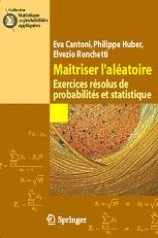
Consists of 245 solved exercises that cover all the basic concepts of probability and statistics. The work is structured in nine chapters, each containing a brief introduction, bibliographic references to more specialized works, as well as a series of exercises and their detailed solutions. Ranked in increasing order of difficulty, these will allow the reader to appreciate the extent of his progress. This book can be used as a supplement to any theory manual on statistics and probability. Due to the great diversity of the examples offered, it will suit a diverse readership: students of economics, psychology, social sciences, mathematics, physics, chemistry, medicine or biology.
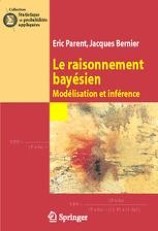
Describes in detail the practice of the Bayesian statistical approach using many examples chosen for their educational interest. The first part gives the general principles of statistical modeling making it possible to supervise but also to come to the aid of the imagination of the apprentice modeler. By examining examples of increasing difficulty, the reader forges the keys to building their own model. The second part presents the most useful calculation algorithms for estimating the unknowns of the model. Each inference method is presented and illustrated by numerous application cases.

Covers the so-called Bayesian approach to statistical inference and in particular its decision-making aspects. The bases of this axiomatics (choice of the a priori, optimal decisions, tests and regions of confidence) are discussed in detail, as well as more recent openings of Bayesian analysis such as the choice of models, the use of numerical methods. Stochastic approximation (MCMC), the theory of noninformative laws (Berger-Bernardo axioms) and the relation to the classical theory of admissibility. Each chapter is completed by an extensive series of exercises of increasing difficulty and by bibliographical notes on the themes addressed. This book can be used in a Master's program in Applied Mathematics, Biometrics, Econometrics or any other program that uses quantitative information processing techniques. It only requires a basic course in probability theory and mathematical statistics as a preliminary.
