



الصفحة 1
الصفحة 1

Oil and Security : A World Beyond Petroleum
This book examines the economic impact of changes in the global demand and supply for fossil fuels both on the major producers in Middle Eastern countries around the Persian Gulf, other producers, as well as the world at large. The economic, social and political life of most countries is not only intimately linked to and influenced by the energy market but also affected by historical developments. Among other issues, it shows how the economic, social and political development of societies in Arabia, the peoples of the Arab Peninsula are influenced by their historic and cultural environment, and what the future may bring to this region when their principal economic assets, petroleum and gas, start to lose markets as alternative sources of fossil fuel, alternative, and renewable energy supply the bulk of global energy needs. It also describes how changing fossil fuel costs, access, security of supply, and environmental impacts may affect future economic, social, and political developments as well as technological advances and changes in priorities.

Enabling Sustainable Energy Transitions : Practices of legitimation and accountable governance
This book reframes sustainable energy transitions as being a matter of resolving accountability crises. It demonstrates how the empirical study of several practices of legitimation can analytically deconstruct energy transitions, and presents a typology of these practices to help determine whether energy transitions contribute to sustainability.

Concentrator Photovoltaics
In fact, photovoltaic conversion of concentrated sunlight insures an efficient and cost-effective sustainable power resource. This book gives an overview of all components. The authors report on significant results related to design, technology, and applications, and also cover the fundamental physics and market considerations.
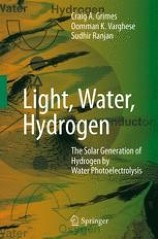
Light, Water, Hydrogen : The Solar Generation of Hydrogen by Water Photoelectrolysis
The development of a direct, inexpensive, and efficient method for converting solar energy into a portable, clean fuel would allow elimination of the growing problems associated with the ever increasing use of fossil fuels and the reality of their rapid depletion. As the title suggests, Light, Water, Hydrogen: The Solar Generation of Hydrogen by Water Photoelectrolysis, considers the combination of water and light with a suitable semiconductor to achieve a safe, renewable and therefore inexhaustable means for hydrogen generation via the splitting of the water molecule, or photoelectrolysis.

Life in the Universe : Expectations and Constraints
Energy, chemistry, solvents, and habitats -- the basic elements of living systems - define the opportunities and limitations for life on other worlds. This class-tested text examines each of these parameters in crucial depth and makes the argument that life forms we would recognize may be more common in our solar system than many assume. It also considers, however, exotic forms of life that would not have to rely on carbon as basic chemical element, solar energy as a main energy source, or water as primary solvent. Finally the question of detecting bio- and geosignature of such life forms is discussed, ranging from Earth environments to deep space. While speculative considerations in this emerging field of science cannot be avoided, the authors have tried to present their study with the breadth and seriousness that a scientific approach to this issue requires. They seek an operational definition of life and investigate the realm of possibilities that nature offers to realize this very special state of matter and avoid scientific jargon wherever possible to make this intrinsically interdisciplinary subject understandable to a broad range of readers.
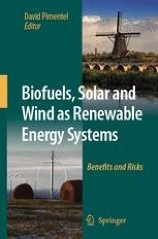
Biofuels, Solar and Wind as Renewable Energy Systems : Benefits and Risks
With shortages of fossil energy, especially oil and natural gas, and heavy biomass energy use occurring in both developed and developing countries, a major focus has developed worldwide on renewable energy systems. Renewable energy systems include wind power, biomass, photovoltaics, hydropower, solar thermal, thermal ponds, and biogas. Currently, a heavy focus is on biofuels made from crops, such as corn, sugarcane, and soybeans, for use as renewable energy sources. Wood and crop residues also are being used as fuel. Though it may seem beneficial to use renewable plant materials for biofuel, the use of crop residues and other biomass for biofuels raises many concerns about major environmental problems, including food shortages and serious destruction of vital soil resources.

An economic feasibility study of extracting electrical energy from solar panels
The research is a case that study depends on both secondary and primary data. Secondary data should be collected from the firms producing the photo panels(local and foreign) and those that working in this field in addition to the data of the ministry of electricity in Syria and the national center of power, while primary data should be collected by interviews with the persons working in electricity field .Then the traditional steps of commercial profitability analysis should be followed starting in pre-feasibility study passing the detailed feasibility study steps which, in turn, consists of the following phases : market study , technical study , financial study in order to reach the estimated net cash flows that should be used in analyzing the project feasibility depending on all criteria both traditional " payback-period . Simple rate of return" and economic criteria " net present value and the internal rate of return”.

Advances in Renewable Energy and Sustainable Environment : Select Proceedings of NCRESE 2019
comprises the select peer-reviewed proceedings of the National Conference on Renewable Energy and Sustainable Environment (NCRESE) 2019. brings together the latest developments in harvesting, storing and optimizing alternate and renewable energy resources. It covers latest developments in green energy technologies as well as smart grids, and their applications towards a sustainable environment. can be useful for beginners, academicians, entrepreneurs, and professionals interested in renewable energy technologies and sustainable environment practices.

Advanced materials in smart building skins for sustainability : From nano to macroscale
Demonstrates the importance of smart and dynamic building skins in in sustainable buildings / Provides the scientific basis for integration of nanoscale materials in building envelopes with enhanced performance / Illustrates engineering solution and design process incorporating advanced materials in applications of building skins. / Updates readers on the key areas of smart building skins embodied in the novel advanced materials with unique structures and smart properties that enable multiple functions in energy efficiency, solar harvesting, and environmental greenness. It synergistically integrates the topics and knowledge of material design and experimental studies, theoretical analyses of building energy-saving mechanisms and solar energy utilization, and new design methodologies and processes taking advanced materials into account at different scales - from nano to the macroscale.
