


تحسين النتائح
ترتيب حسب
من
الى

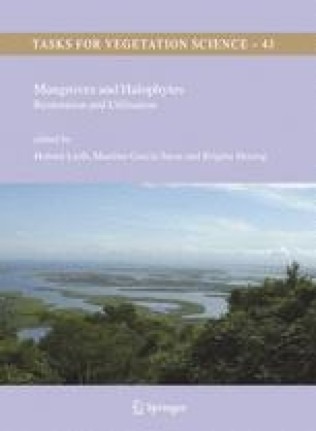
Focusing on Venezuela and Mexico, this edited volume from the International Society of Halophyte Utilisation (ISHU) explores the environmental issues facing South and Central America's coastal ecosystems, and discusses the uses of mangrove species and other halophytes in addressing issues of both coastal pollution and upland soil salinisation. The book draws on expertise from Europe and South America to present a series of case studies that detail Venezuela’s saline ecosystems and examine the economic potential of mangrove restoration and halophyte production. It includes cutting-edge research into the establishment of new mangrove stands which could serve as prototypes for the sustainable use of halophytes, including Chenopodium quinoa and Tamarix aphylla. Moreover, the detailed examples from Venezuela and other Caribbean countries provide useful models for comparison with halophyte utilisation in other parts of the world – especially the Mediterranean region, where much of the earlier research of the ISHU had been conducted.

Known as "a dream place for scientists," the Lamto savannas, located on the edge of the Cote d'Ivoire rain forests, are one of the only savannas in the world where ongoing ecological research has endured for more than forty years. Drawing from and synthesizing this abundance of research, the book examines the structure, functioning, and dynamics of the Lamto humid savanna. Beginning with the history of the Lamto ecology station and an overview of the major environmental conditions of the site, this exacting work specifically examines the integrative view of energy and nutrient fluxes relative to the dynamics of the savanna's vegetation.
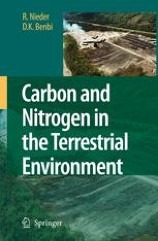
Carbon and Nitrogen in the Terrestrial Environment is a comprehensive, interdisciplinary description of C and N fluxes between the atmosphere and the terrestrial biosphere; issues related to C and N management in different ecosystems and their implications for the environment and global climate change; and the approaches to mitigate emission of greenhouse gases.Drawing upon the most up-to-date books, journals, bulletins, reports, symposia proceedings and internet sources documenting interrelationships between different aspects of C and N cycling in the terrestrial environment, Carbon and Nitrogen in the Terrestrial Environment fills the gap left by most of the currently available books on C and N cycling. They either deal with a single element of an ecosystem, or are related to one or a few selected aspects like soil organic matter (SOM) and agricultural or forest management, emission of greenhouse gases, global climate change or modeling of SOM dynamics.
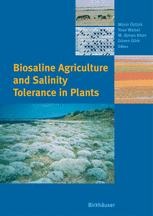
This volume focuses on reclamation, management, and utilization of salt-affected soils, their sustainable use, and evaluation of plants inhabiting naturally occurring saline habitats. It is of interest to scientists and students as well as to agricultural institutions and farmers and will undoubtedly raise the scientific community's awareness of, and interest in salinity issues.
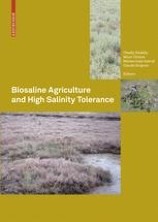
this book reviews the current state of knowledge in biosaline agriculture and high salinity tolerance in plants. It mainly focuses on the biotic approach to economically utilize the stress-prone areas by growing resistant plants.This volume comprises three sections: physiology and biochemistry, ecology, and molecular biology. Thus, a systematic approach has been adopted to uncover plant responses to various ecological factors at physiological and molecular levels.
he most conspicuous biological invasions in terrestrial ecosystems have been by exotic plants, insects and vertebrates. Less conspicuous but possibly of equal importance are invasions by soil invertebrates, which are occurring literally beneath our feet. Familiar examples include the South American fire ant (Solenopsis invicta) which has invaded North America and Australia, and the New Zealand flatworm (Arthurdendyus triangulatus) which has become wide-spread in the United Kingdom; both have caused considerable ecological and economic damage. There is now evidence that exotic earthworm invasions are increasing world-wide and may be having significant impacts on soil processes and plant communities in some regions. Much remains to be learned about these ‘cryptic’ biological invasions. The papers in this book are based on efforts by an international group of soil ecologists to assess the biological and ecological mechanisms of earthworm invasions, their geographic extent and impacts on terrestrial ecosystems, and possible means by which earthworm invasions might be mitigated.
Sand dune dynamics plays a key role in many arid deserts. This volume provides a synthesis of a specific sand dune ecosystem, the Nizzana site in the Negev Desert. Describing its climate and geophysical/geochemical properties of soils, geological history, flora and fauna, and past/present land-use patterns, it elucidates ecological and geomorphological processes and their interrelations, based on long-term monitoring, in situ experiments and satellite imagery. Particular attention is drawn to the impact of the topsoil biological crust in controlling water availability at local/regional scales. The interdisciplinary approach adopted in this case study offers a good example of a highly complex and dynamic system, which could easily be applied to other sandy ecosystems.
This book, written by world experts in aquaponics and related technologies, provides the authoritative and comprehensive overview of the key aquaculture and hydroponic and other integrated systems, socio-economic and environmental aspects. Aquaponic systems, which combine aquaculture and vegetable food production offer alternative technology solutions for a world that is increasingly under stress through population growth, urbanisation, water shortages, land and soil degradation, environmental pollution, world hunger and climate change.
There is wide agreement on the need to change the prevalent agricultural models, given their negative impacts and their incompatibility with current societal issues. Agroecological transition has been promoted as a potential solution to the ecological, social and economic problems generated by these models. It however involves a systemic, multi-scale and transdisciplinary process. Due to this complexity, the overall picture of what farms and food systems “actually are” and “might be” may not be apparent at the individual level. Yet individuals’ knowledge and values provide complementary insights on how to proceed in deepening ecological modernisation. Expertise can also provide landmarks to be considered in that process. Because local stakeholders’ experience and skills are key resources in the adaptation and adoption of agroecological transition, new conceptual and methodological frameworks and tools have to be developed to support them in the design process of such a complex transition. This book presents feedback from the ‘Territorial Agroecological Transition in Action’- TATA-BOX research project, which was devoted to these specific issues.
Food insecurity is a central concern and a fundamental challenge for human welfare and economic growth in Africa. Low agricultural production, results in low incomes, poor nutrition, vulnerability to risks and lack of empowerment. Land degradation and soil fertility depletion are considered the major threats to food security and natural resource conservation in sub-Saharan Africa (SSA). Investments in technology, policy and institutional reforms are needed to increase agricultural productivity to ensure food security and sustained national economies. Past research has generated numerous soil fertility management technologies which if adopted could propel the African continent out of the poverty trap. However, these technologies have had little, if any, impact due to low adoption by the smallholder farmers.
"Advanced Techniques in Soil Microbiology" presents a wide range of biotechnological methods for application in soil microbiology analysis. These include all essential methods involving molecular biology, immunology, microbiology, and structural biology, such as transcriptome analysis, RNAi technology, molecular matchmaking, RAPD, T-RFLP and FT/MS. The techniques and procedures have been selected with the aim of offering practical guides for immediate use in the laboratory. The systems investigated range from individual molecules and cells to entire eukaryotic organisms, with a focus on bacteria, fungi, mycorrhiza, and higher plants. This volume of state-of-the-art, practice oriented methods will be of great use both to the first-timer and to the experienced scientist.
Stresses in plants caused by salt, drought, temperature, oxygen, and toxic compounds are the principal reason for reduction in crop yield. For example, high salinity in soils accounts for large decline in the yield of a wide variety of crops world over; ~1000 million ha of land is affected by soil salinity. Increased sunlight leads to the generation of reactive oxygen species, which damage the plant cells. The threat of global environment change makes it increasingly demanding to generate crop plants that could withstand such harsh conditions. Much progress has been made in the identification and characterization of the mechanisms that allow plants to tolerate abiotic stresses.
This book is the first comprehensive guideline for the beryllium-7 (Be-7) technique that can be applied to evaluate short-term patterns and budgets of soil redistribution in agricultural landscapes. While covering the fundamental and basic concepts of the approach, this book distinguishes itself from other publications by offering step-by-step instructions on how to use this isotopic technique effectively. It covers experimental design considerations and clear instruction is given on data processing. As accurate laboratory measurement is crucial to ensure successful use of Be-7 to investigate soil erosion, a full chapter is devoted to its specific determination by gamma spectrometry.
Applied Geotechnics for Construction Projects 3 first presents the basic theoretical principles and rules governing the designing and validation of foundations; shallow, semi-deep and deep, then presents real foundation projects with a detailed comparison of the approaches and methods of calculating foundations in relation to the reference systems and rules in force, closely compared to and validated by the Eurocodes. The third chapter presents examples of foundation projects, covering high-side building rafts, strip footings, piles and embankments, enriched by an unprecedented level of experience in the field of foundations for civil and industrial construction projects.
Addresses the fundamental principles of soil mechanics and the role of water in geotechnical projects and assessments. Applied Geotechnics for Construction Projects 2 outlines the hydraulic properties of soils and the basic concepts of water in soil, detailing the principles of permeability measurement tests and giving concrete test cases, and then goes on to outline the basic notions of soil mechanics as applied in geotechnics: from consolidation to short- and long-term notions via the swelling phenomena of clayey soils, soil shear strength and slope stability. The third chapter presents a comprehensive overview of geotechnical expertise using examples of concrete projects either with or without damage in the context of geotechnical construction works.
Applied Geotechnics for Construction Projects 1 first defines, identifies and classifies soils, exploring their complexities and weaknesses, and then outlines the basic principles of stresses and strains that establish and develop within soils. The third chapter of the book introduces and develops methods of soil investigation in order to experimentally determine the geotechnical parameters that are useful in the design stage of construction projects.
Outlines methods for analysis and design the construction of shallow and deep foundations with particular reference to case studies in Hong Kong and China, as well as a discussion of methods used in other countries. It introduces the main approaches used by geotechnical and structural engineers, and the precautions required for planning and designing foundation structures. Some computational methods and computer programs are reviewed to provide tools for performing more realistic analysis of foundation systems.
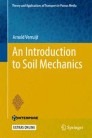
Offers a superb introduction to theoretical and practical soil mechanics. Special attention is given to the risks of failure in civil engineering, and themes covered include stresses in soils, groundwater flow, consolidation, testing of soils, and stability of slopes. The basic principles of applied mechanics, that are frequently used, are offered in the appendices. The author’s considerable experience of teaching soil mechanics is evident in the many features of the book: it is packed with supportive color illustrations, helpful examples and references.
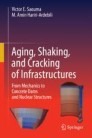
Focuses on the safety assessment of existing structures subjected to multi-hazard scenarios through advanced numerical methods. Whereas the focus is on concrete dams and nuclear containment structures, the presented methodologies can also be applied to other large-scale ones. This book is composed of seven sections: Fundamentals: theoretical coverage of solid mechnics, plasticity, fracture mechanics, creep, / seismology, dynamic analysis, probability and statistics / Damage: that can affect concrete structures, such as cracking of concrete, AAR, chloride ingress, and rebar corrosion, / Finite Element: formulation for both linear and nonlinear analysis including stress, heat and fracture mechanics, / Engineering Models: for soil/fluid-structure interaction, uncertainty quantification, probablilistic and random finite element analysis, machine learning, performance based earthquake engineering, ground motion intensity measures, seismic hazard analysis, capacity/fragility functions and damage indeces, / Applications to dams through potential failure mode analyses, risk-informed decision making, deterministic and probabilistic examples, / Applications to nuclear structures through modeling issues, aging management programs, critical review of some analyses, / Other applications and case studies: massive RC structures and bridges, detailed assessment of a nuclear containment structure evaluation for license renewal.
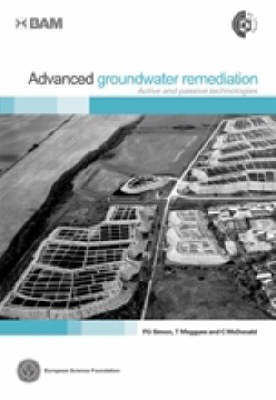
Increasing efforts were made towards containing and cleaning contaminated groundwater. A number of techniques can be used to achieve such goals, traditionally either by treating or isolating the soil in situ, or by removing it for washing or disposal. However, such technologies tend to be accompanied by high energy consumption, and can lead to new environmental problems. Therefore, more efficient and economical techniques are needed to remediate contaminated soil and groundwater.

سوريا - اتستراد درعا - غباغب
+963-15 2050 - 15 860 380 /1/2/3 - 11 662 3900