



الصفحة 1
الصفحة 1

The Welfare of Sheep
The book begins with a discussion of current welfare thinking and how this might be relevant to sheep husbandry. The adaptations of wild sheep to diverse environments, and how their behaviour and physiology has developed to deal with these conditions is described and compared to conditions in modern sheep husbandry. The varied welfare demands of disease, nutrition and metabolism, farming systems and management practices are then discussed by specialists in those areas. The book concludes by considering the economics of improved welfare, and by describing breeding goals and new challenges and opportunities for good sheep husbandry. This book will be of interest to students and academics in animal welfare, animal production, and veterinary medicine, and those with a particular interest in or concern for sheep.

Plant Ecology, Herbivory, and Human Impact in Nordic Mountain Birch Forests
The successful long-term sustainable management of forests is dependent on our knowledge of their history, present state, and responses to changing environmental conditions. In this light, the text evaluates the Nordic mountain birch ecosystem with examples from different sites in the Nordic countries and Scotland. The authors analyse vegetation and soils, and investigate the influence of climate change, insect pests, grazing pressure by sheep and reindeer, construction of roads and other consequences of increasing tourism. The possibilities for a sustainable use of the Nordic mountain birch forests are discussed in various models.

Neurodegeneration and Prion Disease
This volume provides an in-depth overview from world experts on prion disease. These fatal diseases include Creutzfeldt-Jakob disease, chronic wasting disease in deer, scrapie of sheep, bovine spongiform encephalopathy (mad cow’s disease) of cattle and related diseases. Understanding what causes neuronal death in these diseases is essential to both preventing and curing them. The most recent advances in understanding neuronal death in prion diseases are presented. Prion diseases serve as an experimental model for all neurodegenerative conditions. This book will provide understanding of neurodegeneration and provide an up-to-date record of the state of the art for other specialists and non-specialists in related fields.

Comparative Skeletal Anatomy : A Photographic Atlas for Medical Examiners, Coroners, Forensic Anthropologists, and Archaeologists
The goal of this guide is to help experienced archaeologists and forensic scientists distinguish human remains from common animal species, including horses, cows, goats, rabbits, chickens, ducks, sheep, and pigs, among others. Comprehensive and timely, Comparative Skeletal Anatomy.
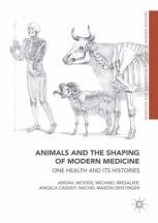
Animals and the shaping of modern medicine : One health and its histories
This book breaks new ground by situating animals and their diseases at the very heart of modern medicine. In demonstrating their historical significance as subjects and shapers of medicine, it offers important insights into past animal lives, and reveals that what we think of as ‘human’ medicine was in fact deeply zoological.Each chapter analyses an important episode in which animals changed and were changed by medicine. Ranging across the animal inhabitants of Britain’s zoos, sick sheep on Scottish farms, unproductive livestock in developing countries, and the tapeworms of California and Beirut, they illuminate the multi-species dimensions of modern medicine and its rich historical connections with biology, zoology, agriculture and veterinary medicine. The modern movement for One Health – whose history is also analyzed – is therefore revealed as just the latest attempt to improve health by working across species and disciplines.
