



الصفحة 1
الصفحة 1

Integrated Risk and Vulnerability Management Assisted by Decision Support Systems : Relevance and Impact on Governance
This book includes terms of reference and offers an augmented volume of relevant work initiated within the comprehensive concept of “Knowledge Management and Risk Governance”.

Global Risk Governance : Concept and Practice Using the IRGC Framework
This book innovative risk governance framework, the careful reviews it received from internationally recognized scientists, and the results of several case studies in which the framework has been applied to a number of significant but different risks.

Fundamentals of operational risk management : Understanding and implementing effective tools, policies and frameworks
Threats to an organization's operations, such as fraud, IT disruption or poorly designed products, could result in serious losses. Understand the key components of effective operational risk management with this essential book for risk professionals and students. Outlines how to implement a sound operational risk management framework which is embedded in day-to-day business activities. It covers the main operational risk tools including categorisation, risk and control self-assessment and scenario analysis, and explores the importance of risk appetite and tolerance.

Contracting and safety : Exploring outsourcing practices in high-hazard industries
This book examines the increase in outsourcing, contracting and subcontracting as ways of organising work. It explores the impact of these employment arrangements on public safety, particularly when they are linked to complex supply networks in a range of engineering industries including oil and gas, nuclear power and aviation.
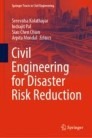
Civil engineering for disaster risk reduction
Brings together all diverse disciplines of civil engineering and related areas (for example, geotechnical engineering, water resources engineering, structural engineering, transportation engineering, environmental engineering, construction management, GIS, and remote sensing) towards a common goal of disaster resilience through an interdisciplinary approach. It contains methods and case studies focusing on civil engineering solutions to reduce the disaster risk. The book contents are aligned in line with the priorities set by UN-Sendai Framework for Disaster Risk Reduction and UN-SDGs to promote a global culture of risk-awareness and disaster reduction. The book will be a useful comprehensive reference for disaster risk reduction beneficial for engineering students, teaching faculty, researchers, industry professionals and policymakers.
