


تحسين النتائح
ترتيب حسب
من
الى

The only book devoted exclusively to this specialty, Lessons Learned details the risk management issues involved in genetic counseling practice, and offers solid strategies for minimizing the risk of costly, career-damaging malpractice suits. Schmerler clearly identifies areas of practitioner liability and demonstrates how they may be averted, so counselors can better manage their practice while lowering the risk of legal action. Examples drawn from relevant court cases illustrate typical issues in malpractice, negligence, and breach of contract suits. With this in-depth knowledge, readers can refine their goals toward increased self-protection as well as client care.

Focusing on a range of gynecological issues, including urinary tract injury, sterilization and assisted pregnancy, as well as the application of cutting-edge laparoscopy, this book will be of great interest and use to the practicing gynecologist or urologist.
Presents the most interesting talks given at ISSE 2006 - the forum for the interdisciplinary discussion of how to adequately secure electronic business processes. The topics include: Smart Token and e-ID-Card Developments and their Application - Secure Computing and how it will change the way we trust computers - Risk Management and how to quantify security threats - Awareness raising, Data Protection and how we secure corporate information. Adequate information security is one of the basic requirements of all electronic business processes. It is crucial for effective solutions that the possibilities offered by security technology can be integrated with the commercial requirements of the applications. The reader may expect state-of-the-art: best papers of the Conference ISSE 2006.
Learn how to gather, manipulate, and analyze data with Python. This book is a practical guide to help you get started with Python from ground zero and to the point where you can use coding for everyday tasks. Python is used in all aspects of financial industry, from algo trading, reporting and risk management to building valuations models and predictive machine learning programs. You will: Get started with Python from square one / Extend what's possible on excel with Python / Automate tasks with Python / Analyze data more precisely
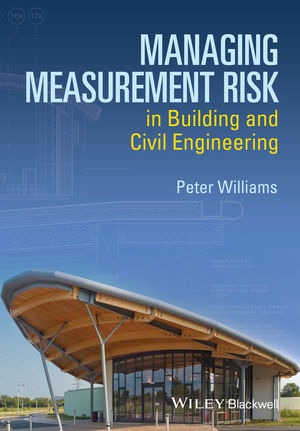
Managing Measurement Risk in Building and Civil Engineering will help all those who use measurement in their work or deal with the output from the measurement process, to understand not only the ‘ins and outs’ of measuring construction work but also the relationship that measurement has with contracts, procurement, claims and post-contract control in construction. The book is for quantity surveyors, engineers and building surveyors but also for site engineers required to record and measure events on site with a view to establishing entitlement to variations, extras and contractual claims.
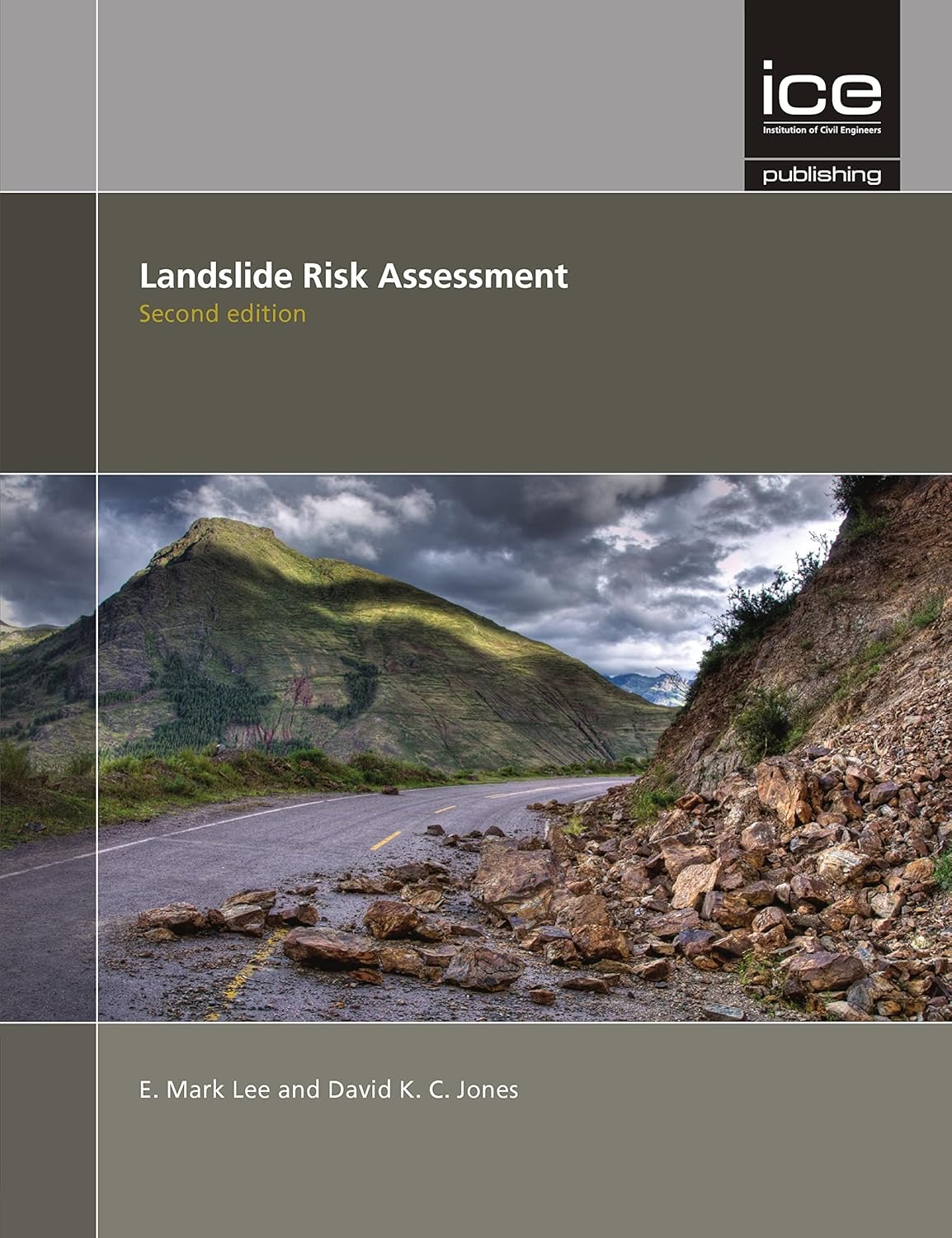
Provides guidance to practitioners on establishing the likelihood and extent to which future slope failures could adversely impact society and affect people and property. The only book to focus on risk and landslides, using examples from across the globe, Landslide Risk Assessment examines a variety of approaches to landslide risk assessment and management, introducing the key challenges that practitioners will need to overcome: estimating the probability and consequences of landsliding, combining these to develop a measure of the risk, and making the transition between risk assessment and risk management.
This book introduces readers to a new methodology for assessing the risks to the marine environment following accidental oil spills. The methodology will soon be implemented on the Norwegian Continental Shelf and will be complemented by guidelines for its use in a regulatory framework.
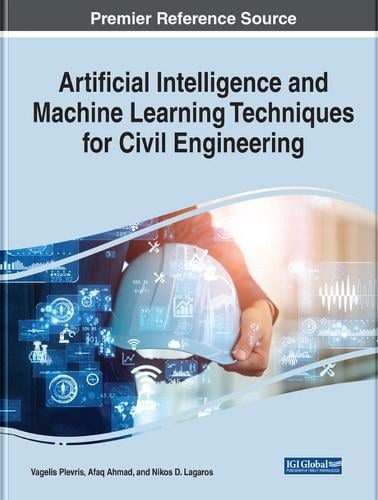
Offers state-of-the-art contributions in the area of AI and its applications in the field of civil engineering presenting methods and implementation of AI and machine learning in multiple facets of civil engineering
Originates from an international workshop organized by Turkish Natural Catastrophe Insurance Pool (TCIP) in November 2019 that gathered renown researchers from academia, representatives of leading international reinsurance and modeling companies as well as government agencies responsible of insurance pricing in Turkey. The book includes chapters related to post-earthquake damage assessment, the state-of-art and novel earthquake loss modeling, their implementation and implication in insurance pricing at national, regional and global levels, and the role of earthquake insurance in building resilient societies and fire following earthquakes. The rich context encompassed in the book makes it a valuable tool not only for professionals and researchers dealing with earthquake loss modeling but also for practitioners in the insurance and reinsurance industry.
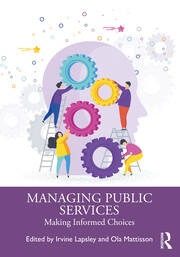
Chapters provide a valuable frame of reference for the 21st-century manager of public services by assessing the renewal of existing practices such as strategic costing, performance management, digitization and procurement and innovations in management practices, including branding, Lean Management, resilience and risk management. The book suggests that, as the management of public services is imbued with financial, social, economic and political uncertainties, management needs to be flexible and responsive to new ideas and practices to fulfil its purpose. This book ultimately supports the reflective manager, those who think about their job and are open to new ideas on how their job can be done better, by revisiting existing practices and examining innovations in public management.
Natural disasters cause considerable economic damage. While developed countries usually are able to cope with the impacts of natural hazards, developing countries are faced with severe consequences for their resources. In order to prevent long-term macroeconomic repercussions, governments need a comprehensive disaster risk management strategy.Budgetary resources are allocated to pre-disaster risk management strategies to reduce the probability of financing gaps. The framework and model approach allows cross country comparisons as well as the assessment of financial vulnerability, macroeconomic risk, and risk management strategies.
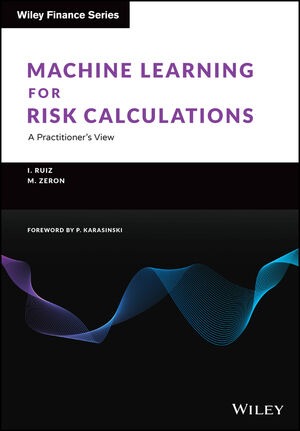
Fundamental Approximation Methods. Machine Learning -- Deep Neural Nets -- Chebyshev Tensors -- The toolkit - plugging in approximation methods. Introduction: why is a toolkit needed -- Composition techniques -- Tensors in TT format and Tensor Extension Algorithms -- Sliding Technique -- The Jacobian projection technique -- Hybrid solutions - approximation methods and the toolkit.
Catastrophe Modeling: A New Approach to Managing Risk is the first book that systematically analyzes how catastrophe models can be used for assessing and managing risks of extreme events. It focuses on natural disaster risk, but also discusses the management of terrorism risk. A unique feature of this book is the involvement of three leading catastrophe modeling firms, AIR Worldwide, EQECAT, and Risk Management Solutions, who examine the role of catastrophe modeling in rate setting, portfolio management and risk financing. Given the uncertainties associated with terrorism the book points out the opportunities for utilizing catastrophe models to set insurance rates and to examine public-private partnerships for providing financial assistance in the event of a terrorist attack. This book is strongly recommended for individuals who must make decisions regarding the management of impacts of catastrophe risks including those in both the public and private sector.
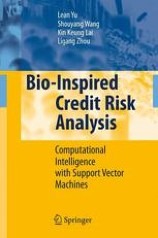
Credit risk analysis is one of the most important topics in the field of financial risk management. Due to recent financial crises and regulatory concern of Basel II, credit risk analysis has been the major focus of financial and banking industry. Especially for some credit-granting institutions such as commercial banks and credit companies, the ability to discriminate good customers from bad ones is crucial. The need for reliable quantitative models that predict defaults accurately is imperative so that the interested parties can take either preventive or corrective action. Hence credit risk analysis becomes very important for sustainability and profit of enterprises. In such backgrounds, this book tries to integrate recent emerging support vector machines and other computational intelligence techniques that replicate the principles of bio-inspired information processing to create some innovative methodologies for credit risk analysis and to provide decision support information for interested parties.
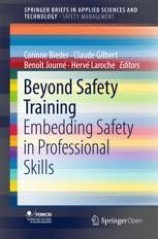
Investigates why, despite more and more resources devoted to safety training, expectations are not entirely met, particularly in the industrial sectors that have already achieved a high safety level. It not only reflects the most precious viewpoints of experts from different disciplines, different countries, with experiences in various industrial fields at the cutting edge of theories and practices in terms of safety, professionalization and their relationships. It also consolidates the positioning of the Foundation for an Industrial Safety Culture, highlighting what is currently considered at stake in terms of safety training, taking into account the system of constraints the different stakeholders are submitted to. It reports some success stories as well as elements which could explain the observed plateau in terms of outcome. It identifies some levers for evolution for at-risk industry and outlines a possible research agenda to go further with experimental solutions.
This book provides an investor-friendly presentation of the premises and applications of the quantitative finance models governing investment in one asset class of publicly traded stocks, specifically real estate investment trusts (REITs). The models provide highly advanced analytics for REIT investment, including: portfolio optimization using both historic and predictive return estimation; model backtesting; a complete spectrum of risk assessment and management tools with an emphasis on early warning systems, risk budgeting, estimating tail risk, and factor analysis; derivative valuation; and incorporating ESG ratings into REIT investment.

Ordinarily, only the interests of shareholders, debtholders, and corporate management are taken into account when analyzing corporate financial decisions while the interests of non-financial stakeholders are often neglected. Gregor Gossy develops a so-called stakeholder rationale for risk management arguing that firms which are more dependent on implicit claims from their non-financial stakeholders, such as customers, suppliers, and employees, prefer conservative financial policies. In order to perform panel data analyses of the determinants of corporate financial decisions, the author uses data from Austrian and German industrial companies. He shows that variables for a firm’s most important non-financial stakeholders explain the firm’s capital structure and cash holding decisions. His findings suggest that a firm’s choice of accounting standards have a moderating effect on the determinants of corporate finance decisions.
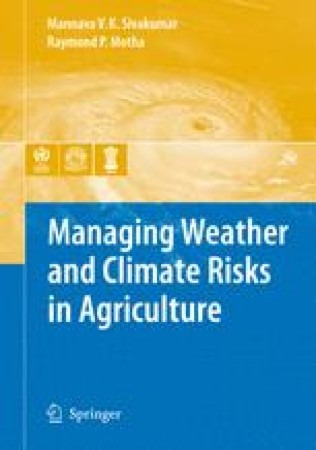
In many parts of the world, weather and climate are one of the biggest production risks and uncertainty factors impacting on agricultural systems performance and management. Both structural and non-structural measures can be used to reduce the impacts of the variability (including extremes) of climate resources on crop production. While the structural measures include strategies such as irrigation, water harvesting, windbreaks etc., the non-structural measures include use of seasonal to interannual climate forecasts, improved application of medium-range weather forecasts and crop insurance. This book based on an International Workshop held in New Delhi, India should be of interest to all organizations and agencies interested in improved risk management in agriculture.
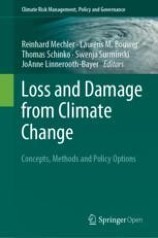
Provides an authoritative insight on the Loss and Damage discourse by highlighting state-of-the-art research and policy linked to this discourse and articulating its multiple concepts, principles and methods. Written by leading researchers and practitioners, it identifies practical and evidence-based policy options to inform the discourse and climate negotiations. With climate-related risks on the rise and impacts being felt around the globe has come the recognition that climate mitigation and adaptation may not be enough to manage the effects from anthropogenic climate change.
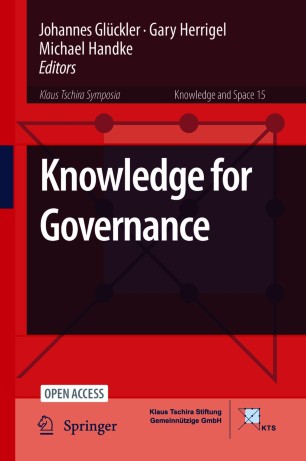
Focuses on theoretical and empirical intersections between governance, knowledge and space from an interdisciplinary perspective. The contributions elucidate how knowledge is a prerequisite as well as a driver of governance efficacy, and conversely, how governance affects the creation and use of knowledge and innovation in geographical context.

سوريا - اتستراد درعا - غباغب
+963-15 2050 - 15 860 380 /1/2/3 - 11 662 3900