



الصفحة 1
الصفحة 1
New challenges in software engineering ; Vol 1
Explores the key challenges shaping the future of software development, including automation, AI-driven development, security-focused engineering, resilient and autonomous architectures, business process optimization, cloud computing, microservices, high-performance distributed systems, and sustainable technologies. Software engineering is undergoing a constant transformation, driven by rapid technological advances and evolving market demands. additionally, it delves into the ethical considerations of AI, the evolution of intuitive user interfaces, and the importance of multidisciplinary collaboration.

Model Driven Architecture ; European MDA Workshops : Foundations and Applications, MDAFA 2003 and MDAFA 2004, Twente, The Netherlands, June 26-27, 2003, and Linköping, Sweden, June 10-11, 2004, Revised Selected Papers
Model-Driven Architecture (MDA) is an initiative proposedby the Object M- agement Group (OMG) for platform-generic software development. MDA s- arates the specification of system functionality from the implementation on a specific platform. It is aimed at making software assets more resilient to changes caused by emerging technologies. While stressing the importance of modeling, the MDA initiative covers a wide spectrum of research areas. Further efforts are required to bring them into a coherent approach based on open standards and supported by matured tools and techniques. This volume contains the selected papers of two workshops on “Model-Driven Architecture – Foundations and Applications” (MDAFA): MDAFA 2003 held at the University of Twente, Twente, The Netherlands, June 26–27, 2003, and MDAFA 2004 held at Linko ¨ping University, Link¨ oping, Sweden, June 10–11, 2004. The goal of the workshops was to understand the foundations of MDA, to share experience in applying MDA techniques and tools, and to outline future research directions. The workshops organizers encouraged authors of accepted papers to re-submit their papers to a post-workshop reviewing process; 15 of these papers were accepted to appear in this volume on MDA.

Metric Handbook : Planning and Design Data
A major handbook of planning and design data for architects and architecture students. Covering basic design data for all the major building types, it is the ideal starting point for any project. For each building type, the book gives the basic design requirements and all the principal dimensional data, and succinct guidance on how to use the information and what regulations the designer needs to be aware of.

How Apollo flew to the moon
Out of the technological battlefield of World War II came a team of gifted German engineers and designers who developed the vengeance weapon, the V-2, which evolved into the peaceful, powerful Saturn V rocket to take men to the Moon. David Woods tells the exciting story, starting from America’s post war astronautical research facilities, that used the V-2 for the development of the robust, resilient and reliable Saturn V launcher. He describes the initial launches through manned orbital spaceflights, comprehensively detailing each step, including computer configuration, the role of ground control, trajectory planning, lunar orbiting, separation of the lander, walking and working on the Moon, retrieval of the lunar astronauts and returning to Earth in this massive technical accomplishment.

Exploring Resilience : A Scientific Journey from Practice to Theory
Resilience has become an important topic on the safety research agenda and in organizational practice. Most empirical work on resilience has been descriptive, identifying characteristics of work and organizing activity which allow organizations to cope with unexpected situations. Fewer studies have developed testable models and theories that can be used to support interventions aiming to increase resilience and improve safety. In addition, the absent integration of different system levels from individuals, teams, organizations, regulatory bodies, and policy level in theory and practice imply that mechanisms through which resilience is linked across complex systems are not yet well understood. Scientific efforts have been made to develop constructs and models that present relationships; however, these cannot be characterized as sufficient for theory building. There is a need for taking a broader look at resilience practices as a foundation for developing a theoretical framework that can help improve safety in complex systems.

Digital transformation management : Challenges and futures in the Asian digital economy
Addresses key topics related to organization design and knowledge management in the digital economy with organizational context, particularly in Asia. the book conceptualizes organization design into three dimensions, people, information, and technology, and offers readers a unique valued insight, bringing new perspectives to understanding emerging business opportunities and challenges in Asia. it presents a valuable collection of 14 chapters with empirical studies from leading researchers. the book addresses digital transformation in companies and organizations in Asia, analysing how disruptive technologies can help them to have more efficient organization processes, create innovative products and services, be more resilient and achieve sustainable goals in post-pandemic time.

Developing Tsunami-Resilient Communities : The National Tsunami Hazard Mitigation Program
Tsunamis remain an ever-present threat to lives and property along the coasts of most of the world’s oceans. Because of the geographical extent of U.S. coastlines, an earthquake in Alaska can generate a local tsunami for Alaskans and, hours later, a distant tsunami for communities in Hawaii and along the Pacific Coast . This volume chronicles the development and accomplishments of a joint State/Federal partnership that was forged to reduce tsunami hazards along U.S. coastlines – the National Tsunami Hazard Mitigation Program. By integrating hazard assessment, warning guidance, and mitigation activities, the program has created a roadmap and a set of tools to develop communities more resilient to local and distant tsunamis. Among the set of tools are tsunami forecasting, educational experiments, early alerting systems, and design guidance for tsunami-resilient communities. Part of this book has already been published in a recent journal issue.

Designing sustainable and resilient cities : Small interventions for stronger urban food-water-energy management
Explores the link between the food-water-energy nexus and sustainability, and the extraordinary value that small tweaks to this nexus can achieve for more resilient cities and communities. Using data from Urban Living Labs in six participating cities (Eindhoven, Gdansk, Miami, Southend-on-Sea, Taipei and Uppsala) to co-define context-specific challenges, the results from each city are collated into an Integrated Decision Support System to guide and improve robust decision making on future urban development. The book presents contributions from CRUNCH, a transdisciplinary team of scholars and practitioners whose expertise spans urban climate modelling; food, water and energy management; the design of resilient public space; collecting better urban data; and the development of smart city technology. Whilst previous works on the food-water-energy nexus have focused on large, transnational cases, this book explores local ways to use the food-water-energy nexus to improve urban resilience.

Creating Resilient Futures : Integrating Disaster Risk Reduction, Sustainable Development Goals and Climate Change Adaptation Agendas
This excellent text recognises that efforts towards improving development outcomes must work in concert with strategies which promote planetary health and support the transition to a sustainable and climate-resilient future.
Corporate Innovation Strategies : Corporate Social Responsibility and Shared Value Creation
Corporate social responsibility (CSR) is simply the maximization of a company's value over time, undertaken because, in the long run, social and environmental problems ultimately become financial problems. The justification for CSR is therefore associated with representing the nature and role of the company, as well as its purpose. Companies therefore regard CSR as a strategic investment that is part of a proactive, resilient, inclusive approach, based on the creation of shared value. This approach is capable of reducing negative societal impacts of their activities, or inducing positive impacts if they sustain a hybrid culture, all the while improving their competitive advantage. This book presents a theoretical development that analyzes the challenges of CSR strategies based on the creation of shared value.

Cold War Civil Defence in Western Europe : Sociotechnical Imaginaries of Survival and Preparedness
This edited collection brings together established and new perspectives on Cold War civil defence in Western Europe within a common analytical framework that also facilitates comparative and transnational dimensions. The current interest in creating disaster-resilient societies demands new histories of civil defence. Historical contextualization is essential in order to understand what is at stake in preparing, devising, and implementing forms of preparedness, protection, and security that are specifically targeted at societies and citizens. Applying the concept of sociotechnical imaginaries to civil defence history, the chapters of this volume cover a range of new themes, from technology and materiality to media, memory, and everyday experience.

Co-Creativity and engaged scholarship : Transformative methods in social sustainability research
This book explores creative and collaborative research methods within the social sustainability sciences. The term co-creativity is used in reference to both individual methods and overarching research approaches that, through socially inclusive forms of action and reflection, stimulate alternative understandings of why and how things are, and how they could be. Supported by a wide-ranging series of in-depth—including chapters on militant research and guerrilla narrative, decolonial participative approaches, appreciate inquiry and care-ethics, deep-mapping, photo-voice, community-arts, digital participatory mapping, and living labs—the edited collection critically reviews the potential of creative, collaborative and transdisciplinary forms of research praxis to nurture just and transformative processes of change.

IUTAM Symposium on Mechanics and Reliability of Actuating Materials ; Proceedings of the IUTAM Symposium held in Beijing, China, 1-3 September, 2004
The general assembly of IUTAM approved in August, 2002 at Cambridge University, UK, a proposal to hold an IUTAM symposium to summarize the relevant research findings. The main themes of the symposium are: (i) the constitutive relations of actuating materials that couple mechanical, electrical, thermal and magnetic properties, as well as incorporate phase transformation and domain switch; (ii) the physical mechanisms of deformation, damage, and fatigue crack growth of actuating materials; (iii) the development of failure-resilient approaches that base on the macro-, meso-, and micro-mechanics analyses; (iv) the investigation of microstructural evolution, stability of phase transformation, and size effects of ferroelectric ceramics, shape memory alloys, actuating polymers, and bio-actuating materials.
Climate risk in Africa : Adaptation and resilience
This book highlights the complexities around making adaptation decisions and building resilience in the face of climate risk. It is based on experiences in sub-Saharan Africa through the Future Climate For Africa (FCFA) applied research programme. It begins by dealing with underlying principles and structures designed to facilitate effective engagement about climate risk, including the robustness of information and the construction of knowledge through co-production
Civil engineering for disaster risk reduction
Brings together all diverse disciplines of civil engineering and related areas (for example, geotechnical engineering, water resources engineering, structural engineering, transportation engineering, environmental engineering, construction management, GIS, and remote sensing) towards a common goal of disaster resilience through an interdisciplinary approach. It contains methods and case studies focusing on civil engineering solutions to reduce the disaster risk. The book contents are aligned in line with the priorities set by UN-Sendai Framework for Disaster Risk Reduction and UN-SDGs to promote a global culture of risk-awareness and disaster reduction. The book will be a useful comprehensive reference for disaster risk reduction beneficial for engineering students, teaching faculty, researchers, industry professionals and policymakers.
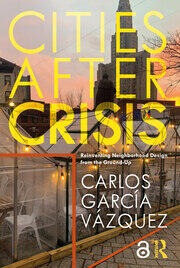
Cities After Crisis : Reinventing Neighborhood Design from the Ground-Up
The book details how these crises have led to a new urban vision—from avantgarde modern design to an artisan aesthetic that calls for simplicity and the everyday, from the sustainable development paradigm to a resilient vision that defends de-growth and the re-wilding of cities, from a homogenizing globalism to a new localism that values what is distinctive and nearby, from the privatization of the public realm to the commoning and self-governance of urban resources, and from top-down to bottom-up processes based on the engagement and empowerment of communities.
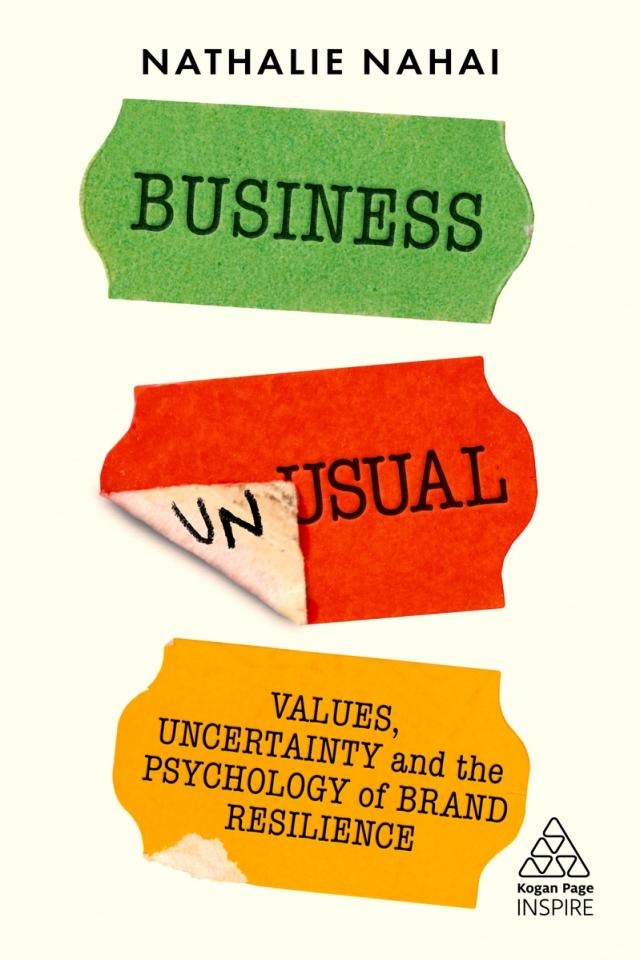
Business Unusual : Values, Uncertainty and the Psychology of Brand Resilience
This book reveals the psychology behind how we feel about businesses, their communications and their leaders in a digital world. From understanding the new dynamics shaping online behaviour, to the evolving expectations driving employees and consumers, Business Unusual will teach you how to build a resilient business - one that is built on trust, an engaged and fulfilled workforce, and the brand values that can empower you to craft resonant communications and relationships.

Business Resilience : A Practical Guide to Sustained Progress Delivered at Pace
Business Resilience is a practical guide to making organizations more resilient and improving current practices by building on what the organization does well. It explains how managers should constantly monitor their business environment and adapt their priorities depending on the level of disruption - from gradual innovation and improvement in good times to swarming on a single problem during a crisis.
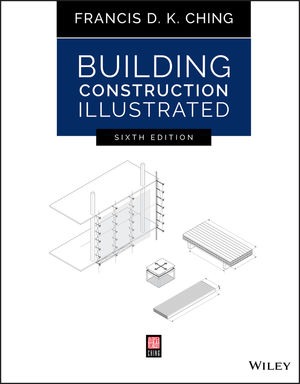
Building construction illustrated
A leading visual guide to the principles of building construction. Filled with rich illustrations and in-depth content by renowned author Francis D.K. Ching, it offers students and practicing professionals the information needed to understand concepts in residential and commercial construction, architecture, and structural engineering. Includes all new sections on resilient design; diagrids; modular foundation systems; smart façade types and systems; lighting sources and systems; and mass timber materials, cross laminated timber (CLT) and nail laminated timber (NLT) Revised to reflect that latest updates in codes and standards requirements: 2018 International Building Code (IBC), LEED v4, and CSI MasterFormat 2018 Includes updated information on sustainability and green building; insulation materials; stair uses; stoves and inserts; and fire-rated wall and floor assemblies
Building a Resilient and Sustainable Agriculture in Sub-Saharan Africa
What are the challenges and action points for agricultural sustainability in Sub-Saharan Africa? This collection of papers offers technical analyses, policy recommendations and an overview of success stories to date. Each carefully selected paper provides valuable insights for improved policy making and defines relevant strategic priorities on Africa’s sustainable transformation process, which is in line with the international development agenda. Although agriculture remains the main source of income for Africa’s population, the sector is rain-fed subjecting it to the vagaries of weather and climate change. This volume demonstrates the rationale of developing a competitive, inclusive and sustainable agribusiness sector for Africa’s food security and structural transformation.
