



الصفحة 1
الصفحة 1

Physical Geodesy
"Physical Geodesy" by Heiskanen and Moritz, published in 1967, has for a long time been considered as the standard introduction to its field. The enormous progress since then, however, required a complete reworking. While basic material could be retained other parts required a complete update. This concerns, above all, the adaptation to the fact that the geometry can now be precisely determined by methods such as GPS, and that new satellite methods, combined with terrestrial methods, also make a detailed determination of the earth's gravitational field a possibility and a necessity. Highlights include: emphasis on global integration of geometry and gravity, a simplified approach to Molodensky's theory without integral equations, and a general combination of all geodetic data by least-squares collocation. In the second edition minor mistakes have been corrected.

Physical Geodesy
"Physical Geodesy" by Heiskanen and Moritz, published in 1967, has for a long time been considered as the standard introduction to its field. The enormous progress since then, however, required a complete reworking. While basic material could be retained other parts required a complete update. This concerns, above all, the adaptation to the fact that the geometry can now be precisely determined by methods such as GPS, and that new satellite methods, combined with terrestrial methods, also make a detailed determination of the earth's gravitational field a possibility and a necessity. Highlights include: emphasis on global integration of geometry and gravity, a simplified approach to Molodensky's theory without integral equations, and a general combination of all geodetic data by least-squares collocation.
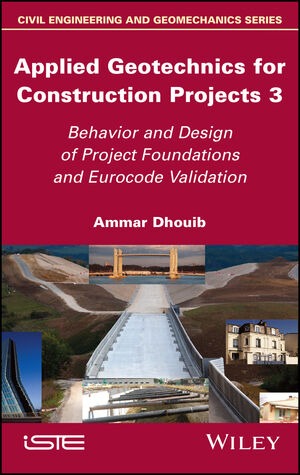
Applied geotechnics for construction projects ; Vol. 3 : Behavior and Design of Project Foundations and Eurocode Validation
Applied Geotechnics for Construction Projects 3 first presents the basic theoretical principles and rules governing the designing and validation of foundations; shallow, semi-deep and deep, then presents real foundation projects with a detailed comparison of the approaches and methods of calculating foundations in relation to the reference systems and rules in force, closely compared to and validated by the Eurocodes. The third chapter presents examples of foundation projects, covering high-side building rafts, strip footings, piles and embankments, enriched by an unprecedented level of experience in the field of foundations for civil and industrial construction projects.
