


تحسين النتائح
ترتيب حسب
من
الى

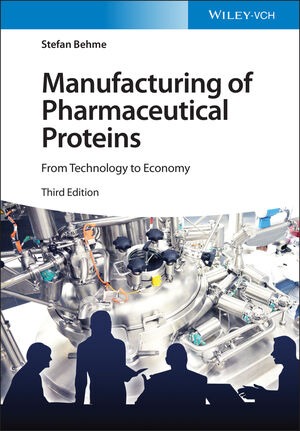
Manufacturing of Pharmaceutical Proteins: From Technology to Economy, renowned chemical engineer Dr. Stefan Behme delivers a comprehensive text covering all aspects of biopharmaceutical manufacturing, including legal and regulatory considerations, production facility design, quality assurance, supply chain management, emerging market regulations, and cost control.
The topics covered are highly relevant to the application of the methods and tools outlined in quality improvement programs. This is in an effort to enhance the specific skills of the pulmonologist, thus making him an effective and independent liaison with the relevant strategic management. With great sensitivity, the SIMeR (Italian Society of Respiratory Medicine) has chosen to sponsor this edition, the only one to date in the field of Pulmonology, whose contents are based on the proposals and work of the leaders of one of its most recently established Study Groups, the "Continuous Quality Improvement in Pulmonology" Study Group.

In Laboratory Control System Operations in a GMP Environment, readers are given the guidance they need to implement a CGMP compliant Laboratory Control System (LCS) that fits within Global Regulatory guidelines. Using the Quality Systems Approach, regulatory agencies like the FDA and the European Medicine Agency have developed a scheme of systems for auditing pharmaceutical manufacturing facilities which includes evaluating the LCS.
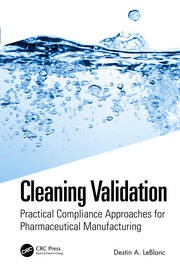
Timely coverage of cleaning validation for the pharmaceutical industry, a dynamic area in terms of health-based limits. Encourages pharmaceutical manufacturers, and particularly upper management, to meet the challenges of the science-based and riskbased approaches to cleaning validation. Draws on the author’s vast experience in the field of cleaning validation and hazardous materials. Discusses EMA vs. ISPE on Cleaning Limits and revised Risk-MaPP for highly hazardous products in shared facilities. A diverse list of topics from protocol limits for yeasts and molds to cleaning validation for homeopathic drug products.
This book constitutes the thoroughly refereed post-conference proceedings of the Third International Symposium on Applications of Graph Transformations, AGTIVE 2007, held in Kassel, Germany, in October 2007.
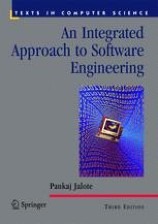
An Integrated Approach to Software Engineering introduces software engineering to advanced-level undergraduate and graduate students of computer science. It emphasizes a case-study approach whereby a project is developed through the course of the book, illustrating the different activities of software development. The sequence of chapters is essentially the same as the sequence of activities performed during a typical software project. All activities, including quality assurance and control activities, are described in each chapter as integral activities for that phase of development. Similarly, the author carefully introduces appropriate metrics for controlling and assessing the software process. Chapters in this revised edition, updated for today’s standards, include these new features: Software Process, Requirements Analysis and Specification, Software Architecture, Project Planning, Object Oriented Design, Coding,Testing,
This textbook is designed for postgraduate studies in the field of 3D Computer Vision. It also provides a useful reference for industrial practitioners; for example, in the areas of 3D data capture, computer-aided geometric modelling and industrial quality assurance. This second edition is a significant upgrade of existing topics with novel findings. Additionally, it has new material covering consumer-grade RGB-D cameras, 3D morphable models, deep learning on 3D datasets, as well as new applications in the 3D digitization of cultural heritage and the 3D phenotyping of crops.
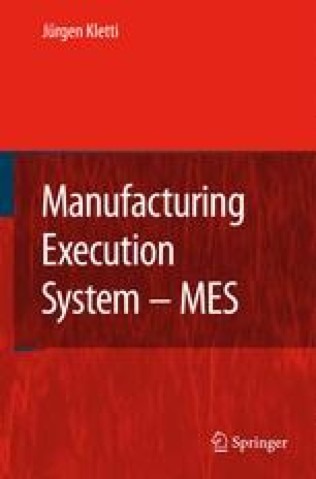
The production plants of today develop into modern service centers. Economic efficiency of modern added value is not a property of products alone but of the process. Decisive potential in business now is a question of process capability, rather than production capability. Process capability in business requires real-time systems for optimization. Business-IT needs to be developed from telecommunications and ERP to real time services, which are not offered by the prevailing ERP systems. Today, only modern Manufacturing Execution Systems (MES) offer real-time applications. They generate current as well as historic mappings of production facilities and thus they can be used as basis for optimizations. It is important to map the supply chain in real time. Increasing complexity in production requires an integrated view of the production and service facilities: detailed scheduling, status collection, quality, performance analysis, tracing of material and so on have to be recorded and displayed in an integrated way.
The push toward lead-free soldering in computers, cell phones and other electronic and electrical devices has taken on a greater urgency as laws have been passed or are pending in the United States, the European Union and Asia which ban lead-bearing solder. These new restrictions on hazardous substances are changing the way electronic devices are assembled, and specifically affect process engineering, manufacturing and quality assurance. Lead-Free Soldering offers in a single volume a broad collection of practical techniques for lead-free soldering design and manufacture, which up to now have been scattered in difficult-to-find scholarly sources. The book includes the latest information on proposed changes to lead-free standards, and up-to-date analysis of government and legislative activities and regulations in North America, Europe and Asia.
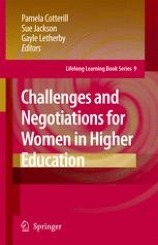
There is much ambivalence in women’s experience of the academy as teachers and students. Although today many more women follow academic careers than in the past, they do not find the welcome that they had hoped for and expected. Additionally, women students find that whilst they can now enter through the doors of universities, academic space remains embedded in structures and cultures of gender and social class. This book is a clear and accessible exploration of lifelong learning and educational opportunities for women in higher education. It has been developed from work undertaken by members of the Women in Higher Education Network with chapters organised in three thematic sections: Ambivalent Positions in the Academy / Process and Pedagogy at Work / Career – Identity – Home
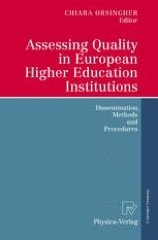
This book collects the evaluation and accreditation experiences gathered by higher education institutions in Finland, France, Germany, Italy, the Netherlands, Portugal, the United Kingdom and Sweden.
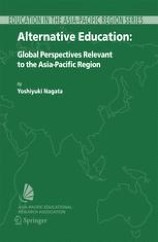
Alternative streams of education have been and remain an important but difficult theme for teachers, parents, policy-makers, and scholars. By focusing on case studies of six countries (Bolivia, Thailand, Australia, USA, The Netherlands, and Denmark), and by comprehensively analysing these by means of international comparative methodologies, the author approaches the nuts and bolts issues of alternative and mainstream education systems. The case studies include Charter Schools in the USA and Waldorf Schools in Australia. The study presents not only an insightful analysis of alternative forms of education with regard to actual issues in societies and also legal and administrative features of education. It provides insights into the kind of school development that could be appropriate in the 21st century and the types of educational communities we should seek to create in the age of globalisation.
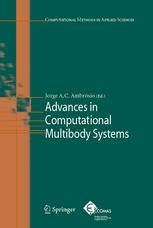
Contains versions of selected communications presented at the ECCOMAS Thematic Conference in Multibody Dynamics 2003 that took place in Lisbon, Portugal, which have been enhanced in their self-containment and tutorial aspects by the authors. This comprehensive text constitutes a useful reference for researchers and design engineers.
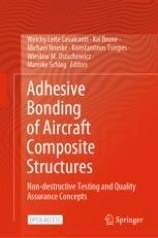
This book is under a CC BY 4.0 license. It presents the results of the ComBoNDT European project, which aimed at the development of more secure, time- and cost-saving extended non-destructive inspection tools for carbon fiber reinforced plastics, adhered surfaces and bonded joints. The book reports the optimal use of composite materials to allow weight savings, reduction in fuel consumptions, savings during production and higher cost efficiency for ground operations.
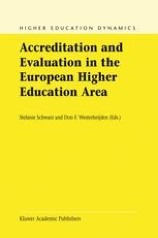
This volume presents a rich account of the development of accreditation and evaluation in 20 European countries. The authors are leaders in the field and they have cooperated in this effort by writing richly different, often deep and insightful analyses of the situation in their country. The two editors have added a synopsis detailing the main trends, and sketching commonalities as well as contrasts in the developments across Europe. The book shows how accreditation is becoming a main mechanism in the steering of higher education all over Europe. The book is unique in its analysis of forces driving towards the spread of different models of accreditation in the emerging European Higher Education area. Readers will obtain an up-to-date picture of the state of affairs of accreditation in the framework of evaluation activities in Europe.

سوريا - اتستراد درعا - غباغب
+963-15 2050 - 15 860 380 /1/2/3 - 11 662 3900