



الصفحة 1
الصفحة 1

Nephrology Worldwide
This book presents contributions from leading international experts in the field of nephrology. Each chapter is independent and discusses nephrology in the author’s country, including the history of nephrology development, kidney disease epidemiology, clinical nephrology, dialysis practice in acute and chronic renal failure settings (hemodialysis, hemodiafiltration, peritoneal dialysis), pediatric nephrology, and kidney transplantation. In addition, the book covers topics such as the job market for nephrologists, reimbursement, nephrology education, and the number of professionals in the private and public sectors.

Intangible capital and growth : Essays on labor productivity, monetary economics, and political economy ; Vol.1
It is now widely recognized that intangible capital has been a crucial element in the growth performance of these economies and their firms. In the author's view, “intangible capital” serves as the most appropriate umbrella term for capturing several dimensions of capital that are not tangible in nature but are nevertheless fundamentally important for growth. The term encompasses investments in education (human capital) and in informal (social capital) and formal (rule of law) institutions by the public sector and households, as well as investments by businesses aimed at enhancing their knowledge base, such as software, innovative property, and economic competencies.

Human Rights and the Moral Responsibilities of Corporate and Public Sector Organisations
All students and advocates of human rights will be interested in this concerted exploration of the human rights moral obligations that fall, not directly on states, but on private and public organisations. Such an approach to human rights opens up the possibility of holding corporations and bureaucracies to account for human rights violations even when they have acted in accordance with the law. This interdisciplinary and international project brings together eminent philosophers, lawyers, social scientists and practitioners to articulate theoretically and develop in practical contexts the moral implications of human rights for non-state actors. What emerges from the book as a whole is a distinctive contemporary vision of the emerging moral impact of human rights and its significance for organisational behaviour and performance.

Financial management and accounting in the public sector
Public sector managers are confronted daily with targets and demands that are often set in confusing accounting and financial language. In Financial Management and Accounting in the Public Sector, Gary Bandy employs a clear and concise narrative to introduce the core concepts of public financial management to help those managers to deliver programmes, projects and services that are value for money. As the author puts it, managing public money is an art, not a science.
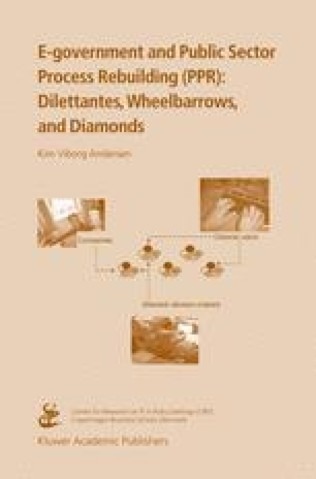
E-government and public sector process rebuilding : Dilettantes, wheel Barrows, and Diamonds
E-government and Public Sector Process Rebuilding: Dilettantes, Wheelbarrows, and Diamonds provides an input to rebuild and improve the processes in which the public sector perform activities and interact with the citizens, companies, and the formal elected decision-makers. Through eleven chapters, the book emphasizes information systems (IS) as the vehicle for redirecting the public sector towards its key customers. The book stresses serious capability challenges inhibiting the digital transformation using activity and customer centric applications.

Digital Towns : Accelerating and Measuring the Digital Transformation of Rural Societies and Economies
This book explores the digital transformation of small and rural towns, in particular, how to measure the evolution and development of digital towns. In addition to access to resources, competition from urban and global markets, and population trends, rural communities present lesser access and use of digital technologies and have lower digital competencies and skills than their urban counterparts. Consequently, they experience less beneficial outcomes from increased digitalisation than urban areas. This book defines what a digital town is and explores digitalisation from the perspective of the four basic economic sectors in towns - individuals and households, businesses, the public sector, and civil society - and three types of enabling infrastructure - digital connectivity, education, and governance.

Crisis management for small and medium-sized enterprises (SMEs) : Strategies for external Crises
Provides an in-depth introduction to crisis management and leadership in SMEs, as well as methods, approaches and cases against the background of different crises; external ones in particular. Featuring contributions from research and practice, this book covers a plethora of SMEs from different sectors to match the diverse nature of small business practice. The combination of a sound theoretical framework for small firm crisis management along with practical instruments/methods and cases, help to improve the organizational resilience of SMEs.

Making Healthcare Safe : The Story of the Patient Safety Movement
This unique and engaging open access title provides a compelling and ground-breaking account of the patient safety movement in the United States, told from the perspective of one of its most prominent leaders, and arguably the movement’s founder, Lucian L. Leape, MD. Covering the growth of the field from the late 1980s to 2015, Dr. Leape details the developments, actors, organizations, research, and policy-making activities that marked the evolution and major advances of patient safety in this time span. In addition, and perhaps most importantly, this book not only comprehensively details how and why human and systems errors too often occur in the process of providing health care, it also promotes an in-depth understanding of the principles and practices of patient safety, including how they were influenced by today’s modern safety sciences and systems theory and design. Indeed, the book emphasizes how the growing awareness of systems-design thinking and the self-education and commitment to improving patient safety, by not only Dr. Leape but a wide range of other clinicians and health executives from both the private and public sectors, all converged to drive forward the patient safety movement in the US.
Macroeconomic Risk Management Against Natural Disasters : Analysis focussed on governments in developing countries
Natural disasters cause considerable economic damage. While developed countries usually are able to cope with the impacts of natural hazards, developing countries are faced with severe consequences for their resources. In order to prevent long-term macroeconomic repercussions, governments need a comprehensive disaster risk management strategy.Budgetary resources are allocated to pre-disaster risk management strategies to reduce the probability of financing gaps. The framework and model approach allows cross country comparisons as well as the assessment of financial vulnerability, macroeconomic risk, and risk management strategies.
Leadership and Performance in Public Sector Networks
Analyses two key aspects of network management in the public sector: leadership and performance. It investigates what integrative leadership is, and how it differentiates from leadership in single-agency structures. It also examines the performance of public interest networks by proposing an analytical framework that highlights which factors lead to high performance networks.

Knowledge management : Value creation through organizational learning, 2nd
Features substantial updates to all chapters, reflecting the implications of the digital transformation on knowledge work and knowledge management. It also addresses three new topics: the impact of knowledge management practices on performance; knowledge management in the public sector; and an introduction to ISO 9001:2015 as an implementation framework.The book is intended not only for academic education but also as an essential guide for managers, consultants, trainers, coaches, and all those engaged in business, public administration or non-profit work who are interested in learning about organizations in a knowledge economy.
Architecture and design for industry 4.0 : Theory and practice
The book is structured into three sections (research, practice, and technologies), with the goal of creating a new framework useful for widespread awareness necessary to initiate technology transfer processes for the benefit of the public sector, universities, research centers, and innovative companies, and a new professional figure capable of controlling the entire process is essential. Thus, the book chapters arouse a series of relevant topics such as computational and parametric design, performance-based architecture, data-driven design strategies, parametric environmental design and analysis, computational and parametric structural design and analysis

Africa-EU Renewable Energy Research and Innovation Symposium 2018 (RERIS 2018) ; 23–26 January 2018, National University of Lesotho On occasion of NULISTICE 2018
This open access book presents the proceedings of the 2nd Africa-EU Renewable Energy Research and Innovation Symposium (RERIS 18), held in Maseru, Lesotho in January 2018. The symposium aimed to foster research cooperation on renewable energy between Africa and Europe – in academia, as well as the private and public sectors. Addressing thematic areas such as • Grid-connected renewable energy; • Decentralised renewable and household energy solutions; • Energy ocioeconomics; and • Promotion of energy research, innovation, education and entrepreneurship.
