



الصفحة 1
الصفحة 1

Micro-Place Homicide Patterns in Chicago : 1965 - 2017
This brief examines 36,263 homicides in Chicago over a 53-year study period, 1965 through 2017, at micro place grid cells of 150 by 150 meters. This study shows not only long-term historical patterns of homicides in Chicago, but also places that historical context of homicide in reference to the dramatic increases in homicides in 2016-2017. It uses several different inequality metrics, as well as kernel density maps to demonstrate that homicides were more clustered in the 1960’s compared to later periods. Using zero inflated group-based trajectory models, it demonstrates the long-term temporal stability of homicides at micro places. This brief will be of interest to researchers in policing, homicide, and research methods in criminology.

Crime and safety in the rural : Lessons from research
This book highlights 20 reasons why crime and safety in rural areas is a topic of relevance. We attempt to untangle currently simplistic views of the rural by discussing a number of facets of the countryside as both safe and criminogenic, and more importantly, a hybrid place worth to be examined in its own right. We adopt the notion of a rural-urban continuum that captures the nuances of places of varied nature, spanning from remote and desolate spaces to accessible and connected environments of the urban fringe. Areas on the rural-urban continuum may be in constant transformation given local and global influences, which imposes challenges for policing and long-term social sustainability.

Counter-Terrorism Policing : Community, Cohesion and Security
This book charts these opportunities and challenges through unprecedented access to the police and diverse communities in Australian regional and metropolitan contexts. It locates these developments in an international comparison with like jurisdictions in the US, UK, and Canada and in light of former conflicts in Northern Ireland and South Africa. It examines the nature and impact of counter-terrorism on policing, diverse communities, legislation and policy and on the media. The book concludes by posing questions for the future of counter-terrorism policing in liberal democracies.

Comparative and international criminal justice systems : policing, judiciary, and corrections
The Nature of Comparative and International Criminal JusticeThe Purpose of Comparative and International Criminal Justice Systems; Crime and Criminal Law: Global PerspectiveCrime: International and Comparative;Overview of Model Criminal Justice Systems
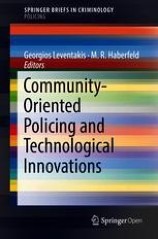
Community-oriented policing and technological innovations
Presents new approaches and innovative challenges to address bringing technology into community-oriented policing efforts. “Community-oriented policing” is an approach that encourages police to develop and maintain personal relationships with citizens and community organizations. By developing these partnerships, the goal is to enhance trust and legitimacy of police by the community (and vice versa), and focus on engaging the community crime prevention and detection efforts for sustainable, long-term crime reduction. The contributions to this volume emphasize how technological innovations can advance community-oriented policing goals.
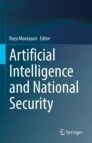
Artificial intelligence and national security
Analyses the implications of the technical, legal, ethical and privacy challenges as well as challenges for human rights and civil liberties regarding Artificial Intelligence (AI) and National Security. It also offers solutions that can be adopted to mitigate or eradicate these challenges wherever possible. As a general-purpose, dual-use technology, AI can be deployed for both good and evil. The use of AI is increasingly becoming of paramount importance to the governments mission to keep their nations safe. However, the design, development and use of AI for national security poses a wide range of legal, ethical, moral and privacy challenges. This book explores national security uses for Artificial Intelligence (AI) in Western Democracies and its malicious use. This book also investigates the legal, political, ethical, moral, privacy and human rights implications of the national security uses of AI in the aforementioned democracies. It illustrates how AI for national security purposes could threaten most individual fundamental rights, and how the use of AI in digital policing could undermine user human rights and privacy.
