



الصفحة 1
الصفحة 1

Trease & Evans Pharmacognosy
Covers the study of those natural substances, principally plants, that find a use in medicine. Its popularity and longevity stem from the book's balance between classical (crude and powdered drugs' characterization and examination) and modern (phytochemistry and pharmacology) aspects of this branch of science, as well as the editor's recognition in recent years of the growing importance of complementary medicines, including herbal, homeopathic and aromatherapy.

Therapeutic use of medicinal plants and their extracts ; Vol.2 : Phytochemistry and bioactive compounds
Starts with a general introduction to phytochemistry, followed by chapters on plant constituents, their origins and chemistry, but also discussing animal-, microorganism- and mineral-based drugs. Further chapters cover vitamins, food additives and excipients as well as xenobiotics and poisons. The book also explores the herbal approach to disease management and molecular pharmacognosy and introduces methods of qualitative and quantitative analysis of plant constituents. Phytochemicals are classified as primary (e.g. carbohydrates, lipids, amino acid derivations, etc.) or secondary (e.g. alkaloids, terpenes and terpenoids, phenolic compounds, glycosides, etc.) metabolites according to their metabolic route of origin, chemical structure and function. A wide variety of primary and secondary phytochemicals are present in medicinal plants, some of which are active phytomedicines and some of which are pharmaceutical excipients.

Therapeutic Applications of Honey and its Phytochemicals ; Vol.2
Provides evidence-based information on the pharmaceutical potential of honey along with its therapeutic applications and precise mechanisms of action. It discusses in detail the phytochemistry and pharmacological properties of honey, highlighting the economic and culturally significant medicinal uses of honey and comprehensively reviewing the scientific research on the traditional uses, chemical composition, scientific validation, and general pharmacognostical characteristics. Given its scope, it is a valuable tool for researchers and scientists interested in drug discovery and the chemistry and pharmacology of honey.

Therapeutic Applications of Honey and its Phytochemicals ; Vol.1
Provides evidence-based information on the pharmaceutical potential of honey along with its therapeutic applications and precise mechanisms of action. It discusses in detail the phytochemistry and pharmacological properties of honey, highlighting the economic and culturally significant medicinal uses of honey and comprehensively reviewing the scientific research on the traditional uses, chemical composition, scientific validation, and general pharmacognostical characteristics. Given its scope, it is a valuable tool for researchers and scientists interested in drug discovery and the chemistry and pharmacology of honey.

St. Johns Wort and its Active Principles in Depression and Anxiety
Hypericum extract preparations are used extensively in many countries to treat mildly to moderately depressed patients. While this was based previously on traditional experience, extensive research over the last 10 years has given a broad preclinical and clinical basis to justify the use of Hypericum as an antidepressant. This book reviews the available data related to the biochemical, functional, and behavioural pharmacology of Hypericum and its active constituents. The clinical chapters overview the evidenced basis for its use as an antidepressant, initial data in anxiety and somatoform disorders, and the site effect profile of Hypericum and its possible relevant drug interactions. The known pharmacokinetics of the relevant constituents and the biopharmaceutical quality of commercially available Hypericum preparations are also discussed.

Semi-critical assisted extraction : Applications and commercialization in biotechnology, food, and pharmacy
Compiles empirical and traditional extraction methods applied to cutting-edge critical extraction research in the areas of food science, phytochemistry, pharmacy, fragrance, cosmetology, and folk medicine. It presents extraction technology as an interdisciplinary area that applies the principles of physics and chemistry as tools to develop engineered models for the construction of more advanced extraction devices. It includes examples and problems related to data treatment in normal laboratory research work that will facilitate undergraduate- and graduate-level students, as well as operators working in the area, in solving real problems.

Ranunculales medicinal plants : Biodiversity, chemodiversity and pharmacotherapy ; 1st ed.
Covers this order of flowering plants, detailing the phytochemistry, chemotaxonomy, molecular biology, and phylogeny of selected medicinal plants families and genera and their relevance to drug efficacy. The book carries out an exhaustive survey of the literature in order to characterize global trends in the application of flexible technologies. The interrelationship between Chinese species, and between Chinese and non-Chinese species, is inferred through molecular phylogeny and based on nuclear and chloroplast DNA sequencing. The book discusses the conflict between chemotaxonomy and molecular phylogeny in the context of drug discovery and development. Users will find invaluable and holistic coverage on the study of Ranunculales that will make this the go-to pharmaceutical resource.

Plant and human health ; Vol.2 : Phytochemistry and molecular aspects
Early anthropological evidence for plant use as medicine is 60,000 years old as reported from the Neanderthal grave in Iraq. The importance of plants as medicine is further supported by archeological evidence from Asia and the Middle East. Today, around 1.4 billion people in South Asia alone have no access to modern health care, and rely instead on traditional medicine to alleviate various symptoms. On a global basis, approximately 50 to 80 thousand plant species are used either natively or as pharmaceutical derivatives for life-threatening conditions that include diabetes, hypertension and cancers. As the demand for plant-based medicine rises, there is an unmet need to investigate the quality, safety and efficacy of these herbals by the “scientific methods”

Phytopharmaceuticals : Potential Therapeutic Applications
Covers these bioactive compounds, their available sources, how the bioactive molecules are isolated from the plants, the biochemistry, structural composition and potential biological activities. Also discussed are the pharmacological aspects of medicinal plants, phytochemistry and biological activities of different natural products, ethnobotany and medicinal properties, as well as a novel dietary approach for various disease management and therapeutic potential. The importance of phytopharmaceutical of plants and potential applications in the food and pharma industries is highlighted.

Phytochemistry and pharmacology of medicinal plants ; 2 Volume set
Introduces and provides extensive coverage of 79 important medicinal plant species. Each chapter, written by noted experts in the field, focuses on one important medicinal plant, giving a brief introduction about the species and then delving into the plant’s bioactive phytochemicals along with its chemical structures and pharmacological activities. A wide array of biological activities and potential health benefits of the medicinal plant—which includes antiviral, antimicrobial, antioxidant, anti-cancer, anti-inflammatory and antidiabetic properties as well as protective effects on liver, kidney, heart and nervous system—are given. An extensive collection of research literature on pharmacological activities on that species is reviewed.

Phytochemistry and pharmacology of garlic (Allium sativum L.)
Provides a thorough overview on the origin of garlic, history of garlic chemistry, garlic preparations and their use in folklore, health benefits of garlic, garlic as pesticide and its adverse effects. Garlic (Allium sativum) is also used as a popular herbal alternative therapy. There is a lack of consolidated literature on the health benefits of garlic, this book will provide a comprehensive compendium on these benefits. Though it is a scientific research-based knowledge compilation, it will be also equally beneficial to science students as well as the lay reader.

Phenolic Compound Biochemistry
This book is written for researchers, instructors, advanced undergraduate students and beginning graduate students in the life sciences who wish to become more familiar with these and many other intriguing aspects of phenolic compounds. Topics covered include nomenclature, chemical properties, biosynthesis, including an up-to-date overview of the genetics controlling phenolic metabolism, isolation and characterization of phenolic compounds, phenolics used in plant defense, and the impact of phenolics on human health. The book is written in an accessible style, and assumes only basic knowledge of organic chemistry, biochemistry and cell physiology. More than 300 chemical structures and reaction schemes illustrate the text.

Pharmacological assays of plant-based natural products
Provides information on how to select and screen plants for their medicinal properties. It describes phytopharmacological techniques for extracting and qualitatively and quantitatively analyzing a plant’s phytochemicals. After a detailed in vitro investigation including nutritional and anti-nutritional analyses, medicinal properties were tested with various in vivo models for anti-inflammatory, analgesic, anti-pyretic, anticancer and anti-diabetic properties, as well as wound healing, neurodegenerative diseases, etc. Compound identification and purification techniques include, among others, TLC and column chromatography, as well as molecular docking with specific proteins.

Pharmacognosy and phytochemistry : Principles, techniques, and clinical applications
Covers the classification of crude drugs, complementary and alternative medical (CAM) systems, adulteration and evaluation of drugs, extraction methods of plant drugs, and ethnobotany and ethnopharmacology.

Medicinal plants and antimicrobial therapies
Serves as an excellent comprehensive material covering the current understandings and updates on antimicrobial resistance (AMR) and the use of medicinal plant resources for tackling it. Chapters cover important aspects of AMR and strategies to address this threatening issue with medicinal plants and their resources. One health perspectives for addressing AMR have been presented for the readers. Antimicrobial medicinal plant therapeutic resources including crude extracts, active fractions, pure molecules and essential oils, besides using them as functionalizing agents for nano-antimicrobials have been covered. Further, plant endophytes as a source of antimicrobial compounds have been discussed. Chapters cover both the bactericidal as well as resistance-reversal (or potentiating/ combinatorial therapies) potencies of medicinal plant resources. The book also focuses on how medicinal plant resources effectively target major determinants of AMR.

Immunity boosting medicinal plants of the Western Himalayas
Presents a comprehensive guide to traditional immunity-boosting medicinal plants of the Himalayas, their traditional uses, phytochemistry, pharmacology, diversity, conversation, biotechnology, toxicology, as well as future prospective. All the chapters cover the latest advances in ethnobotany, phytochemistry, biochemistry, and biotechnology.

From herbs to healing : Pharmacognosy - phytochemistry - phytotherapy - biotechnology
Demonstrates the place of phytotherapy in healing, the role of herbs in complementary and traditional therapy, and research strategies for the development of drugs of natural plant origin. This book is primarily designed for scientific researchers, but is also very useful for undergraduate and postgraduate students in their professional training. As this book discusses herbs from all over the world, it is specifically drafted to be useful not only in Hungary and Europe, but also for people in other continents as an English language encyclopaedia of medicinal plants and their biologically active compounds.

Ethnobotany : A phytochemical perspective
Explores the chemistry behind hundreds of plant medicines, dyes, fibers, flavors, poisons, insect repellants, and many other uses of botanicals. Bridging the gap between ethnobotany and chemistry, this book presents an introduction to botany, ethnobotany, and phytochemistry to clearly join these fields of study and highlight their importance in the discovery of botanical uses in modern industry and research. Part I. Ethnobotany, explores the history of plant exploration, current issues such as conservation and intellectual property rights, and a review of plant anatomy. An extensive section on plant taxonomy highlights particularly influential and economically important plants from across the plant kingdom. Part II. Phytochemistry, provides fundamentals of secondary metabolism, includes line drawings of biosynthetic pathways and chemical structures, and describes traditional and modern methods of plant extraction and analysis. The last section is devoted to the history of native plants and people and case studies on plants that changed the course of human history from five geographical regions: Africa, the Americas, Asia, Europe, and Ocean. Throughout the entire book, vivid color photographs bring science to life, capturing the essence of human botanical knowledge and the beauty of the plant kingdom.
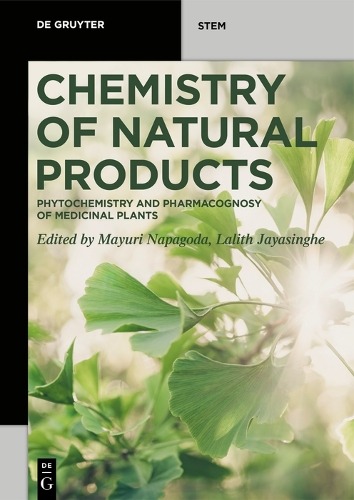
Chemistry of natural products : phytochemistry and pharmacognosy of medicinal plants
Plants produce secondary metabolites that humans harness for their own benefit. About half of drugs currently in clinical use are based on these chemicals found in nature. Chemistry of Natural Products covers secondary metabolites present in medicinal plants and their biosynthesis, biological activities, and isolation and separation techniques.
Aquatic medicinal plants
The use of medicinal plants in herbal and modern medicine has gained popularity over the last few decades due to consumers taking more natural approaches to medicine. Aquatic medicinal plants are rich in bioactive compounds and demonstrate various commercial, nutraceutical, and biological applications. Aquatic Medicinal Plants offers the reader a wealth of information on uses of bioactive components of these plants, along with crucial references, and explains their traditional uses, phytochemistry, and pharmacological properties.
