



الصفحة 1
الصفحة 1

Mobile Information Systems II ; IFIP Working Conference on Mobile Information Systems, MOBIS 2005, Leeds, UK, December 6-7, 2005
Contains the proceedings of the second IFIP TC8 Working Conference on Mobile Information Systems which was held in December 2005 in Leeds, UK and sponsored by the International Federation of Information Processing (IFIP). Mobile Information Systems II aims to: · Clarify differences and similarities between the development of mobile and more traditional information systems. · Investigate the organizational impact of mobile information systems. · Investigate the 'e to m shift' , for example in m-Commerce relative to e-Commerce. · Investigate mobile commerce applications combined with the advantages of mobile communications technologies, the drivers of which have been identified as ubiquity, accessibility, security, convenience, localization, instant connectivity, and personalization. · Evaluate existing and newly developed approaches for the analysis, design, implementation, and evolution of mobile information systems. · Investigate technical issues and the constraints they impose on mobile information systems functionalities and design.
Mobile Information Systems ; Vol. 158 : IFIP TC 8 Working Conference on Mobile Information Systems (MOBIS) 15-17 September 2004, Oslo, Norway
This book contains the proceedings of the IFIP TC8 Working Conference on Mobile Information Systems, which was held in September 2004 in Oslo, Norway and sponsored by the International Federation for Information Processing (IFIP). Mobile Information Systems aims to: Clarify differences and similarities between the development of mobile vs. more traditional information system. Investigate the organizational impact of mobile information systems Investigate mCommerce relative to eCommerce Investigate mobile commerce applications combined with the advantages of mobile communications technologies, the drivers of which have been identified as ubiquity, reachability, security, convenience, localization, instant connectivity and personalization. Evaluate existing and newly developed approaches for analysis, design, implementation, and evolution of mobile information systems. Investigate technical issues and the constraints they pose on mobile information systems functionalities and design

Metainformatics ; International Symposium, MIS 2004, Salzburg, Austria, September 15-18, 2004, Revised Selected Papers
Constitutes the refereed post-proceedings of the Metainformatics Symposium, MIS 2004, held in Salzburg, Austria. This book reviews 17 papers that are devoted to finding useful abstractions, analytical frameworks, and systems that improve the understanding of the underlying structure of disciplines and families of systems within computer science.

Interactive TV : A shared experience ; 5th European Conference, EuroITV 2007, Amsterdam, the Netherlands, May 24-25, 2007, Proceedings
This book constitutes the refereed proceedings of the 5th European Conference on Interactive Television, EuroITV 2007, held in Amsterdam, The Netherlands, May 2007. The papers are organized in topical sections on social TV systems, user studies, the future of TV, social TV evaluation, personalization, and mobile TV.
Intelligent Techniques for Web Personalization ; IJCAI 2003 Workshop, ITWP 2003, Acapulco, Mexico, August 11, 2003, Revised Selected Papers
Web personalizationcan be de?ned as any set of actions that can tailor the Web experience to a particular user or set of users. The experience can be something as casualas browsinga Web site oras (economically)signi?cantas tradingstock or purchasing a car. The actions can range from simply making the presentation more pleasing to anticipating the needs of a user and providing customized and relevant information. To achieve e?ective personalization, organizations must rely on all available data, including the usage and click-stream data (re?e- ing user behavior), the site content, the site structure, domain knowledge, user demographics and pro?les. In addition, e?cient and intelligent techniques are needed to mine these data for actionable knowledge, and to e?ectively use the discovered ...

Innovations in E-learning, Instruction Technology, Assessment and Engineering Education
Innovations in E-learning, Instruction Technology, Assessment and Engineering Education is a collection of world class paper articles addressing the following topics: E-Learning including development of courses and systems for technical and liberal studies programs; online laboratories; intelligent testing using fuzzy logic; evaluation of on line courses in comparison to traditional courses; mediation in virtual environments; and methods for speaker verification. Instruction Technology including internet textbooks; pedagogy-oriented markup languages; graphic design possibilities; open source classroom management software; automatic email response systems; tablet-pcs; personalization using web mining technology; intelligent digital chalkboards; virtual room concepts for cooperative scientific work; and network technologies, management, and architecture.

Geospatial Services and Applications for the Internet
This book covers a wide spectrum of techniques, algorithms and modeling methodologies that address the challenges in service-oriented architectural design for GIS, and intelligent processing for spatial queries. This book presents in-depth studies on performance improvement, data integration, service personalization and interoperation between geospatial services. These studies provide the reader with a wide spectrum of examples and case studies on the development of GIS for hydrological applications, electrical power supply applications, land usage and urban planning, and NASA’s Earth image datasets dissemination.

From Data and Information Analysis to Knowledge Engineering ; Proceedings of the 29th Annual Conference of the Gesellschaft für Klassifikation e.V., University of Magdeburg, March 9-11, 2005
The volume contains revised versions of selected papers presented during the 29th Annual Conference of the Gesellschaft für Klassifikation (GfKl), the German Classification Society, held at the Otto-von-Guericke-University of Magdeburg, Germany, in March 2005. In addition to papers on the traditional subjects Classification, Clustering, and Data Analysis, there are many papers on a wide range of topics with a strong relation to Computer Science. Examples are Text Mining, Web Mining, Fuzzy Data Analysis, IT Security, Adaptivity and Personalization, and Visualization. Application-oriented topics include Economics, Marketing, Banking and Finance, Medicine, Bioinformatics, Biostatistics, and Music Analysis.

Flexible Query Answering Systems ; 7th International Conference, FQAS 2006, Milan, Italy, June 7-10, 2006
This book constitutes the refereed proceeding of the 7th International Conference on Flexible Query Answering Systems, FQAS 2006, held in Milan, Italy in June 2006. The 60 revised full papers presented were carefully reviewed and selected from numerous submissions. The papers are organized in topical sections on flexibility in database management and quering, vagueness and uncertainty in XML quering and retrieval, information retrieval and filtering, multimedia information access, user modeling and personalization, knowledge and data extraction, intelligent information extraction from text, and knowledge representation and reasoning.

E-Service Intelligence : Methodologies, Technologies and Applications
Business organizations and governments are nowadays developing and providing internet based electronic services (e-services) featuring various intelligent functions. E-Service Intelligence integrates intelligent techniques into e-service systems for realizing intelligent internet information searching, presentation, provision, recommendation, online system design, implementation, and assessment to internet users. This book offers a thorough introduction and systematic overview of the new field and covers the state-of-the-art of the research and development in E-Service Intelligence ranging from e-services and/or intelligent techniques to web information presentation, search, and mining, to personalization, privacy, and trust in e-services, to e-service evaluation, optimization and knowledge discovery, and to intelligent e-service system developments.

Embedded Security in Cars : Securing Current and Future Automotive IT Applications
Lemke, Paar, and Wolf collect in this volume a state-of-the-art overview on all aspects relevant for IT security in automotive applications. After an introductory chapter written by the editors themselves, the contributions from experienced experts of different disciplines are structured into three parts. "Security in the Automotive Domain" describes applications for which IT security is crucial, like immobilizers, tachographs, and software updates. "Embedded Security Technologies" details security technologies relevant for automotive applications, e.g., symmetric and asymmetric cryptography, and wireless security. "Business Aspects of IT Systems in Cars" shows the need for embedded security in novel applications like location-based navigation systems and personalization.

Digital Libraries : Research and Development; 1st International DELOS Conference, Pisa, Italy, February 13-14, 2007, Revised Selected Papers
This book presented similarity search, architectures, personalization, interoperability, evaluation, miscellaneous, preservation, video data management, 3D objects, and peer to peer.

Customer Data Platforms : Use People Data to Transform the Future of Marketing Engagement
Marketers are faced with a stark and challenging dilemma: customers demand deep personalization, but they are increasingly leery of offering the type of personal data required to make it happen. As a solution to this problem, Customer Data Platforms have come to the fore, offering companies a way to capture, unify, activate, and analyze customer data.
Marketing 5.0 : Technology for Humanity
Explains the greatest problem facing marketers today how to integrate three major movements that are changing global markets and customer behavior: Dramatic advances in technology such as AI, Sensors, and the Internet of Things, which are enabling extreme forms of customer targeting and personalization; Dramatic shifts in customer behavior, such as Whatever-Whenever-Wherever (WWW) and the differences between Generations X, Y, Z, and Alpha; And dramatic shifts in business models such as Everything as a Service, Physical/Digital business models.

Knowledge-Based Intelligent Information and Engineering Systems ; 12th International Conference, KES 2008, Zagreb, Croatia, September 3-5, 2008, Proceedings, Part II
The papers present a wealth of original research results from the field of intelligent information processing in the broadest sense; topics covered in the second volume are artificial intelligence driven engineering design optimization; biomedical informatics: intelligent information management from nanomedicine to public health; communicative intelligence; computational intelligence for image processing and pattern recognition; computational intelligence in human cancer research; computational intelligence techniques for Web personalization; computational intelligent techniques for bioprocess modelling, monitoring and control; intelligent computing for Grid.

Big data and artificial intelligence in digital finance : Increasing personalization and trust in digital finance using big data and AI
This book presents how cutting-edge digital technologies like Machine Learning, Artificial Intelligence (AI), and Blockchain are set to disrupt the financial sector. The book illustrates how recent advances in these technologies facilitate banks, FinTechs, and financial institutions to collect, process, analyze, and fully leverage the very large amounts of data that are nowadays produced and exchanged in the sector. To this end, the book also introduces some of the most popular Big Data, AI and Blockchain applications in the sector, including novel applications in the areas of Know Your Customer (KYC), Personalized Wealth Management and Asset Management, Portfolio Risk Assessment, as well as variety of novel Usage-based Insurance applications based on Internet-of-Things data.
Artificial intelligence for customer relationship management : Solving customer problems
This book describes a number of applications of Artificial Intelligence in the field of Customer Relationship Management with the focus of solving customer problems. We design a system that tries to understand the customer complaint, his mood, and what can be done to resolve an issue with the product or service. To solve a customer problem efficiently, we maintain a dialogue with the customer so that the problem can be clarified and multiple ways to fix it can be sought. We introduce dialogue management based on discourse analysis: a systematic linguistic way to handle the thought process of the author of the content to be delivered. We analyze user sentiments and personal traits to tailor dialogue management to individual customers. We also design a number of dialogue scenarios for CRM with replies following certain patterns and propose virtual and social dialogues for various modalities of communication with a customer.
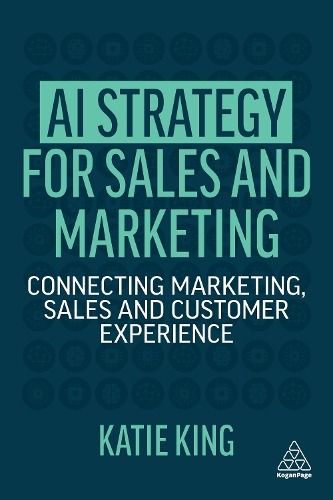
AI Strategy for sales and marketing : Connecting marketing, sales and customer experience
AI Strategy for Sales and Marketing presents a framework for understanding how AI can boost customer-centricity and sales by creating a connected strategy that delivers value today and into the future. Supported by practical tips and advice throughout, it covers topics including personalization, upskilling, customer experience for both on and offline shopping channels and the importance of using AI responsibly to create consumer trust.

Advances in web based learning -- ICWL 2006 ; 5th International conference, Penang, Malaysia, July 19-21, 2006, Revised Papers
The conference program was organized in a single-track 3-day workshop. It included a tutorial, a keynote talk, and oral/poster paper presentations in several sessions dedicated to specific topics. Session topics included “Personalization in E-Learning,” “Designs, Model and Framework of E-Learning Systems,” “Implementations and Evaluations of E-Learning Systems,” “Tools in E-Learning,” and “Learning Resource Deployment, Organization and Management. ” We received a total of 99 submissions from all over the world.

Advances in semantic media adaptation and personalization
Realizing the growing importance of semantic adaptation and personalization of media, the editors of this book brought together leading researchers and practitioners of the field to discuss the state-of-the-art, and explore emerging exciting developments. This volume comprises extended versions of selected papers presented at the 1st International Workshop on Semantic Media Adaptation and Personalization (SMAP 2006).
