


تحسين النتائح
ترتيب حسب
من
الى

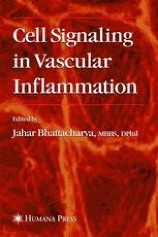
Although inflammatory disease of the vascular bed of the lung is a major cause of morbidity and mortality in both adult and pediatric age groups, the importance of vascular biology to its understanding, and in developing novel therapeutics, has been overlooked. In Cell Signaling in Vascular Inflammation, leading basic and clinical researchers review the signal transduction mechanisms responsible for lung inflammation, including vascular hyperpermeability, white cell accumulation, and vascular remodeling. The authors cut across disciplines to bring together a broad-based presentation of inflammatory challenge, both in the initial phases of the inflammatory response, as well as in the more prolonged phase of genomic involvement.
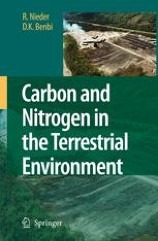
Carbon and Nitrogen in the Terrestrial Environment is a comprehensive, interdisciplinary description of C and N fluxes between the atmosphere and the terrestrial biosphere; issues related to C and N management in different ecosystems and their implications for the environment and global climate change; and the approaches to mitigate emission of greenhouse gases.Drawing upon the most up-to-date books, journals, bulletins, reports, symposia proceedings and internet sources documenting interrelationships between different aspects of C and N cycling in the terrestrial environment, Carbon and Nitrogen in the Terrestrial Environment fills the gap left by most of the currently available books on C and N cycling. They either deal with a single element of an ecosystem, or are related to one or a few selected aspects like soil organic matter (SOM) and agricultural or forest management, emission of greenhouse gases, global climate change or modeling of SOM dynamics.
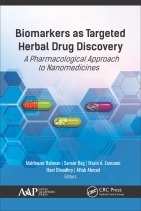
Looks at the applications of biomarkers as important tools for herbal drug discovery, presenting research on phytoconstituents with advanced nanotechnological applications for healthcare benefits. Herbal drug discovery based on biomarkers is an emerging area in complementary and alternative medicine that has tremendous potential in healthcare. Conventional medications have limited efficacy and high toxicity, whereas herbal drugs are said to provide wide structural diversity that is not usually seen with conventional/synthetic drug molecules. Recognition of various herbal constituents, such as terpenoids, fatty acids, flavonoids and steroids, are well explored in the management and treatment of various disorders in this volume. These agents target various biomarkers such as nitric oxide (NO), cytokines, chemokines, adhesion molecules, NF- kβ, lipoxygenase (LOX), and arachidonic acid. Reviews the literature on inflammatory biomarkers in the treatment of diseases Looks at the development of herbal drug discovery based on biomarkers Explores emerging concepts of nanomedicines for herbal drug delivery Takes an interdisciplinary approach, with application to disciplines related to medical, pharmaceutical, biotechnological, Ayurvedic, Unani and biomedical engineering fields
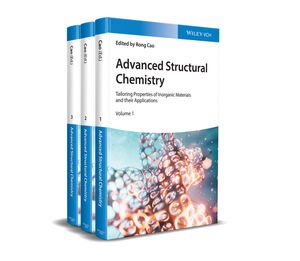
Advanced Structural Chemistry clarifies the relationships between synthesis and structure, as well as structure and property, both of which are central to the creation of new materials with unique functions. In addition to subjects like the syntheses of metal-oxide clusters, metal-organic cages, and metal-organic frameworks with tailored optical, electric, ferroelectric, magnetic, adsorption, separation, and catalytic properties, the accomplished editor Rong Cao provides readers with information on a wide variety of topics
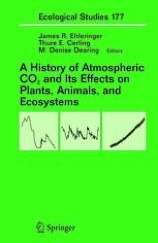
The authors address the future role of atmospheric CO2 and its likely effects on ecosystems. This book incorporates the advances of various earth science, environmental, and ecological fields into an overall account of global change and the changing dynamics of life on Earth.
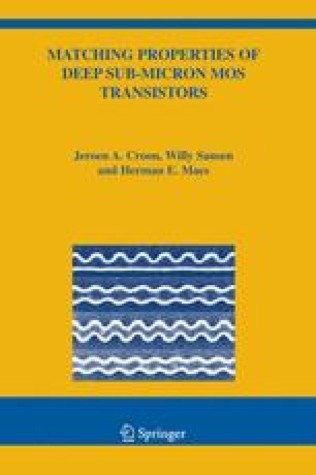
Matching Properties of Deep Sub-Micron MOS Transistors examines this interesting phenomenon. Microscopic fluctuations cause stochastic parameter fluctuations that affect the accuracy of the MOSFET. For analog circuits this determines the trade-off between speed, power, accuracy and yield.

This book focuses on hydraulic calcium silicate-based materials available in clinical dentistry, used as pulp capping materials, root canal sealers, root-end fillers, or root repair materials and which offer improved properties and easier clinical application compared with the original mineral trioxide aggregate. The book introduces the current classification of bioceramic materials and explains their characterization and their physicochemical and biological properties.
Covers synthesis, characterization, and applications of diverse types of nanomaterials. Specifically, it describes carbon, graphene, and graphene oxide-based nanomaterials and their use for environmental remediation. Nanomaterials for concrete coating applications and advances in the processing of high-entropy alloys by means of mechanical alloying are also covered. Subsequently, the use of nanomaterials in endodontics and the use of nanotechnology strategies to enhance restorative resin-based dental nanomaterials are reported.
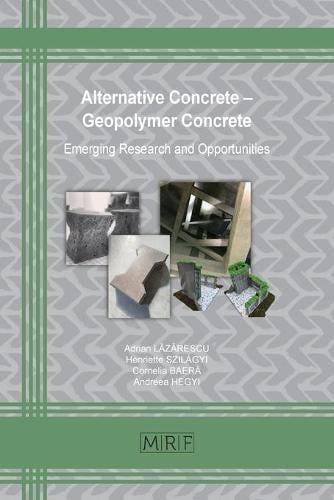
Focuses on fly ash-based alkali-activated geopolymer concrete, its production and characteristic properties. The re-use of waste materials and industrial by-products, such as fly ash, is not only economically of interest but also helps to reduce carbon dioxide emissions. The carbon footprint of these materials is much lower than that of concrete using ordinary Portland cement. They thus offer new sustainable solutions to the construction industry.

Oxide Design, Co. has collected and curated this latest collection of stunning letterheads and logos. From logos to labels, business cards to envelopes, the creative techniques and full-color images portrayed in this broad range of work inspires new design solutions for age-old challenges that beg for a fresh approach.

This book presents materials fundamentals of novel gate dielectrics that are being introduced into semiconductor manufacturing to ensure the continuous scalling of the CMOS devices. This is a very fast evolving field of research so we choose to focus on the basic understanding of the structure, thermodunamics, and electronic properties of these materials that determine their performance in device applications. Most of these materials are transition metal oxides. Ironically, the d-orbitals responsible for the high dielectric constant cause sever integration difficulties thus intrinsically limiting high-k dielectrics. Though new in the electronics industry many of these materials are wel known in the field of ceramics, and we describe this unique connection. The complexity of the structure-property relations in TM oxides makes the use of the state of the art first-principles calculations necessary. Several chapters give a detailed description of the modern theory of polarization, and heterojunction band discontinuity within the framework of the density functional theory. Experimental methods include oxide melt solution calorimetry and differential scanning calorimetry, Raman scattering and other optical characterization techniques, transmission electron microscopy, and x-ray photoelectron spectroscopy.

Low-Frequency Noise in Advanced CMOS Devices begins with an introduction to noise, describing the fundamental noise sources and basic circuit analysis. The characterization of low-frequency noise is discussed in detail and useful practical advice is given. The various theoretical and compact low-frequency (1/f) noise models in MOS transistors are treated extensively providing an in-depth understanding of the low-frequency noise mechanisms and the potential sources of the noise in MOS transistors. Advanced CMOS technology including nanometer scaled devices, strained Si, SiGe, SOI, high-k gate dielectrics, multiple gates and metal gates are discussed from a low-frequency noise point of view. Some of the most recent publications and conference presentations are included in order to give the very latest view on the topics. The book ends with an introduction to noise in analog/RF circuits and describes how the low-frequency noise can affect these circuits.

In this book control algorithms are represented by the linear graph-schemes of algorithms (GSA), where the number of operator vertices is not less than 75% of the total number of all algorithm vertices. A special class of control units named as compositional microprogram control units (CMCU) is proposed as the best way for interpretation of linear control algorithms.
The development of a direct, inexpensive, and efficient method for converting solar energy into a portable, clean fuel would allow elimination of the growing problems associated with the ever increasing use of fossil fuels and the reality of their rapid depletion. As the title suggests, Light, Water, Hydrogen: The Solar Generation of Hydrogen by Water Photoelectrolysis, considers the combination of water and light with a suitable semiconductor to achieve a safe, renewable and therefore inexhaustable means for hydrogen generation via the splitting of the water molecule, or photoelectrolysis.
Both experimental and theoretical studies of nearly every aspect of the LDH structure are discussed, including the range of metal cations and interlayer anions, M 3+ /M 2+ ratios, LDH polytypes, arrangement of the "interlayer" anions and water molecules, molecular modeling and molecular dynamics simulations, and the long- and short-range order in both the layers and interlayer galleries. Of especial value is the treatment of the more detailed aspects of the LDH structure that are still unresolved.
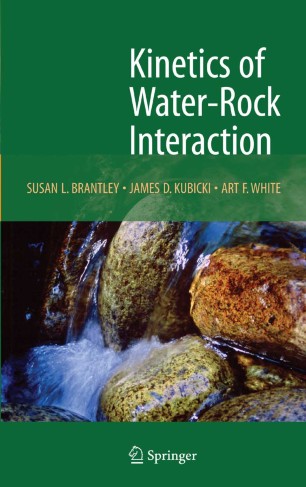
Systems at the surface of the Earth are continually responding to energy inputs derived from solar radiation or from the radiogenic heat in the interior. These energy inputs drive plate movements and erosion, exposing metastable mineral phases at the Earth’s surface. In addition, these energy fluxes are harvested and transformed by living organisms. As long as these processes persist, chemical disequilibrium at the Earth’s surface will be perpetuated. Chemical disequilibrium is also driven by human activities related to production of food, extraction of water and energy resources, and burial of wastes. To understand how the surface of the Earth will change over time, we must understand the rates at which reactions occur and the chemical feedbacks that relate these reactions across extreme temporal and spatial scales. This book addresses fundamental and applied questions concerning the rates of water-rock interactions driven by tectonic, climatic, and anthropogenic forcings.

This book asks just how climate-smart our food really is. It follows an average day's worth of food and drink to see where it comes from, how far it travels, and the carbon price we all pay for it. From our breakfast tea and toast, through breaktime chocolate bar, to take-away supper, Dave Reay explores the weather extremes the world’s farmers are already dealing with, and what new threats climate change will bring. Readers will encounter heat waves and hurricanes, wildfires and deadly toxins, as well as some truly climate-smart solutions. In every case there are responses that could cut emissions while boosting resilience and livelihoods. Ultimately we are all in this together, our decisions on what food we buy and how we consume it send life-changing ripples right through the global web that is our food supply.
Specifically covered are the following aspects: exposure from the environment and the diet; biomarkers of exposure; risk assessment; epidemiology; mechanism of formation in food; biological alkylation of amino acids, peptides, proteins, and DNA by acrylamide and its epoxide metabolite glycidamide; neurotoxicity, reproductive toxicity, and carcinogenicity; protection against adverse effects; and possible approaches to reducing levels in food. Cross-fertilization of ideas among several disciplines in which an interest in acrylamide has developed, including food science, pharmacology, toxicology, and medicine, will provide a better understanding of the chemistry and biology of acrylamide in food, and can lead to the development of food processes to decrease the acrylamide content of the diet.
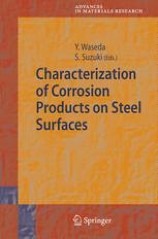
It is well known that corrosion products, i.e. rust, on iron and steel surfaces cannot be assigned a typical crystallographic structure with long-range order. In fact, the structure of rust is considered to be very complicated, and some forms of rust are assigned to the amorphous state for this reason. Accurate information about the atomic-scale structure of rust is important to shed light on corrosion mechanisms of metallic materials. And, since life of steel structures is often dominated by environmental degradation or corrosion of the surface, the structure of the rust formed on iron and steel surfaces during prolonged exposure to air is of great interest. This book describes the fundamental aspects of materials characterization for the ferric oxyhydroxides formed on steel surfaces.
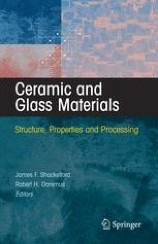
Ceramic and Glass Materials: Structure, Properties and Processing is a concise and comprehensive guide to the key ceramic and glass materials used in modern technology. Each chapter focuses on the structure-property relationships for these important materials and expands the reader’s understanding of their nature by simultaneously discussing the technology of their processing methods. In each case, the resulting understanding of the contemporary applications of the materials provides insights as to their future roles in twenty first century engineering and technology. Organized to be a practical and comprehensive resource, each chapter is dedicated to a specific material such as: alumina, mullite, sillimanite minerals, aluminates, quartz and silicas, refractory oxides, clays, concrete and cement, lead compounds, and zirconia.

سوريا - اتستراد درعا - غباغب
+963-15 2050 - 15 860 380 /1/2/3 - 11 662 3900