


تحسين النتائح
ترتيب حسب
من
الى

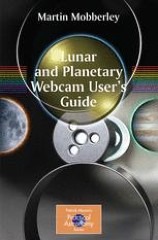
In the Lunar and Planetary Webcam User’s Guide Martin Mobberley de-mystifies the jargon of webcams and computer processing, and provides detailed hints and tips for imaging the Sun, Moon and planets with a webcam. He looks at each observing target separately, describing and explaining all specialised techniques in context.
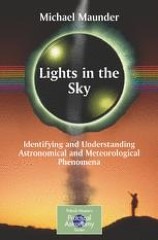
Lights in the Sky is a truly comprehensive guide to observing, identifying, and imaging sky glows and other unusual atmospheric/astronomical phenomena, in both the night and daytime skies.
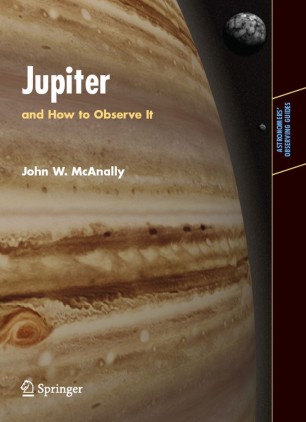
Jupiter is one of the most spectacular observing targets for amateur astronomers. There are various books about observing the planets, and several about Jupiter itself, but this is the only book to deal with the giant planet - its formation, structure, and incredible physics - as well as with the practical aspects of observation of the planet and its moons.

The average person can name more bird species than they think, but do we really know what a bird “species” is? This open access book takes up several fascinating aspects of bird life to elucidate this basic concept in biology. From genetic and physiological basics to the phenomena of bird song and bird migration, it analyzes various interactions of birds – with their environment and other birds. Lastly, it shows imminent threats to birds in the Anthropocene, the era of global human impact.This book brings together various disciplines involved in observing bird species come into existence, modify, and vanish. It is a rich resource for bird enthusiasts who want to understand various processes at the cutting edge of current research in more detail. At the same time it offers students the opportunity to see primarily unconnected, but booming big-data approaches such as genomics and biogeography meet in a topic of broad interest. Lastly, the book enables conservationists to better understand the uncertainties surrounding “species” as entities of protection.
Creating some links between control feedback and biology modeling communities based on similarities in modeling, observing and perceiving alive structures, and analyzing interconnections between biological structures and subsystems was the main objective of this volume. The idea of this book was conceived in the context mentioned above with the objective to help in claiming many of the problems for control researchers, starting discussions and opening interactive debates between the control and biology communities, and, finally, to alert graduate students to the many interesting ideas at the frontier between control feedback theory and biology.
Anyone who has used a binocular telescope or even wide-field binoculars to look at the night sky will know just how breathtakingly beautiful the view can be when you observe with both eyes. Observing galaxies and nebulae with ‘regular’ prismatic binoculars is just a beginning. Binocular eyepieces and adapters can be added to almost any commercially-made astronomical telescope, and of course specialized astronomical binoculars can be assembled or purchased complete. These range from modest instruments to giants that are basically two large telescopes mounted together. Binocular Astronomy contains everything you’ll need to know about this exciting branch of astronomical observing.
The uniquely beautiful light display of an aurora is the result of charged particles colliding with tenuous atmospheric oxygen and nitrogen, more than 60 miles above the Earth, when the magnetosphere is disturbed by changes in the solar wind. Often - and incorrectly - regarded as being confined to high northern and southern latitudes, major auroral displays are visible from even the southern USA and the south of England, and occur perhaps twenty times in each eleven-year sunspot cycle. This book describes the aurora from the amateur observational viewpoint, discusses professional studies of auroral and geomagnetic phenomena to put amateur work in context, and explains how practical observers can go about observing and recording auroral displays.
In this book we focus on sensors on Low Earth Orbit (LEO) satellites, which exploit solar, lunar, stellar, GNSS (Global Navi- tion Satellite Systems), and LEO-crosslink signals for observing the Earth's - mosphere and climate. The methods all share the key properties of self-calibration, high accuracy and vertical resolution, global coverage, and (if using radio signals) all-weather ca- bility. The atmospheric parameters obtained extend from the fundamental va- ables temperature, density, pressure and water vapor via trace gases, aerosols and cloud liquid water to ionospheric electron density. Occultation data are therefore of high value in a wide range of fields including climate monitoring and research, atmospheric physics and chemistry, operational meteorology, and ionospheric physics.

سوريا - اتستراد درعا - غباغب
+963-15 2050 - 15 860 380 /1/2/3 - 11 662 3900