



الصفحة 1
الصفحة 1

Nuucleic acids in medicinal chemistry and chemical biology : Drug development and clinical applications
Delivers a comprehensive overview of the chemistry and biology of nucleic acids and their therapeutic applications. The book emphasizes the latest research in the field, including new technologies like CRISPR that create novel possibilities to edit mutated genes at the genomic DNA level and to treat inherited diseases and cancers. The authors explore the application of modified nucleosides and nucleotides in medicinal chemistry, a variety of current topics on nucleic acid chemistry and biology, nucleic acid drugs used to treat disease, and more. They also probe new domains of pharmaceutical research, offering the reader a wealth of new drug discovery opportunities emerging in this dynamic field

New Technologies, Mobility and Security
NTMS’2007 is the first IFIP International Conference on New Technologies, Mobility and Security that was held from May 2 to May 4, 2007 in Paris, France. NTMS'2007 aims at fostering advances in the areas of New Technologies, Wireless Networks, Mobile Computing, Ad hoc and Ambient Networks, QoS, Network Security and E-commerce, to mention a few, and provides a dynamic forum for researchers, students and professionals to present their state-of-the-art research and development in these interesting areas. The event was combined with tutorial sessions and workshops. Tutorials preceded the main program, aiming at the dissemination of mature knowledge and technology advances in the field. One Workshop immediately followed the main conference, offering the opportunity for a more focused exchange of ideas and presentation of on-going research relevant to selected topics.

New Technologies in Radiation Oncology
This book provides an overview of recent advances in radiation oncology, many of which have originated from physics and engineering sciences. After an introductory section on basic aspects of 3D medical imaging, the role of 3D imaging in the context of radiotherapy is explored in a series of chapters on the various modern imaging techniques. A further major section addresses 3D treatment planning for conformal radiotherapy, with consideration of both external radiotherapy and brachytherapy. Subsequently the modern techniques of 3D conformal radiotherapy are described, including stereotactic radiotherapy, intensity-modulated radiation therapy, image-guided and adaptive radiotherapy, and radiotherapy with charged particles. More clinically oriented chapters explore the use of brachytherapy in patients with prostate cancer, cardiovascular disorders and breast cancer. The book concludes with a section on quality assurance.

Natural Products : Drug Discovery and Therapeutic Medicine
Although the natural product drug discovery programs of the large drug companies are now equaled by programs for the high throughput screening of synthetic compounds generated through combinatorial chemistry, natural compounds still hold great promise to overcome such problems as antibiotic resistance, the emergence of new diseases, the failure to conquer old diseases, and the toxicity of some contemporary medical products. In Natural Products: Drug Discovery and Therapeutic Medicine, a panel of recognized experts and leaders in the field discuss the past successes of natural products as medicines and review future possibilities arising from both conventional and new technologies. High-performance liquid chromatography profiling, combinatorial synthesis, genomics, proteomics, DNA shuffling, bioinformatics, and genetic manipulation all now make it possible to rapidly evaluate the activities of extracts as well as purified components derived from microbes, plants, and marine organisms. The authors apply these methods to new natural product drug discovery, to accessing microbial diversity, to investigating specific groups of products (Chinese herbal drugs, antitumor drugs from microbes and plants, terpenoids, and arsenic compounds), and to exploiting specific sources (the sea, rainforest, and endophytes). These new opportunities show how research and development trends in the pharmaceutical industry can advance to include both synthetic compounds and natural products, and how this paradigm shift can be more productive and efficacious.

Nato And Terrorism : On Scene : New Challenges for First Responders and Civil Protection
This book provides information about how leading agencies across the NATO membership are preparing to confront and respond to terrorists deploying Weapons of Mass Destruction (WMD), Weapons of Mass Killing (WMK) and Weapons of Mass Disruption (WMDi). Based on contributions by experts from NATO member states, Israel and the Russian Federation, this book offers information on fourth generation warfare as a new challenge to first responders. It also provides a variety of insights into methods for preparing for and responding to WMD-, WMK-, and WMDi-events, using new technologies and strategies. Furthermore, the book offers solution for restoring the community to functioning after such a major terror attack. Topics include preparing, planning, operations, equipment, training and unique applications of existing technologies for countering terrorist attacks against cities and their infrastructure.

Multimedia technology and enhanced learning ; 2nd EAI International conference, ICMTEL 2020, Leicester, UK, April 10-11, 2020, Proceedings, Part II
This two-volume book constitutes the refereed proceedings of the Second International Conference on Multimedia Technology and Enhanced Learning, ICMTEL 2020, held in Leicester, United Kingdom, in April 2020. Due to the COVID-19 pandemic all papers were presented in YouTubeLive. The 83 revised full papers have been selected from 158 submissions. They describe new learning technologies which range from smart school, smart class and smart learning at home and which have been developed from new technologies such as machine learning, multimedia and Internet of Things.
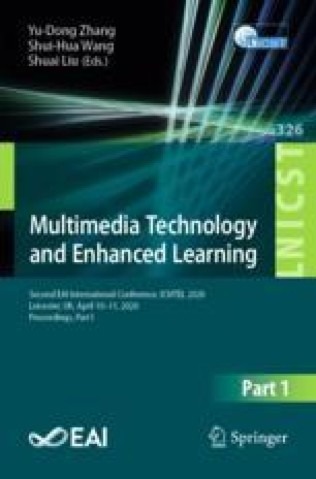
Multimedia Technology and Enhanced Learning ; 2nd EAI International Conference, ICMTEL 2020, Leicester, UK, April 10-11, 2020, Proceedings, Part I
This two-volume book constitutes the refereed proceedings of the Second International Conference on Multimedia Technology and Enhanced Learning, ICMTEL 2020, held in Leicester, United Kingdom, in April 2020. Due to the COVID-19 pandemic all papers were presented in YouTubeLive. The 83 revised full papers have been selected from 158 submissions. They describe new learning technologies which range from smart school, smart class and smart learning at home and which have been developed from new technologies such as machine learning, multimedia and Internet of Things.

Multi-dimensional Approaches Towards New Technology : Insights on Innovation, Patents and Competition
This open access edited book captures the complexities and conflicts arising at the interface of intellectual property rights (IPR) and competition law. To do so, it discusses four specific themes: (a) policies governing functioning of standard setting organizations (SSOs), transparency and incentivising future innovation; (b) issue of royalties for standard essential patents (SEPs) and related disputes; (c) due process principles, procedural fairness and best practices in competition law; and (d) coherence of patent policies and consonance with competition law to support innovation in new technologies.

Molecular Biomethods Handbook
Recent advances in the biosciences have led to a range of powerful new technologies, particularly nucleic acid, protein and cell-based methodologies. The most recent insights have come to affect how scientists investigate and define cellular processes at the molecular level. Molecular Biomethods Handbook, 2nd Edition expands upon the techniques included in the first edition, providing theory, outlines of practical procedures, and applications for a range of techniques. Part A of the book describes nucleic acid methods, such as gene expression profiling, microarray analysis and quantitative PCR. In Part B, protein and cell-based methods are outlined, in subjects ranging from protein engineering to high throughput screening. Written by a well-established panel of research scientists, Molecular Biomethods Handbook, 2nd Edition provides an up-to-date collection of methods used regularly in the authors’ own research programs.

Micro Cogeneration : Towards Decentralized Energy Systems
The need for replacement is an extremely important driving force for the current transformation, forcing conventional and new technologies to compete for a role in the future energy supply. The overall transformation of electricity systems is neither driven nor shaped by technical or societal modifications alone, but rather by a rich diversity of processes in the realms of technology, politics, society and economy.

Innovations and new developments in craniomaxillofacial reconstruction
Provides a comprehensive review of the new technologies that are having a tremendous impact on the complex field of craniomaxillofacial reconstructive surgery. The coverage encompasses the use of biomaterials and tissue engineering, virtual planning and CAD/CAM techniques, the various applications of computer-assisted surgery, and intraoperative navigation.

Information Technology Solutions for Healthcare
This book presents the current and future trends in the transformation of healthcare services in the Information Society Era and is of great relevance to informatics professions, clinical managers and all clinicians using these new technologies as part of their practice.

Information Storage : A Multidisciplinary Perspective
Examines some of the underlying processes behind different forms of information management, including how we store information in our brains, the impact of new technologies such as computers and robots on our efficiency in storing information, and how information is stored in families and in society.

Information and communication technologies in tourism 2007 ; Proceedings of the International Conference in Ljubljana, Slovenia, 2007
The 14th ENTER Conference had the theme "Connecting Destinations: New Technologies, New Thinking, New Solutions." This focus reflects efforts to gather cutting-edge academic research and industry applications to address the challenges of ICT advances fostering a globally networked and connected village. The diverse studies including theoretical, empirical, experimental, case studies and policy, all address a myriad of topics, themes, disciplines and approaches, thereby ensuring that any reader will find several studies of interest to them. This year’s proceedings are comprised of 50 research papers that have been double – blind peer reviewed by at three reviewers and represent the global corpus of state-of-the art ICT Travel and Tourism research.

Information and communication technologies in tourism 2005 ; Proceedings of the International Conference in Innsbruck, Austria, 2005
The key objectives of this premier conference in ICT in travel and tourism are the dissemination of research findings and strong interaction among researchers and practitioners. The conference theme this year is "eBusiness is here ? – what is next?" The future is being explored by researchers from all perspectives – papers examine the basic architectures and systems underlying how toursim information is provided and how the marketplace is responding. Trip advisory research is now moving from the speculative to the sophisticated reflecting the rapidly changing individual skill sets, motivations and goals of today's tourist while an emerging collection of work is investigating the growing phenomenon of collaboration and community-building. A close examiniation of the 51 research papers will reveal the full extent of marketing-oriented research and show how strong the link is between ICT developments per se and business adoption and use of the new technologies and systems.

Human Cytomegalovirus
The golden age of cytomegalovirus research was ushered in during the late 1970s and early 1980s by a set of powerful new technologies that included restriction enzymes, DNA cloning, DNA sequencing, and open reading frame prediction. The genetic manipulation and propagation of novel CMV strains was accelerated with the app- cation of bacterial artificial chromosome technology. Today, we still struggle to understand the full spectrum of disease associated with human CMV. To the molecular biologist, CMV is a master of regulation in the eukaryotic cell where it either replicates or remains latent. To the immunologist, CMV is a master of immune evasion with tools to escape both the innate and acquired immune responses. The use of animal models with non-human CMVs has become significantly more sophisticated and tied to a more certain understanding of the interrelationships of non-human and human CMV genes.

Greening the Industrial Facility : Perspectives, Approaches, and Tools
This book fills a critical gap as a textbook and reference book on the comprehensive environmental impacts of industrial organizations. It is intended for both upper-level undergraduate and beginning graduate students in environmental studies or engineering, and, more broadly, for practicing managers and engineers seeking to improve industrial processes. Nineteen chapters, each focusing on an industrial sector, from resource extraction through fabrication and manufacturing to recycling, evaluate the sector’s inherent "potential to pollute" by providing an overview of typical sector operations and their environmental implications. Beyond outlining and providing frameworks for assessing industrial facilities’ contemporary interactions with the environment (energy and water use, material throughput and hazard, and pollution potential), the book provides forward-looking analyses concerning how new technologies and practices can transform environmentally degrading effects of industry. It also addresses how managers can navigate these changes and move their industrial organizations towards environmental sustainability over the long term.

Green techniques for organic synthesis and medicinal chemistry
Presents comprehensive coverage of green chemistry techniques for organic and medicinal chemistry applications, summarizing the available new technologies, analyzing each technique’s features and green chemistry characteristics, and providing examples to demonstrate applications for green organic synthesis and medicinal chemistry.

Governance of Communication Networks : Connecting Societies and Markets with IT
The articles collected in this book shed light on several aspects that are crucial for the success of global communication networks: they range from an appropriate framework for regulation and suitable strategies of firms that act as international players, to the inclusion of customers in defining product and service strategies, and from problems of access to advanced technology and networks for all groups in society regardless of their social status or geographical location to the role of new technologies in facilitating universal communication.

Global Fintech : Financial Innovation in the Connected World
How the global financial services sector has been transformed by artificial intelligence, data science, and blockchain. Artificial intelligence, big data, blockchain, and other new technologies have upended the global financial services sector, creating opportunities for entrepreneurs and corporate innovators. Venture capitalists have helped to fund this disruption, pouring nearly $500 billion into fintech over the last five years. This book offers global perspectives on technology-fueled transformations in financial services, with contributions from a wide-ranging group of academics, industry professionals, former government officials, and current government advisors. They examine not only the struggles of rich countries to bring the old analog world into the new digital one but also the opportunities for developing countries to “leapfrog” directly into digital.
