



الصفحة 1
الصفحة 1

New Algorithms for Macromolecular Simulation
Molecular simulation is a widely used tool in biology, chemistry, physics and engineering. This book contains a collection of articles by leading researchers who are developing new methods for molecular modelling and simulation. Topics addressed here include: multiscale formulations for biomolecular modelling, such as quantum-classical methods and advanced solvation techniques; protein folding methods and schemes for sampling complex landscapes; membrane simulations; free energy calculation; and techniques for improving ergodicity. The book is meant to be useful for practitioners in the simulation community and for those new to molecular simulation who require a broad introduction to the state of the art.

Molecular Materials with Specific Interactions - Modeling and Design
One of the first requirements to initiate the molecular modeling of molecular materials is an accurate and realistic description of the electronic structure, intermolecular interactions and chemical reactions at microscopic and macroscopic scale. Therefore the first four chapters contain an extensive introduction into the latest theories of intermolecular interactions, functional density techniques, microscopic and mezoscopic modeling techniques as well as first-principle molecular dynamics.In the following chapters, techniques bridging microscopic and mezoscopic modeling scales are presented. The authors then illustrate various successful applications of molecular design of new materials, drugs, biocatalysts, etc. before presenting challenging topics in molecular materials design.

Molecular Gels : Materials with Self-Assembled Fibrillar Networks
Molecular gels and fibrillar networks – a comprehensive guide to experiment and theory Molecular Gels: Materials with Self-Assembled Fibrillar Networks provides a comprehensive treatise on gelators, especially low molecular-mass gelators (LMOGs), and the properties of their gels. The structures and modes of formation of the self-assembled fibrillar networks (SAFINs) that immobilize the liquid components of the gels are discussed experimentally and theoretically. The spectroscopic, rheological, and structural features of the different classes of LMOGs are also presented. Many examples of the application of the principal analytical techniques for investigation of molecular gels (including SANS, SAXS, WAXS, UV-vis absorption, fluorescence and CD spectroscopies, scanning electron, transmission electron and optical microscopies, and molecular modeling) are presented didactically and in-depth, as are several of the theories of the stages of aggregation of individual LMOG molecules leading to SAFINs. Several actual and potential applications of molecular gels in disparate fields (from silicate replication of nanostructures to art conservation) are described. Special emphasis is placed on perspectives for future developments.

Immediate Early Genes in Sensory Processing, Cognitive Performance and Neurological Disorders
This book reviews and details experiments and theories that challenge the reader to expand their view on how IEG research is currently being used to advance our understanding of static and active brain circuits, enabling the processing, acquisition and storage of new information in healthy systems. In addition, we explore roles of IEGs in clinical neuropathology, with potential utility in molecular modeling, to highlight, on a go-forward basis, candidate mechanisms for novel targets in clinical intervention.

Hybrid Methods of Molecular Modeling
Hybrid Methods of Molecular Modeling is a self-contained advanced review volume. It provides a step by step derivation of the consistent theoretical picture of hybrid modeling methods and a thorough analysis of the concepts and current practical methods of hybrid modeling based on this theory. The book presents its material sequentially, paying attention both to the physical soundness of the approximations used and to the mathematical rigor necessary for the practical development of the robust modeling code.

Glycopeptides and Glycoproteins : Synthesis, Structure, and Application
Their structure, biosynthesis, and mode of action are summarized in the fth chapter. The last chapter covers current methods for the determination of high-resolution structures of glycopeptides and glycoproteins mainly based onNMRspectroscopy, X-raycrystallography,and molecular modeling.This series presents critical reviews of the present position and future trends in modern chemical research Short and concise reports on chemistry.

Drug design : A conceptual overview
The newer research areas in pharmaceutical sciences, particularly molecular modeling and simulations, prompted a more efficient drug discovery process. Informatics integrated with pharmaceutical sciences (cheminformatics and bioinformatics) became an essential component of drug research. Drug informatics such as genomics and proteomics assists in the Rational Drug Design (RDD). This emerging discipline is known as “Computer-Aided Drug Design" (CADD), which has profound application in RDD. The advanced and adequate practice in drug design informatics is essential for pharmacy graduates. Hence, a companion for acquiring knowledge on these concepts is vital. The students of B. Pharmacy, M. Pharmacy (Pharmaceutical Chemistry, Pharmacology, and Pharmaceutics), biotechnology, biomedical engineering and other interdisciplinary fields may find this book as a reference guide.

Conceptual density functional theory : Towards a new chemical reactivity theory
This two-volume reference book shows how conceptual density functional theory can reconcile empirical observations within silico calculations using density functional theory, molecular orbital theory, and valence bond theory. The ability to predict properties like electronegativity, acidity/basicity, strong covalent and weak intermolecular interactions as well as chemical reactivity makes DFT directly applicable to almost all problems in applied chemistry, from synthetic chemistry to catalyst design and materials characterization.

Computer Aided Pharmaceutics and Drug Delivery : An Application Guide for Students and Researchers of Pharmaceutical Sciences
Examines the role of computer-assisted techniques for discovering, designing, optimizing and manufacturing new, effective, and safe pharmaceutical formulations and drug delivery systems. The book discusses computational approaches, statistical modeling and molecular modeling for the development and safe delivery of drugs in humans. The application of concepts of QbD (Quality by Design), DoE (Design of Experiments), artificial intelligence and in silico pharmacokinetic assessment/simulation have been made a lot easier with the help of commercial software and expert systems. This title provides in-depth knowledge of such useful software with illustrations from the latest researches. The book also fills in the gap between pharmaceutics and molecular modeling at micro, meso and maro scale by covering topics such as advancements in computer-aided Drug Design (CADD), drug-polymer interactions in drug delivery systems, molecular modeling of nanoparticles and pharmaceutics/bioinformatics.

Computational Chemistry and Molecular Modeling : Principles and Applications
The gap between introductory level textbooks and highly specialized monographs is filled by this modern textbook. It provides in one comprehensive volume the in-depth theoretical background for molecular modeling and detailed descriptions of the applications in chemistry and related fields like drug design, molecular sciences, biomedical, polymer and materials engineering. Special chapters on basic mathematics and the use of respective software tools are included.

Layered Double Hydroxides
Both experimental and theoretical studies of nearly every aspect of the LDH structure are discussed, including the range of metal cations and interlayer anions, M 3+ /M 2+ ratios, LDH polytypes, arrangement of the "interlayer" anions and water molecules, molecular modeling and molecular dynamics simulations, and the long- and short-range order in both the layers and interlayer galleries. Of especial value is the treatment of the more detailed aspects of the LDH structure that are still unresolved.

Chemistry from First Principles
This book examines the appearance of matter in its most primitive form, from the vacuum and the diversity that results from the fusion of elementary units in the genesis of atomic matter; considers the empirical rules of chemical affinity that regulate the synthesis and properties of molecular matter; analyzes the compatibility of the theories of chemistry with the quantum and relativity theories of physics; formulates a consistent theory, based on clear physical pictures and manageable mathematics, to account for chemical concepts such as the structure and stability of atoms and molecules, the periodicity of nuclides and elements, valence states, activation and chemical reactivity, electronegativity and general covalency, the exclusion principle, electronic energy, orbital angular momentum and spin in relation to molecular shape, torsional rigidity, chirality and molecular modeling; explains the self-similarity between space-time, nuclear structure, covalent assembly, biological growth, planetary systems and galactic conformation.

Bioactive Heterocycles IV
This volume contains nine more contributions from expert researchers of the?eld, providing readers with in depth and current research results regarding therespective topics. In the?rst chapter, Flemming et al. review the chemistry, biosynthesis, metabolism and biological activities of tetrahydrocannabinol and its deri- tives. Hansch and Verma contribute to the quantitative structure-activity re- tionship (QSAR) analysis of heterocyclic topoisomerase I and II inhibitors. These inhibitors, knowntoinhibit either enzyme, actasantitumoragentsand are currently used in chemotherapy and in clinicaltrials. In the third chapter, Khan reviews some aspects of molecular modeling studies on biologically active alkaloids.
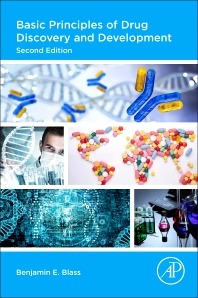
Basic principles of drug discovery and development ; 2nd ed.
Presents the multifaceted process of identifying a new drug in the modern era, which requires a multidisciplinary team approach with input from medicinal chemists, biologists, pharmacologists, drug metabolism experts, toxicologists, clinicians, and a host of experts from numerous additional fields. Enabling technologies such as high throughput screening, structure-based drug design, molecular modeling, pharmaceutical profiling, and translational medicine are critical to the successful development of marketable therapeutics. Given the wide range of disciplines and techniques that are required for cutting edge drug discovery and development, a scientist must master their own fields as well as have a fundamental understanding of their collaborator’s fields.
