


تحسين النتائح
ترتيب حسب
من
الى

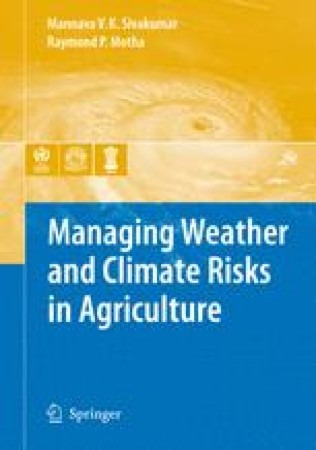
In many parts of the world, weather and climate are one of the biggest production risks and uncertainty factors impacting on agricultural systems performance and management. Both structural and non-structural measures can be used to reduce the impacts of the variability (including extremes) of climate resources on crop production. While the structural measures include strategies such as irrigation, water harvesting, windbreaks etc., the non-structural measures include use of seasonal to interannual climate forecasts, improved application of medium-range weather forecasts and crop insurance. This book based on an International Workshop held in New Delhi, India should be of interest to all organizations and agencies interested in improved risk management in agriculture.
Lights in the Sky is a truly comprehensive guide to observing, identifying, and imaging sky glows and other unusual atmospheric/astronomical phenomena, in both the night and daytime skies.

Part of the ""Light Scattering Reviews"" series that is devoted to modern knowledge and milestones in both experimental and theoretical techniques related to light scattering and radiative transport problems. This work gives a picture of developments in the area of remote sensing and radiative transfer.

A pioneer in meteorology and peace research and remains a towering presence in both fields. This edited volume reviews his work and assesses its influence in the social sciences, notably his work on arms races and their consequences, mathematical models, the size distribution of wars, and geographical features of conflict
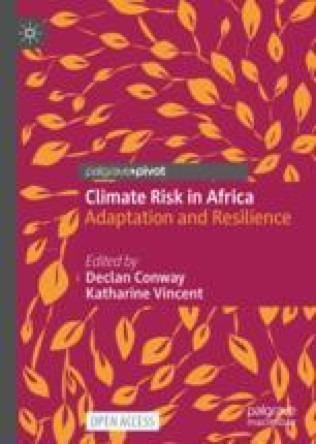
This book highlights the complexities around making adaptation decisions and building resilience in the face of climate risk. It is based on experiences in sub-Saharan Africa through the Future Climate For Africa (FCFA) applied research programme. It begins by dealing with underlying principles and structures designed to facilitate effective engagement about climate risk, including the robustness of information and the construction of knowledge through co-production
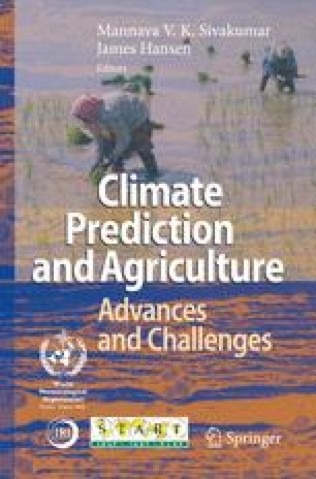
Improved adaptation of food production, particularly in areas where climate variability is large, holds the key to improving food security for human populations. Increasing climate knowledge and improved prediction capabilities facilitate the development of relevant climate information and prediction products for applications in agriculture to reduce the negative impacts due to climate variations and to enhance planning activities based on the developing capacity of climate science. This book, based on an International Workshop held in Geneva in 2005, reviews the advances made so far in seasonal climate predictions and their applications for management and decision-making in agriculture and identifies the challenges to be addressed in the next 5 to 10 years to further enhance operational applications of climate predictions in agriculture, especially in the developing countries.
Atmospheric ice takes a wide range of fascinating forms, all beautiful in their own ways but many posing severe risk to the security of overhead networks for electric power, communications and other systems. This book documents the fundamentals of atmospheric icing and surveys the state of the art in eight chapters, each written by a team of experienced and internationally renowned experts.
This collection of peer reviewed papers represents a concise, up-to-date summary of our current knowledge of planetary boundary layer (PBL) physics and parameterization. As such, it makes a major contribution to the interchange of knowledge and ideas between physicists, meteorologists and environmental modellers and sets out the course to be followed in subsequent research to improve PBL parameterizations in climate, numerical weather prediction, air quality, and emergency preparedness models. Major themes covered are: Nature and theory of turbulent boundary layers, Boundary layer flows - modelling and applications to environmental security, Nature, theory and modelling of boundary-layer flows, and Air flows within and above urban and other complex canopies - air-sea-ice interactions.
In this book we focus on sensors on Low Earth Orbit (LEO) satellites, which exploit solar, lunar, stellar, GNSS (Global Navi- tion Satellite Systems), and LEO-crosslink signals for observing the Earth's - mosphere and climate. The methods all share the key properties of self-calibration, high accuracy and vertical resolution, global coverage, and (if using radio signals) all-weather ca- bility. The atmospheric parameters obtained extend from the fundamental va- ables temperature, density, pressure and water vapor via trace gases, aerosols and cloud liquid water to ionospheric electron density. Occultation data are therefore of high value in a wide range of fields including climate monitoring and research, atmospheric physics and chemistry, operational meteorology, and ionospheric physics.
The two-way oceanic exchanges that connect the Arctic and Atlantic oceans through subarctic seas are of fundamental importance to climate. Change may certainly be imposed on the Arctic Ocean from subarctic seas, including a changing poleward ocean heat flux that is central to determining the present state and future fate of the perennial sea-ice. And the signal of Arctic change is expected to have its major climatic impact by reaching south through subarctic seas, either side of Greenland, to modulate the Atlantic thermohaline ‘conveyor’. Developing the predictive skills of climate models is seen to be the most direct way of extending the ability of society to mitigate for or adapt to 'global change' and is the main justification for continuing an intense observational effort in these waters. As records have lengthened, they have shown that important aspects of oceanic exchange through subarctic seas are currently at a long-term extreme state, providing further motivation for their study.
Numerical weather prediction is receiving increased attention as weather forecasters aim to improve the numerical models used to forecast the weather. This is a textbook on global spectral modeling, which is an important component for global weather forecasts at numerous operational centers. This book covers all areas of model development including numerical analysis, treatment of clouds, mountains, radiation, precipitation processes, and the surface layers over land and the ocean. The objectives of this book are to provide a systematic and sequential background for students, researchers, and operational weather forecasters in order to develop comprehensive weather forecast models. This is designed for a one semester introductory graduate level course on weather prediction methodologies. As a prerequisite it requires a basic background in meteorology, applied mathematics, and numerical analysis.

سوريا - اتستراد درعا - غباغب
+963-15 2050 - 15 860 380 /1/2/3 - 11 662 3900