


تحسين النتائح
ترتيب حسب
من
الى

Intelligence is wasted on problems that themselves have been caused by an excess of intelligence. Lean Brain Management strives toward uncompromising Lean Brain Quality. Lean Brain stands for consistent economization of intelligence in all realms of life: Intelligent systems will only be operated by unskilled workers. Education, universities, and schools would become obsolete. A week of training would be enough for virtually any job. ("You are now the physician for the measles in the State of Ohio. In response to phone calls, send this prescription.") Lean Brain is not aimed at dumbing down! Lean Brain can survive on just a very small amount of central intelligence. Potential savings amount to trillions! This is demonstrated using Germany as an example. With this book, Dueck presents a radical suggestion for world improvement. The desire to laugh infinitely about it will eventually segue into a collective rude awakening. The book contains concrete advice for managers to economize on intelligence, and is thus--in keeping with the theme--written in an easy-to-read fashion.
The Human Condition-in-the-unity-of-everything-there-is-alive, under whose aegis the present selection of essays falls, offers the urgently needed new approach to reinvestigating humanness. While recent advances in the neurosciences, genetics and bio-engineering challenge the traditional abstract conception of "human nature", indicating its transformability, thus putting in question the main tenets of traditional philosophical anthropology, in the new perspective of the Human Creative Condition the human individual is seen in its emergence and unfolding within the dynamic networks of the logos of life, and within the evolution of living types.
The interface of logic, philosophy and science. It is intended for readers with interest and/or current involvement in process philosophy, ontology and in the philosophy or metaphysical aspects of science, especially, quantum physics, biology and cosmology. The content requires competence in reasoning, but not detailed knowledge of the fields discussed.
Leibniz’s metaphysics of space and time stands at the centre of his philosophy and is one of the high-water marks in the history of the philosophy of science. In this work, Futch provides the first systematic and comprehensive examination of Leibniz’s thought on this subject. In addition to elucidating the nature of Leibniz’s relationalism, the book fills a lacuna in existing scholarship by examining his views on the topological structure of space and time, including the unity and unboundedness of space and time. It is shown that, like many of his more recent counterparts, Leibniz adopts a causal theory of time where temporal facts are grounded on causal facts, and that his approach to time represents a precursor to non-tensed theories of time.
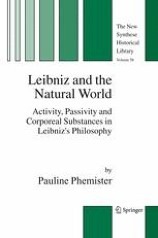
In the present book, Pauline Phemister argues against traditional Anglo-American interpretations of Leibniz as an idealist who conceives ultimate reality as a plurality of mind-like immaterial beings and for whom physical bodies are ultimately unreal and our perceptions of them illusory. Re-reading the texts without the prior assumption of idealism allows the more material aspects of Leibniz's metaphysics to emerge. Leibniz is found to advance a synthesis of idealism and materialism. His ontology posits indivisible, living, animal-like corporeal substances as the real metaphysical constituents of the universe; his epistemology combines sense-experience and reason; and his ethics fuses confused perceptions and insensible appetites with distinct perceptions and rational choice. In the light of his sustained commitment to the reality of bodies, Phemister re-examines his dynamics, the doctrine of pre-established harmony and his views on freedom.

Comprises essays presented to Alvin Plantinga on the occasion of his 70th birthday. Plantinga is one of the leading figures in Anglo-American metaphysics, epistemology and philosophy of religion; his work in these areas has been the focus of wide scholarly attention. This collection of essays, all of which were written specifically for this volume in honor of Plantinga’s 70th birthday, ranges broadly over topics in metaphysics and epistemology and includes contributions by some of the best philosophers writing today. The volume will be of particular interest to metaphysicians, epistemologists, philosophers of religion and theologians as it includes important recent work by some of the leading thinkers in these fields.
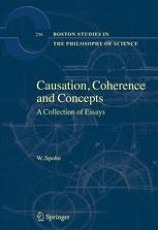
the papers cover epistemology, general philosophy of science, philosophy of language, and philosophy of mind. The section titles Belief, Causation, Laws, Coherence, and Concepts and the paper titles give a more adequate impression of the topics dealt with.
Beauty fulfils human existence. As it registers in our aesthetic experience, beauty enhances nature’s enchantment around us and our inward experience lifting our soul toward moral elevation. Carried by creative imagination (Imaginatio Creatrix), beauty participates in the moulding of the forms of the intellective constitution of the mind in tandem with praxis and seeks deeper enigmas of the real in the labyrinth of the cosmos. Yet with the evolution of human development and in technological inventions, beauty, while suffusing all modalities of experience, seems to undergo transformations and expansion. Are there perduring norms and modalities of beauty or are we carried along blindly by human development? Is there a measure intrinsic to our human ontopoietic unfolding and the growth of human life that we may follow instead of the whim of fancy and excess? The present collection of art-explorations seeks the elemental ties of Human Condition. Together, the authors aim to answer the questions posed above.
Today, when systematic philosophy - and reason itself - are challenged both outside of and within philosophy, is it still possible to do metaphysics? This volume provides a broad perspective on contemporary approaches to the nature and the fundamental questions of metaphysics. Drawing on scholars from continental Europe, Asia, Canada, the United States, and Great Britain, and representing a variety of philosophical cultures and traditions, this volume surveys and extends work in metaphysics and its implications for broader philosophical concerns (e.g., in ethics and social philosophy, in mathematics and logic, and in epistemology). It also addresses such questions as the role of history and historicity in undertaking metaphysics, the nature of metaphysics, the priority of metaphysics over epistemology, and the challenges of empiricism and postmodernism.
This book offers the first synoptic study of how the primary elements in knowledge structures were analysed in antiquity from Plato to late ancient commentaries, the main emphasis being on the Platonic-Aristotelian tradition. It argues that, in the Platonic-Aristotelian tradition, the question of starting points was treated from two distinct points of view: from the first perspective, as a question of how we acquire basic knowledge; and from the second perspective, as a question of the premises we may immediately accept in the line of argumentation. It was assumed that we acquire some general truths rather naturally and that these function as starting points for inquiry. In the Hellenistic period, an alternative approach was endorsed: the very possibility of knowledge became a central issue when sceptics began demanding that true claims should always be distinguishable from false ones.
This volume explores the various ways in which selfhood was approached and conceptualised in antiquity. They also describe how the ancient philosophers understood human agents as capable of causing changes and being affected in and by the world. The themes of persistence, identity, self-examination and self-improvement recur in many of these essays. The articles of the collection combine systematic and historical approaches to ancient sources that range from Socrates to Plotinus and Augustine.
The papers in this collection are united by an approach to philosophy. They illustrate the manifold contributions that logic makes to philosophical progress, both by the application of formal methods to traditional philosophical problems and by opening up new avenues of inquiry as philosophers sort out the implications of new and often surprising technical results. Contributions include new technical results rich with philosophical significance for contemporary metaphysics, attempts to diagnose the philosophical significance of some recent technical results, philosophically motivated proposals for new approaches to negation, investigations in the history and philosophy of logic, and contributions to epistemology and philosophy of science that make essential use of logical techniques and results.

سوريا - اتستراد درعا - غباغب
+963-15 2050 - 15 860 380 /1/2/3 - 11 662 3900