



الصفحة 1
الصفحة 1

Nanostructured Coatings
Controlling the performance of structures and components of all sizes and shapes through the use of engineered coatings has long been a key strategy in materials processing and technological design. The ever-increasing sophistication of en- neered coatings and the rapid trend toward producing increasingly smaller devices with greater demands on their fabrication, properties and performance have led to signicant progress in the science and technology of coatings, particularly in the last decade or two. Nanostructured coatings constitute a major area of sci- ti?c exploration and technological pursuit in this development.Nanostructured coatings demand study in a highly interdisciplinary research arena which encompasses: surface and interface science study of defects modern characterization methodologies cutting-edge experimental developments to deposit.

Hydrogen Materials Science and Chemistry of Carbon Nanomaterials
The 2005 International Conference “Hydrogen Materials Science and Chemistry of Carbon Nanomaterials” (ICHMS’2005) was held in September 5-11, 2005 in the remarkable city Sevastopol (Crimea, Ukraine) known for its heroic and unusual th fate. In the tradition of the earlier ICHMS conferences, this 9 ICHMS’2005 meeting served as an multidisciplinary forum for the presentation and discussion of the most recent research on transition to hydrogen-based energy systems, technologies for hydrogen production, storage, utilization, materials processing and chemical behavior, energy and environmental problems. The aim of ICHMS’2005 was to provide the wide overview of the latest scientific results on basic research and technological applications of hydrogen interactions with metals and other materials.

High-Pressure Shock Compression of Solids VIII : The Science and Technology of High-Velocity Impact
Research in the field of shock physics and ballistic impact has always been intimately tied to progress in development of facilities for accelerating projectiles to high velocity and instrumentation for recording impact phenomena. The chapters of this book, written by leading US and European experts, cover a broad range of topics and address researchers concerned with questions of material behaviour under impulsive loading and the equations of state of matter, as well as the design of suitable instrumentation such as gas guns and high-speed diagnostics. Applications include high-speed impact dynamics, the inner composition of planets, syntheses of new materials and materials processing. Among the more technologically-oriented applications treated is the testing of the flight characteristics of aeroballistic models and the assessment of impacts in the aerospace industry.

High Power Diode Lasers : Technology and Applications
In a very comprehensive way this book covers all aspects of high power diode laser technology for materials processing. Basics as well as new application oriented results obtained in a government funded national German research project are described in detail.

Gallium Nitride Processing for Electronics, Sensors and Spintronics
Semiconductor spintronics is expected to lead to a new generation of transistors, lasers and integrated magnetic sensors that can be used to create ultra-low power, high speed memory, logic and photonic devices. Useful spintronic devices will need materials with practical magnetic ordering temperatures and current research points to gallium and aluminium nitride magnetic superconductors as having great potential.Gallium Nitride Processing for Electronics, Sensors and Spintronics details current research into the properties of III-nitride semiconductors and their usefulness in novel devices such as spin-polarized light emitters, spin field effect transistors, integrated sensors and high temperature electronics.

Gallium Nitride Electronics
Gallium Nitride Electronics covers developments in III-N semiconductor-based electronics with a focus on high-power and high-speed RF applications. Material properties of III-N semiconductors and substrates; the state-of-the-art of devices and circuits, epitaxial growth, device technology, modelling and characterization; and circuit examples are discussed. The book concludes with device reliability aspects and an overview of integration and packaging. This comprehensive monograph and tutorial is based on more than a decade of research on materials, devices, and circuits.
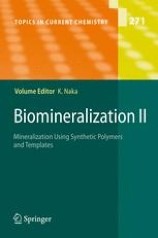
Biomineralization II : Mineralization Using Synthetic Polymers and Templates
In nature, biological organisms produce mineralized tissues such as bone, teeth, diatoms, and shells. Biomineralization is the sophisticated process of production of these inorganic minerals by living organisms. Construction of organic–inorganic hybrid materials with controlled mineralization analogous to those produced by nature has recently received much attention because it can aid in understanding the mechanisms of the biomineralization process and development of biomimetic materials processing. The biomineralization processes use aqueous solutions at temperatures below 100 ◦C and no toxic intermediates are produced in these systems. This series presents critical reviews of the present position and future trends in modern chemical research. The short and concise reports on chemistry are each written by world renowned experts. This series is still valid and useful after 5 or 10 years.
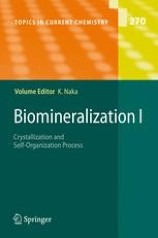
Biomineralization I : Crystallization and Self-Organization Process
The five chapters of Biomineralization, volume 1, provide a bridge between the mineralogy and the organic substrates that enable the mineral formation by organisms in nature and under laboratory conditions. The book is a most useful reference for all concerned with biomineralization and biogenic minerals.In nature, biological organisms produce mineralized tissues such as bone, teeth, diatoms, and shells. Biomineralization is the sophisticated process of production of these inorganic minerals by living organisms. Construction of organic–inorganic hybrid materials with controlled mineralization analogous to those produced by nature has recently received much attention because it can aid in understanding the mechanisms of the biomineralization process and development of biomimetic materials processing.

Artificial neural networks : Recent advances, new perspectives and applications
This book explores the potential of ANNs for applications in different fields. Itincludes eight chapters that discuss deep learning, ANN tools, and other cutting-edgetechnologies. It also suggests avenues for further research into ANN techniques formedical imaging to detect breast tumors, classification of COVID-19 surveillancedatasets, health management, estimation of materials processing parameters, solarenergy management, and control of a petrochemical unit.

Advances in microwave and radio frequency processing ; Report from the 8th International conference on microwave and high-frequency heating held in Bayreuth, Germany, September 3-7, 2001
Recent applications of microwave and high-frequency radiation in the field of materials processing, chemical synthesis, food processing and in the biomedical area are presented. The book also covers fundamentals of matter radiation interaction, modeling of processes, hardware development, measurement techniques as well as current regulations for industrial applications of microwave and radio frequency heating.
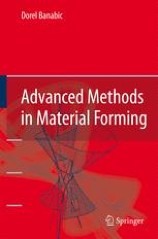
Advanced Methods in Material Forming
The book contains the most relevant papers presented in the International Conference on Materials Forming, ESAFORM 2005. The list below presents some of the most successful minisymposia of the conference: - New and advanced numerical strategies in forming process simulation; - Sheet metal forming technologies and modeling; - Anisotropy and formability of materials; - Polymer processing and modeling; - Composite forming technologies and modeling; - Superplastic forming. This volume gathers selected plenary and keynote papers presented in the conference, offering an up-to-date synthesis of the academic and industrial research in the fields of physical and numerical modeling of materials forming processes. The book is useful for the doctoral fellows, scientists and engineers involved in various domains of materials processing technology.
