



الصفحة 1
الصفحة 1

Habitats and Biota of the Gulf of Mexico : Before the deepwater horizon oil spill ; Vol.2 : Fish resources, fisheries, sea turtles, avian resources, marine mammals, diseases and mortalities
The Gulf of Mexico is an open and dynamic marine ecosystem rich in natural resources but heavily impacted by human activities, including agricultural, industrial, commercial and coastal development. Nutrients and pollutants from coastal communities and dozens of rivers flow into the Gulf, including material from the Mississippi River watershed, which drains over one third of continental United States. The Gulf of Mexico has been continuously exposed to petroleum hydrocarbons for millions of years from natural oil and gas seeps on the sea floor, and more recently from oil drilling and production activities located in the water near and far from shore. Major accidental oil spills in the Gulf are infrequent; two of the most significant include the Ixtoc I blowout in the Bay of Campeche in 1979 and the Deepwater Horizon Oil Spill in 2010.

Habitats and Biota of the Gulf of Mexico : Before the deepwater horizon oil spill ; Vol.1 : Water quality, sediments, sediment contaminants, oil and gas Seeps, coastal habitats, offshore plankton and benthos, and shellfish
The Gulf of Mexico is an open and dynamic marine ecosystem rich in natural resources but heavily impacted by human activities, including agricultural, industrial, commercial and coastal development. Nutrients and pollutants from coastal communities and dozens of rivers flow into the Gulf, including material from the Mississippi River watershed, which drains over one third of continental United States. The Gulf of Mexico has been continuously exposed to petroleum hydrocarbons for millions of years from natural oil and gas seeps on the sea floor, and more recently from oil drilling and production activities located in the water near and far from shore. Major accidental oil spills in the Gulf are infrequent; two of the most significant include the Ixtoc I blowout in the Bay of Campeche in 1979 and the Deepwater Horizon Oil Spill in 2010.

Economic Geology of Natural Gas Hydrate
This is the first book that attempts to broadly integrate the most recent knowledge in the fields of hydrate nucleation and growth in permafrost regions and marine sediments. Gas hydrate reactant supply, growth models, and implications for pore fill by natural gas hydrate are discussed for both seawater precursors in marine sediments and for permafrost hydrate. These models for forming hydrate concentrations that will constitute targets for exploration are discussed, along with exploration methods. Thermodynamic models for the controlled conversion of hydrate to natural gas, which can be recovered using conventional industry practices, suggest that a number of different types of hydrate occurrence are likely to be practical sources of hydrate natural gas. Current progress in the various aspects of commercial development of hydrate gas deposits are discussed, along with the principal extractive issues that have yet to be resolved.
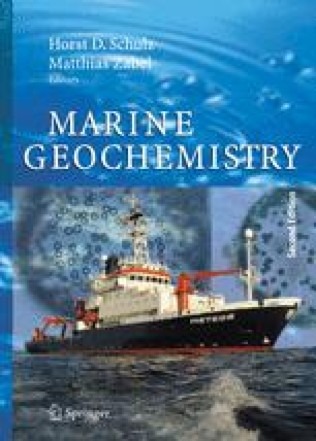
Marine Geochemistry
Since 1980 a considerable amount of scientific research dealing with geochemical processes in marine sediments has been carried out. This textbook summarizes the state of the art in this field of research. The topics comprise the examination of sedimentological and physical properties of the sedimentary solid phase, of pore water and pore water constituents, organic matter as the driving force of most microbiological processes, biotic and abiotic redox reactions, carbonates and stable isotopes as proxies for paleoclimate reconstruction, metal enrichments in ferromanganese nodules and crusts as well as in hot vents and cold seeps on the seafloor. A new chapter describes properties, occurrence and formation of gas hydrates in marine sediments. The textbook ends with a chapter on model conceptions and computer models to quantify processes of early diagenesis.
Isotopes in Palaeoenvironmental Research
This thorough reference shows how stable isotopes can be applied to understanding the palaeoenvironment, with chapters on the interpretation of isotopes in water, tree rings, bones and teeth, lake sediments, speleothems and marine sediments.
