


تحسين النتائح
ترتيب حسب
من
الى

In this book, anyone who can operate a PC, standard software and the Internet will learn to understand the biological basis of bioinformatics of the existence as well as the source and availability of bioinformatics software how to apply these tools and interpret results with confidence.This is aided by introductory chapters to important aspects of bioinformatics, detailed bioinformatics exercises, including solutions and a glossary of definitions and terminology relating to bioinformatics.
You love it as the world's most popular desktop Linux distribution, and now Ubuntu is available at a server near you. Embracing the very same features desktop users have grown to love, system administrators are rapidly adopting Ubuntu due to their ability to configure, deploy, and manage network services more effectively than ever. Beginning Ubuntu Server Administration guides you through all of the key configuration and administration tasks you'll need to know. Whether you're interested in adopting Ubuntu within a Fortune 500 environment or just want to use Ubuntu to manage your home network, this book is your go–to guide to using the distribution securely for a wide variety of network services. Topics include file, print, web, and FTP management, command–line tips and tricks, automated installation, configuration and deployment processes, and kernel management.
The book starts by introducing you to the world of Linux. Then, it outlines Ubuntu installation in illustrated steps, after which you'll learn how to configure every piece of everyday tech hardware such as your Internet connection, printers, 3D graphics cards, Bluetooth devices, and much more. Then you'll learn fun tasks such as listening to audio CDs and MP3s, watching movies, performing office tasks, and even image editing.
Beginning Ubuntu Linux is the perfect guide for those switching to the world's favorite Linux. The new edition has been thoroughly updated to cover technology introduced in the 6.10 release. You'll learn how to install Linux, set up your hardware and software, customize the desktop experience, browse the Web and send/receive e-mail, play back audio and video, edit digital images, use the OpenOffice.org office suite, and more.
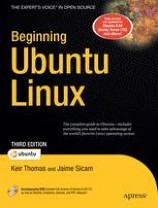
Beginning Ubuntu Linux, the award–winning and best–selling Ubuntu book for beginners, is now in its third edition, presenting readers with an up–to–the–minute introduction to the world of Linux and the open source community. A detailed overview of Ubuntu's installation and configuration process encourages you to take the plunge and switch to Linux, and from there you'll learn how to wield total control over your newly installed operating system. Guided through the most commonly desired tasks such as printer configuration, listening to audio CDs and MP3s, watching movies, performing office and Internet–related tasks, as well as general system maintenance matters, authors Keir Thomas and Jaime Sicam will soon have you using and enjoying Ubuntu Linux and never looking back.
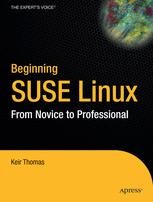
The book begins by discussing the background of Linux and open source software, then proceeds to guide you through the SUSE installation process. You'll learn how to use the basic functions, and modify the look and feel according to your tastes. This book is packed with troubleshooting tips, so even the most cautious beginner will feel right at home. Next, the book covers the daily usage tasks that are enjoyable and interesting to learn. You'll learn how to configure your system to listen to audio CDs and MP3s, burn CDs, watch movies, connect to the Internet, and reproduce common Windows tasks.
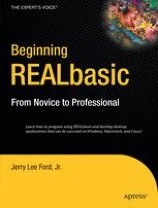
REALbasic is an easy-to-learn, powerful, cross-platform programming language, allowing you to write powerful applications that can be distributed across Windows, Mac, and Linux. REALbasic’s success is proven - there are already over 100,000 users, and this number is steadily growing. In a recent promotional effort, 35,000 Visual Basic developers downloaded a free copy of the Windows version of REALbasic, and REAL software has had many requests for decent beginning title on the subject. As far as we know, this is the only up-to-date book planned for the current version, REALbasic 2005, which matches that description. REAL software are enthusiastic about helping us sell the book.
Beginning GIMP: From Novice to Professional explains how to use the open source image manipulation program, GIMP version 2.4. You'll learn how to install GIMP on Windows, Linux, and MacOS X platforms. Once you've installed the application, you'll learn about the interface and configuration options, and then jump into a quick–and–simple project to familiarize yourself even further. With four–color graphics and screenshots throughout, you'll learn how to prepare camera images for display on web pagesincluding functions like rescaling, cropping, and balancing color. The book also explains with great detail how to utilize layers, paths, and masks. You'll also learn how to draw lines and shapes, use patterns and gradients, and even create your own brushes, patterns, and gradients.
Beginning Fedora: From Novice to Professional guides you through the tasks most new Linux users desire to perform, while explaining potentially confusing concepts along the way. It will steer you through system customization opportunities and common tasks like listening to audio CDs and MP3s, watching movies, and performing office- and Internet-related jobs.
The book continues with a complete tutorial on PostgreSQL features and functions and include information on database construction and administration. Key features such as transactions, stored procedures and triggers are covered, along with many of the capabilities new to version 8. To help you get started quickly, step-by-step instructions on installing PostgreSQL on Windows and Linux/UNIX systems are included. In the remainder of the book, we show you how to make the most of PostgreSQL features in your own applications using a wide range of programming languages, including C, Perl, PHP, Java and C#. Many example programs are presented in the book, and all are available for download from the Apress web site. By the end of the book you will be able to install, use, and effectively manage a PostgreSQL server, design and implement a database, and create and deploy your own database applications.
With Beginning C: From Novice to Professional, Fourth Edition, you'll come to understand the fundamentals of the C language and learn how to program. All you need is this book and any one of the widely available free or commercial C or C++ compilers, and you'll soon be writing real C programs. You'll learn C from the first principles.
Analyzing computer system performance is often regarded by most system administrators, IT professionals and software engineers as a black art that is too time consuming to learn and apply. Finally, this book by acclaimed performance analyst Dr. Neil Gunther makes this subject understandable and applicable through programmatic examples. The means to this end is the open-source performance analyzer Pretty Damn Quick (PDQ) written in Perl As the epigraph in this book points out, Common sense is the pitfall of performance analysis. The performance analysis framework that replaces common sense is revealed in the first few chapters of Part I. The important queueing concepts embedded in PDQ are explained in a very simple style that does not require any knowledge of formal probability theory. Part II begins with a full specification of how to set up and use PDQ replete with examples written in Perl. Subsequent chapters present applications of PDQ to the performance analysis of multicomputer architectures, benchmark results, client/server scalability, and Web-based applications.
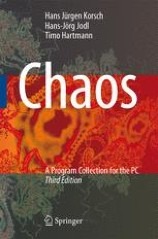
This new edition strives yet again to provide readers with a working knowledge of chaos theory and dynamical systems through parallel introductory explanations in the book and interaction with carefully-selected programs supplied on the accompanying diskette. The programs enable readers, especially advanced-undergraduate students in physics, engineering, and math, to tackle relevant physical systems quickly on their PCs, without distraction from algorithmic details. For the third edition of Chaos: A Program Collection for the PC, each of the previous twelve programs is polished and rewritten in C++ (both Windows and Linux versions are included). A new program treats kicked systems, an important class of two-dimensional problems, which is introduced in Chapter 13. Each chapter follows the structure: theoretical background; numerical techniques; interaction with the program; computer experiments; real experiments and empirical evidence; reference.

سوريا - اتستراد درعا - غباغب
+963-15 2050 - 15 860 380 /1/2/3 - 11 662 3900