


تحسين النتائح
ترتيب حسب
من
الى


Landscape Pattern Analysis for Assessing Ecosystem Condition presents a new method for assessing spatial pattern in raster land cover maps based on satellite imagery in a way that incorporates multiple pixel resolutions. This is combined with more conventional single-resolution measurements of spatial pattern and simple non-spatial land cover proportions to assess predictability of both surface water quality and ecological integrity within watersheds of the state of Pennsylvania (USA).

Written primarily for researchers and advanced students in environmental and social sciences, this latest book in Springer’s Landscape Series looks at some of the emerging fields and new challenges in landscape research. These include: the role of value systems in perceiving, appreciating, and managing landscapes the ‘space’ and ‘place’ concept in landscape research GIS and remote sensing techniques for gathering and processing spatially and temporally explicit land cover, vegetation, and land use data methods of landscape history landscape genetics and genetic methods to test landscape connectivity and dispersal of plant and animal species
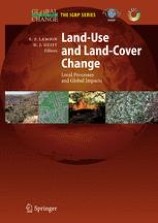
The book presents recent estimates of the rates in changes of major land classes such as forest, cropland and pasture. Among the causative mechanisms behind land change, synergetic factor combinations are found to be more common than single key factor explanations. Aggregated globally, multiple impacts of local land changes are shown to significantly affect central aspects of Earth System functioning. Innovative developments and applications in the fields of modeling and scenario construction are presented. Finally, conclusions are drawn about the most pressing implications for the design of appropriate intervention policies, and on new directions and frontiers of research.
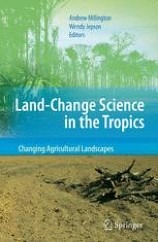
Land use and land-cover change research over the past decade has focused mainly on contemporary primary land-cover conversions in the tropics and sub-tropics, with considerable resources dedicated to the explanation and prediction of tropical deforestation and often ignoring the dynamism in the world’s agro-pastoral landscapes. This collection integrates cutting-edge research in the social, biogeophysical, and geographical information sciences to understand the human and environmental dynamics that change the type, magnitude and location of land uses and land covers in the changing countryside.This book describes the monitoring of land-cover changes, explains the processes through which land is altered, and describes the development of spatially-explicit models to predict land change. This book illustrates how practitioners have integrated knowledge from the three scientific realms - social, biophysical, and GIScience - that underpin land-change science.

سوريا - اتستراد درعا - غباغب
+963-15 2050 - 15 860 380 /1/2/3 - 11 662 3900