



الصفحة 1
الصفحة 1

Inorganic Polymeric Nanocomposites and Membranes
This series presents critical reviews of the present and future trends in polymer and biopolymer science including chemistry, physical chemistry, physics and materials science. It is addressed to all scientists at universities and in industry who wish to keep abreast of advances in the topics covered.This Book reviews different methods of synthesis of polysilalkylene or silarylene siloxanes that are sometimes called "hybrid" silicones. This special type of silicone has been developed to avoid the drawback of the depolymerization of classical polysiloxanes in certain conditions and to obtain elastomers with enhanced thermal and fuel resistance properties.

Garlic Extract : Interaction with mechanisms of bacterial resistance
Garlic (Allium sativum) is a medicinal plant which has a diverse biological activities including antioxidant activity, antimicrobial activity, anticancer activity and others… In this article we are focusing on its antimicrobial effect which had been tested individually and in combination with two resisted antibiotics (Ampicillin, Ciprofloxacin) on 3 gram negative bacteria (Proteus mirabilis, klebsiella pneumoniae and Enterobacter aerogenes) to estimate the effect of garlic extract on the activity of the resisted drugs and bacterial resistance mechanism.

Future space-transport-system components under high thermal and mechanical loads : results from the DFG Collaborative Research Center TRR40
This book presents the findings of Collaborative Research Center Transregio 40 (TRR40), initiated in July 2008 and funded by the German Research Foundation (DFG). Gathering innovative design concepts for thrust chambers and nozzles, as well as cutting-edge methods of aft-body flow control and propulsion-component cooling, it brings together fundamental research undertaken at universities, testing carried out at the German Aerospace Center (DLR) and industrial developments from the ArianeGroup

Focus on bacterial biofilms
Bacterial biofilms are colonies of bacterial cells embedded in their self-produced matrix composed of polysaccharides, DNA, and proteins. They protect bacterial cells against antibiotics, antibacterial agents, soaps and detergents, and shear stress. Some of the most common biofilm-associated infections in humans include urinary tract infections, infection of wounds and surgical sites, diabetic foot ulcers, dental caries (tooth decay) and gingivitis (gum inflammation), ventilator-associated infections, sinusitis, microbial keratitis, secondary infection related to Covid-19 and other viral infections, and so on. Bacterial resistance to common antibiotics (e.g., penicillin, gentamycin, erythromycin, ciprofloxacin, etc.) is driving us to a catastrophic failure of our health systems. Strategies to develop novel antibacterial agents and technology must be prioritized to combat and eradicate biofilms and their associated challenges. This book provides a comprehensive overview of biofilms with chapters on bacterial virulence factors, quorum sensing in bacteria, antimicrobial resistance in bacteria, strategies to develop new antibacterial agents, and much more.
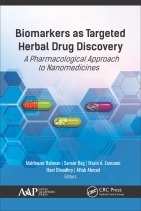
Biomarkers as targeted herbal drug discovery : A pharmacological approach to nanomedicines
Looks at the applications of biomarkers as important tools for herbal drug discovery, presenting research on phytoconstituents with advanced nanotechnological applications for healthcare benefits. Herbal drug discovery based on biomarkers is an emerging area in complementary and alternative medicine that has tremendous potential in healthcare. Conventional medications have limited efficacy and high toxicity, whereas herbal drugs are said to provide wide structural diversity that is not usually seen with conventional/synthetic drug molecules. Recognition of various herbal constituents, such as terpenoids, fatty acids, flavonoids and steroids, are well explored in the management and treatment of various disorders in this volume. These agents target various biomarkers such as nitric oxide (NO), cytokines, chemokines, adhesion molecules, NF- kβ, lipoxygenase (LOX), and arachidonic acid. Reviews the literature on inflammatory biomarkers in the treatment of diseases Looks at the development of herbal drug discovery based on biomarkers Explores emerging concepts of nanomedicines for herbal drug delivery Takes an interdisciplinary approach, with application to disciplines related to medical, pharmaceutical, biotechnological, Ayurvedic, Unani and biomedical engineering fields

Bioceramics and alternative bearings in joint arthroplasty ; 12th BIOLOX® Symposium Seoul, Republic of Korea September 7 - 8, 2007. Proceedings
th ® Dear Colleague and Participant of the 12 International BIOLOX Symposium ® It is an honor for CeramTec to have the BIOLOX Symposium in Asia. The selection of Seoul, Korea as the site was a difficult one due to the fact that there are many wonderful location options in this dynamic and fast growing region of the world. The selection was made easier by the outstanding support of our Symposium Chairman, Prof. Chang, as well as the excellent airline service and meeting facilities present in Seoul. We hope that conducting the Symposium in this region will serve as a foundation for the increased recognition of the potential patient benefits to be derived from the use of ceramics and other alternative bearing technologies in Korea, China, India, Japan and the rest of the countries of the region.

Bioceramics and alternative bearings in joint arthroplasty ; 11th BIOLOX Symposium. Proceedings
Presents the source of scientific and clinical information regarding the use of ceramics and other alternative bearings in joint replacement surgery. This book presents the proceedings of a Symposium that pays tribute and recognition to the many innovations and contributions that have been developed by the Italian Orthopedic Surgical Community.

Bioceramics and alternative bearings in joint arthroplasty ; 10th BIOLOX Symposium. Washington D.C., June 10-11, 2005. Proceedings
This group accomplishment has been made possible by the superb cooperation received from the speakers in sending us their manuscripts on a timely basis as well as by the supporting staff at both CeramTec and at the Publishing House in executing all of the details needed. We specially extend our most heartfelt thanks to the Scientific Committee for their assistance in evaluating and selecting the submissions as well as developing the Symposium program. We are more convinced than ever that the proceedings of this Symposium are a continuation of CeramTec's tradition of providing all members of the orthopedic surgical community with a valuable addition to your reference libraries. We hope that this book will present you with the latest and most up to date source of scientific and clinical information regarding the use of ceramics and other alternative bearings in joint replacement surgery.
