


تحسين النتائح
ترتيب حسب
من
الى

A Sea Change in a Changing Sea The oceans, seas and coastal areas encompass over 70% of the earth’s surface. They are a critical driver of the earth’s hydrologic cycle and climate system, important for c- merce, transport, and tourism, a source of economically important living marine resources, minerals such as hydrocarbons, as well as new pharmaceutical compounds. The marine environment provides essential habitats for thousands of marine living 1 2 resources, which in turn contribute significantly to global food security, employment, 3 and trade. Overall, the sea’s contribution to human welfare, in terms of market and non-market resources and environmental services, has been estimated at US$21 trillion/year (Costanza, 2000). However, despite the importance of the ocean realm to humans, there is a growing sense that human impacts are destabilizing this system. Some experts believe that current fishing levels are approaching or exceeding the total 4 productivity of the ocean ecosystem (National Research Council, 1999).
Consists of a selection of papers presented at the Asia-Pacific Research Conference on Social Sciences and Humanities. It contains essays on current legal issues in law and justice, and their role and transformation in a globalizing world. Topics covered include human rights, criminal law, law of the sea, good governance, democracy, foreign investment, and regional integration. The conference focused on Asia and the Pacific, two regions where law has taken an important position in creating and shaping the regional integrations, new legal institutions, and norms.
This book offers a comprehensive study of the prerequisites, effectiveness, and enforcement of exclusive jurisdiction and arbitration agreements in international dispute resolution. It examines whether jurisdiction and arbitration clauses have identical effects in private international law and whether they have been or should be given the same treatment by most countries in the world. The book considers whether the Hague Convention on Choice of Court Agreements could be treated as a litigating counterpart to the New York Convention.

Investigates the use of duress as a defence in international criminal law, specifically in cases of child soldiers. The prosecution of children for international crimes often only focuses on whether children can and should be prosecuted under international law. However, it is rarely considered what would happen to these children at the trial stage. This work offers a nuanced approach towards international prosecution and considers how children could be implicated and defended in international courts.
A topical and engaging companion for study; placing international law directly in the context of contemporary debate. The book offers broad coverage of international law, and is an appropriate match for a range of courses and teaching styles.

A definitive guide to international law for over 40 years. This eighth edition, updated by James Crawford, builds on the reputation of its predecesors, providing outstanding, lucid and up-to-date treatment of all of the main issues in international law today
The legal regimes adopted and being implemented by parties to the OECD Convention flow from a common framework. Yet even when the anti-bribery legal regimes are virtually identical, the differences can still be significant in the context of a range of factors that are unique to each legal system.
Offers readers comprehensive coverage and a high level of academic rigour while maintaining its signature accessible and engaging style. Introducing the readers to the fundamental concepts of international criminal law, as well as the domestic and international institutions that enforce that law, this book engages with critical questions, political and moral challenges, and alternatives to international justice.
In recent years the question of the legitimacy of international law has been discussed quite intensively. Such questions are, for example, whether international law lacks legitimacy in general; whether international law or a part of it has yielded to the facts of power; whether adherence to international legal commitments should be subordinated to self-defined national interests; whether international law or particular rules of it – such as the prohibition of the use of armed force – have lost their ability to induce compliance (compliance pull); and what is the relevance of non-enforcement or failure to obey for the legitimacy of that particular international norm? This book contains fresh perspectives on these questions, offered at an international and interdisciplinary conference hosted by the Max Planck Institute for Comparative Law and International Law.
Dr Yang's book deals with the port and coastal State's jurisdiction over foreign merchant ships as well as with the rights and duties of these ships in the internal waters and in the territorial sea. The international law is rather different in both situations. Despite the fact that it faces a number of issues such as, for example, a contested right of access to ports or conditions for port access requirements, the law of foreign merchant ships in internal waters has never been codified. On the other hand, already the League of Nations considered the law of the territorial sea as appropriate for codification in the 1930s. And the Geneva Convention on the Territorial Sea and the Contiguous Zone of 1958 was indeed a codification of most rules of international law on the territorial sea known at that time.
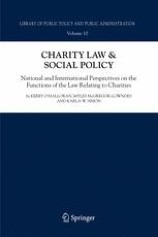
Charity Law & Social Policy explores contemporary law, policy and practice in a range of modern common law nations. It does so in four parts and from the perspective of how this has evolved in the UK.As progenitor of a system bequeathed to its colonies and after centuries of leadership in developing the core principles, policies and precedents that subsequently shaped its development, the contribution of England & Wales, the originating jurisdiction, is first described and analysed in detail.
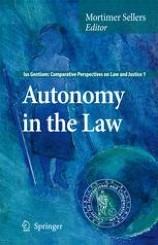
Autonomy in the Law considers one of the most important benefits of the rule of law. Juxtaposing European and American conceptions of autonomy in the law of families, capital punishment and, criminal trials reveals the common values that justify all legal systems. Law protects the autonomy of individuals and associations by defending the boundaries of their own self-rule. This book illuminates the fundamental purpose of law by examining how European and American lawyers, judges and citizens do and should apply legal autonomy to the practical circumstances of litigation, legislation and the law.
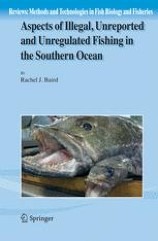
Overfishing threatens the viability of high seas living resources. Furthermore, controls to prevent overfishing are inadequate. Illegal, Unreported and Unregulated (IUU) fishing is a product of overfishing and affects all marine fisheries. Southern Ocean fisheries have been particularly targeted by IUU fishing. The efforts of the Convention for the Conservation of Antarctic Marine Living Resources Commission and the Australian government to adopt complementary measures to deter IUU fishing in the Southern Ocean form the basis of this study, although the examination is conducted following a comprehensive review of the legal and other factors contributing to the development of IUU fishing as well as the applicable international law.

This edited volume explores the legal, economic and political context for the debate about intellectual property rights for traditional knowledge and genetic resources and critically analyses the theory and practice of access and benefits sharing efforts around the world. The book also investigates the current flashpoints—the David and Goliath battle between Monsanto and Percy Schmeiser over farmers’ rights; the dispute over coexistence of GM and organic production; and the ownership and control of human genetic materials stored in human gene banks around the world.

سوريا - اتستراد درعا - غباغب
+963-15 2050 - 15 860 380 /1/2/3 - 11 662 3900