


تحسين النتائح
ترتيب حسب
من
الى


In the intervening years well over 10,000 articles have appeared with lectins as the main subject, and more than twice as many in which they were touched upon, as well as around 20 books. In particular, great strides have been made in several areas of lectin research, about which little was known until the late 1980s. One prominent example is animal lectins, many of which have been discovered only during the last decade and the functions of several of which have been clarified, especially as to their key role in innate immunity.
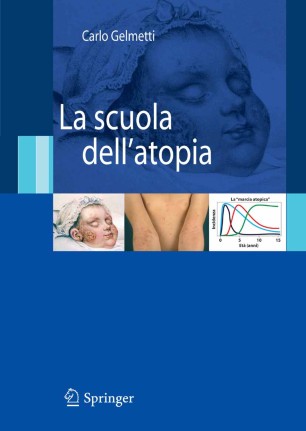
The need to clarify the current concepts of atopy, which for too long have oscillated between a primitive purely clinical vision and a subsequent purely immunological one, had been ripe for some time. Understanding that the role of immunoglobulins E is not exhaustive and accepting the Solomonic division between intrinsic and extrinsic atopy were the first two fundamental steps. Recent discoveries of the role of innate immunity, and therefore of antimicrobial peptides, have opened fundamental spaces for understanding in atopy and beyond. What now appears clear is that atopy is not the disease of an organ but rather a defect in the membranes that delimit our "self". The fact that these membranes are called skin, intestines, conjunctiva, bronchi or whatever has artificially fragmented the understanding and treatment of a unitary phenomenon. This book seeks to summarize the different experiences but above all to be a stimulus to ensure that medicine focuses constructively on the same target. If this is the case, we will no longer see "religious wars" between scientists and practicing doctors or, even worse, between the different specialists vying for the patient. If atopy, as we believe, is a global problem, it can only be adequately addressed in a multidisciplinary context and in a collaborative atmosphere, not only between doctor and doctor but also between doctor and patient.
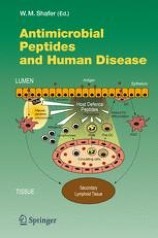
Microbes are in our midst soon after birth. Thankfully, the number of harmless (and often beneficial) microbes far outnumber those that would do us harm. Our ability to ward-off pathogens in our environment, including those that can colonize our exterior and/or interior surfaces, depends on the integrative action of the innate and adaptive immunity systems. This volume of CTMI, entitled Antimicrobial Peptides and Human Disease, is dedicated to the role of antimicrobial peptides (AMPs) in the innate host defense system of homo sapiens.

Provides a collection of protocols that will allow researchers to further explore the multiple, fascinating activities of Alpha-1 Antitrypsin (AAT) isoforms in innate immunity, and gene therapy. Written in the highly successful Methods in Molecular Biology series format, chapters include introductions to their respective topics, lists of the necessary materials and reagents, step-by-step, readily reproducible laboratory protocols, and tips on troubleshooting and avoiding known pitfalls.

سوريا - اتستراد درعا - غباغب
+963-15 2050 - 15 860 380 /1/2/3 - 11 662 3900