


تحسين النتائح
ترتيب حسب
من
الى

Russian mathematics (later Soviet mathematics, and Russian mathematics once again) occupies a special place in twentieth-century mathematics. In addition to its well-known achievements, Russian mathematics established a unique style of research based on the existence of prominent mathematical schools. These schools were headed by recognized leaders, who became famous due to their talents and outstanding contributions to science. The present collection is intended primarily to gather in one book the t- timonies of the participants in the development of mathematics over the past century. In their articles the authors have expressed their own points of view on the events that took place. The editors have not felt that they had a right to make any changes, other than stylistic ones, or to add any of their own commentary to the text. Naturally, the points of view of the authors should not be construed as those of the editors. The list of mathematicians invited to participate in the present edition was quite long.
the history of mathematics there are many situations in which cal- lations were performed incorrectly for important practical applications. the history of computing the number began in Egypt and Babylon about 2000 years BC, since then many mathematicians have calculated (e. g. , Archimedes, Ptolemy, Vi` ete, etc. ). In modern mathematics there exist computers that can perform various mathematical operations for which humans are incapable. Therefore the computers can be used to verify the results obtained by humans, to discovery new results, to - prove the result sthatahumancanobtain without anytechnology

Presents the main mathematical machines for drawing curves, for applying geometrical transformations or for making classical perspectives.The publication constitutes an example of how history of mathematics may be useful for teaching today’s mathematics.
A study of how a particular vision of the unity of mathematics, often called geometric function theory, was created in the 19th century. The central focus is on the convergence of three mathematical topics: the hypergeometric and related linear differential equations, group theory, and on-Euclidean geometry. The text for this second edition has been greatly expanded and revised, and the existing appendices enriched with historical accounts of the Riemann–Hilbert problem, the uniformization theorem, Picard–Vessiot theory, and the hypergeometric equation in higher dimensions. The exercises have been retained, making it possible to use the book as a companion to mathematics courses at the graduate level.

Euler was not only by far the most productive mathematician in the history of mankind, but also one of the greatest scholars of all time. He attained, like only a few scholars, a degree of popularity and fame which may well be compared with that of Galilei, Newton, or Einstei .This book is based in part on unpublished sources and comes right out of the current research on Euler. It is entirely free of formulae as it has been written for a broad audience with interests in the history of culture and science.
this book offers the first account of the development of Huygens’ mathematical analysis of lenses and telescopes and its significance for the origin of the wave theory of light. As Huygens applied his mathematical proficiency to practical issues pertaining to telescopes – including trying to design a perfect telescope by means of mathematical theory – his dioptrics is significant for our understanding of seventeenth-century relations between theory and practice. With this full account of Huygens’ optics, this book sheds new light on the history of seventeenth-century optics and the rise of the new mathematical sciences, as well as Huygens’ oeuvre as a whole. Students of the history of optics, of early mathematical physics, and the Scientific Revolution, will find this book enlightening.

The chapters of the book are the result of intense discussion in the course of an international conference focused on the title question of this book, and were selected in view of their contribution to this topic. They are clustered in thematically organized parts. No effort has been made to hide the controversies underlying the different interpretations of Leibniz’s “rationalism” – in each particular domain and as a whole. On the contrary, the editor firmly believes that only through a variety of conflicting interpretive perspectives can the multi-faceted nature of an oeuvre of such a magnitude and variety as Leibniz’s be brought to light and understood as it deserves.
Labyrinth of Thought discusses the emergence and development of set theory and the set-theoretic approach to mathematics during the period 1850-1940. Rather than focusing on the pivotal figure of Georg Cantor, it analyzes his work and the emergence of transfinite set theory within the broader context of the rise of modern mathematics. The text has a tripartite structure.A new Epilogue for this second edition offers further reflections on the foundations of set theory, including the "dichotomy conception" and the well-known iterative conception.
This volume records the diversity of scholarly approaches to John Dee which have emerged since the synthetic accounts of I. R. F. Calder, Frances Yates and Peter French. If these approaches have not succeeded in resolving the problematic multiplicity of Dee’s activities, they will at least deepen our understanding of specific and local areas of his intellectual life, and render them more historiographically legible.
This book describes Italian mathematics in the period between the two World Wars. We analyze its development by focusing on both the interior and the external influences. Italian mathematics in that period was shaped by a colorful array of strong personalities who concentrated their efforts on a select number of fields and won international recognition and respect in an incredibly short time. Italy was also dominated by a fascist regime. This political situation and the social and academic structure of Italian society are included in the analysis as influences external to mathematics itself. The authors have provided a fascinating study of a most difficult time in the history of the world and of mathematics.

This book presents first-year calculus roughly in the order in which it first was discovered. The first two chapters show how the ancient calculations of practical problems led to infinite series, differential and integral calculus and to differential equations. The establishment of mathematical rigour for these subjects in the 19th century for one and several variables is treated in chapters III and IV. The text is complemented by a large number of examples, calculations and mathematical pictures and will provide stimulating and enjoyable reading for students, teachers, as well as researchers.
This is a history of parametric statistical inference, written by one of the most important historians of statistics of the 20th century, Anders Hald. This book can be viewed as a follow-up to his two most recent books, although this current text is much more streamlined and contains new analysis of many ideas and developments. And unlike his other books, which were encyclopedic by nature, this book can be used for a course on the topic, the only prerequisites being a basic course in probability and statistics.
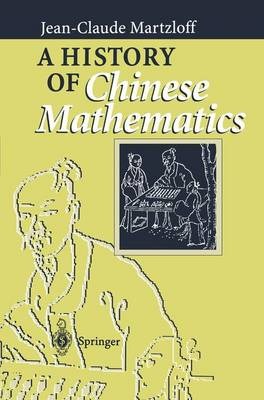
It includes many new recent insights and illustrations, a new appendix on Chinese primary sources and a guide to the to the bibliography. From the reviews: "This book ranks with the most erudite Asian publications, and is the most informative and most broadly informed on its topic in any language.this book apart from the usual histories of mathemathics (in any language, Chinese or Western, of any period or country) is its emphasis first on context, then on content, in describing the long history of Chinese mathematics. It is primarily the question of context that Martzloff approaches directly. Perhaps the greatest contribution his book makes is the chance it offers to consider issues of cultural context as significant, determining factors in the history of mathematics.
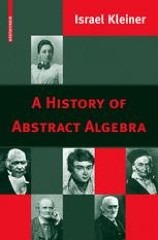
This presentation provides an account of the intellectual lineage behind many of the basic concepts, results, and theories of abstract algebra.The development of abstract algebra was propelled by the need for new tools to address certain classical problems that appeared unsolvable by classical means. A major theme of the approach in this book is to show how abstract algebra has arisen in attempts to solve some of these classical problems, providing context from which the reader may gain a deeper appreciation of the mathematics involved.

سوريا - اتستراد درعا - غباغب
+963-15 2050 - 15 860 380 /1/2/3 - 11 662 3900