


تحسين النتائح
ترتيب حسب
من
الى


The book describes the major physical theories of comets in the past two millennia. It demonstrates the evolution of ideas about the nature, position, motion and physical constitution of comets from Aristotle to Whipple. Unlike the available works on the history of comets, which either illustrate relatively short periods in the history of physical cometology or portray a landscape view without adequate details, the present study focuses on details of each theory. It also investigates the interaction between observational and mathematical astronomy, and the physical sciences in defining the properties of comets.
Learning the diagnostic elements of lung pathology requires not only great familiarity with a wide diversity of cases, but also a sharp eye for analyzing pictorial images. In Lung Pathology: A Consultative Atlas, leading experts offer a novel and substantive approach to the teaching of pulmonary pathology. Drawing on 263 challenging, yet exemplary, referral cases taken from files collected over 20 years by internationally renowned lung pathologist, Dr. Eugene Mark, the authors introduce his state-of-the-art approach to the interpretation of pulmonary pathology. This text includes the primary and/or differential diagnosis and the pertinent histological features of each case, as well as clinical history, when available. Key words or phrases in the text are highlighted and digitally hyperlinked to associated images or regions of interest within those images to assist the readers in their correlation. Novel and user friendly, Lung Pathology: A Consultative Atlas describes a cutting-edge diagnostic approach to pulmonary pathology, describing its principles and demonstrating its application in text and full-color illustrations drawn from 263 difficult cases of human lung pathologies.

Presents and analyzes the results of more than 30 years of long-term ecological research in riparian forest ecosystems with the aim of casting light on changes in the dynamics of riparian forests over time.
Life As we Know It ["LAKI"] covers several aspects of Life, ranging from the prebiotic level, origin of life, evolution of prokaryotes to eukaryotes and finally to various affairs of human beings. Although it is hard to define Life, one can, however, characterize it and describe its features. Topics treated are categories of bacteria, algae and fungi, conscience, philosophy, theology, aesthetics, appearance of sport and life destiny, life after clinical death, and thoughts of the world to come ("Olam Haba"). The various chapters have been written so that they are accessible to all - from the avid lay reader to the specialist – and make available multidisciplinary sources of information about Life. This volume will interest open minded scholars, students at all levels of general sciences, natural and Life science, researchers of philosophy, theology, history of Life, astrobiology, and those who wish to widen their knowledge about "who are we in the universe".
We are at the start of the development of new therapeutic classes, directed against new molecular targets (EGFR, VEGF, IGFR, Rank, etc.) Several diseases such as kidney, colon or breast cancer, GIST, have a natural history now modified thanks to these therapies. This practical book takes stock of the current use of these molecules.
Fifteen years after the first experiments, the breast cancer screening program was rolled out in France in 2004. It is aimed at more than eight million women aged 50 to 74. Public health action on such a scale is exemplary in Europe and especially in France where the health system is not centralized. The new edition of this book takes stock of the current state of the program and its initial results. It updates technical and radiological aspects, assessment indicators, communication and forensic problems and finally the progress of foreign programs. The history of the French program is detailed from the 1990s until 2006, with the publication of the latest version of the specifications by the Directorate General of Health. The short and medium term objectives are re-specified: to increase the participation of women, to retain them and to further improve the quality of practices. The challenge is to combine the performance of screening and therapeutic management to finally achieve a clear reduction in mortality, which has remained stable for twenty years.
Each year, cervical cancer kills approximately 1,000 people in France, making it the fifth leading cause of cancer death and the eighth most common cancer among women. While eradicating cervical cancer is not possible, a national screening campaign should significantly reduce its incidence. This campaign should be based, in particular, on the systematic use of Pap smears. Conventional Pap smears have already reduced the number of invasive cancers by more than 50%. Improving them requires optimizing their sensitivity. This book details the natural history of cervical cancer, its incidence and mortality, and the various aspects of screening: general principles, the French screening program, the different types of Pap smears, the role and contribution of the HPV test, the management of abnormal Pap smears, the role of colposcopy, and the follow-up of treated women. It is intended for all those involved in this screening : specialist interns and gynecologists, pathologists and biologists, public health physicians, but also general practitioners whose role in screening is privileged since they are at the forefront of medical demand.

What is the future of genetically modified (or transgenic) conifer plantations? The content of this edited volume Landscapes, Genomics and Transgenic Conifers addresses this question directly - and indirectly - using language drawn from policy, forest history, genomics, metabolism, pollen dispersal and gene flow, landscape ecology, evolution, economics, technology transfer and regulatory oversight. Although the book takes its title from a Nicholas School Leadership forum held November 17-19, 2004 at Duke University, its de novo contents move past the forum’s deliberations. The result is a trans-disciplinary book composed of 14 chapters written by a total of 31 authors working in North America, South America, Europe and Africa.

Known as "a dream place for scientists," the Lamto savannas, located on the edge of the Cote d'Ivoire rain forests, are one of the only savannas in the world where ongoing ecological research has endured for more than forty years. Drawing from and synthesizing this abundance of research, the book examines the structure, functioning, and dynamics of the Lamto humid savanna. Beginning with the history of the Lamto ecology station and an overview of the major environmental conditions of the site, this exacting work specifically examines the integrative view of energy and nutrient fluxes relative to the dynamics of the savanna's vegetation.

This extensively documented, comprehensive survey of cell-mediated cytotoxicity (CMC) traces the history of killer lymphocytes from 1960 to the present, providing a definitive resource for specialists and non-specialists alike.
Support pharmacists in identifying, diagnosing, treating or referring the illnesses and conditions they will commonly encounter in the community. A logical structure covers the full range of common presentations, including respiratory, ear, eye, gastroenterological and skin conditions. Clear pictures, referral criteria and summaries of treatment options support clinical reasoning, differential diagnosis and selection of appropriate products. Suitable for both pharmacy students and qualified pharmacists, the sixth edition has been fully updated to align with changes to the pharmacy curriculum and the rapidly expanding scope of pharmacists working in primary care and community pharmacy.
Follows the revised format of the Practical Assessment Clinical Examination Skills (PACES) exam conducted by the Royal College of Physicians in the UK, where ‘clinical consultation skills’ will be tested twice in two separate stations. Thus, coming closest to what doctors do in real life: obtain a structured history, perform a focussed examination and explain the problem to the patient in lay terms. This book takes readers through a rational approach to 63 common presenting symptoms or laboratory abnormalities in medicine. It is aimed at improving the clinical consultation skills of young doctors and preparing them for the new format of MRCP PACES
Cephalopods are diverse, highly developed molluscs capable of swimming and jet propulsion. These animals are an important component of present-day marine ecos- tems throughout the world and comprise approximately 900 species. They also have an extraordinary fossil record, extending back to the Cambrian Period, with as many as 10,000 extinct species. Throughout their long history, they have experienced sp- tacular radiations and near-total extinctions. Because of their superb fossil record, they also serve as ideal index fossils to subdivide geologic time. This book touches on many of these themes, and it treats both fossil and present-day cephalopods.
This volume serves as a succinct and well-organized reference volume focused on inflammatory CNS disease to a wide audience. The text is comprised of four sections revolving around current areas of interest in the fields of neuroimmunology, virology, pharmacology and disease. Sections of this text focus on a specific category of diseases as well as the pharmacological, virological, and immunological effects of and on the disease.Although many have covered this topic, few have provided a volume as concise and efficient. Each disease is broken down on a variety of scientific levels without getting into the history of the disease. This approach provides a succinct overview of a specific subject encompassing interrelated topics pertaining to neurology, immunology and disease. The information provided in Central Nervous System Diseases and Inflammation will be useful for researchers, clinicians, as well as a valuable resource for students interested in the fascinating arena of neuroinflammation.
Cartilage Repair Strategies is a comprehensive update of the present state of cartilage repair and regeneration. The information in this volume addresses what methods are effective, what methods are safe, and what methods will lead to an alteration in the short history of articular cartilage injury repair. Contributors present examinations of a variety of topics including the structure and function of articular cartilage, the evaluation of cartilage repair techniques, and the latest cartilage sensitive imaging techniques.
Cancer Grading Manual addresses all histopathologic aspects of tumor pathology essential for grading of tumors. It discusses the history and basic tenets of tumor grading; principles of microscopic grading of tumors; ancillary methods currently used to improve tumor grading; and new techniques used in evaluating tumors and formulating prognosis. It is designed to be a practice-oriented, concise and well-illustrated resource for diagnostic surgical pathologists and pathology residents.
A major objective of this book is to summarize the current status of Buruli Ulcer (BU) research for the first time. It will identify gaps in our knowledge, stimulate research and support control of the disease by providing insight into approaches for surveillance, diagnosis, and treatment of Buruli Ulcer. Book chapters will cover the history, epidemiology diagnosis, treatment and disease burden of BU and provide insight into the microbiology, genomics, transmission and virulence of Mycobacterium ulcerans.

Since the terrorist attack on the United States on September 11, 2001 and subsequent cases of anthrax in Florida and New York City, attention has been focused on the threat of b- logical warfare and bioterrorism. Biological warfare agents are de?ned as “living org- isms, whatever their nature, or infected material derived from them, which are used for h- tile purposes and intended to cause disease or death in man, animals and plants, and depend for their efforts on the ability to multiply in person, animal or plant attacked.” Biological warfare agents may be well suited for bioterrorism to create havoc and terror in a civilian population, because they are cheap and easy to obtain and dispense. Infectious or contagious diseases have played a major part in the history of warfare – deliberately or inadvertently – in restricting or assisting invading armies over the centuries. In 1346, the Tartars catapulted plaque-infected bodies into Kaffa in the Crimea to end a 3-year siege. Blankets contaminated with smallpox to infect North American Indians were used by British forces in the 18th century. More recently, the Japanese released ?eas infected with plaque in Chinese cities in the 1930s and 1940s. Biological research programs for both offensive and defensive strategies have been developed by the United States, Britain, the former Soviet Union, and Canada; several other nations are thought to have such programs.
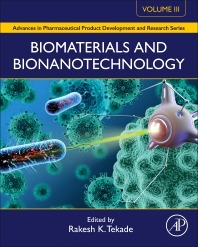
Examines the current state of the field within pharmaceutical sciences and concisely explains the history of biomaterials including key developments. Written by experts in the field, this volume within the Advances in Pharmaceutical Product Development and Research series deepens understanding of biomaterials and bionanotechnology within drug discovery and drug development. Each chapter delves into a particular aspect of this fast-moving field to cover the fundamental principles, advanced methodologies and technologies employed by pharmaceutical scientists, researchers and pharmaceutical industries to transform a drug candidate or new chemical entity into a final administrable dosage form, with particular focus on biomaterials and bionanomaterials. This book provides a comprehensive examination suitable for researchers working in the pharmaceutical, cosmetics, biotechnology, food and related industries as well as advanced students in these fields.

The idea for Bioethics in Law began more than a decade ago, while I was studying social science and law. I was parti- larly interested in the collaborations that comprised social s- ence in law. Economic and social data in the pioneering Brandeis brief had been used to defend an early 20th-century labor law; surveys of consumer confusion had helped resolve trademark - fringement cases; psychologists’ predictions of future violence had informed capital sentencing decisions. Additionally, Kenneth Clark’s “doll studies,” cited by the Supreme Court in Brown v. Board of Education, had helped change the course of American 1 history.

سوريا - اتستراد درعا - غباغب
+963-15 2050 - 15 860 380 /1/2/3 - 11 662 3900