


تحسين النتائح
ترتيب حسب
من
الى

The volume includes a total of 62 invited papers, organized into 12 broad thematic areas: cochlear signal processing; brainstem signal processing; pitch; frequency modulation; streaming; amplitude modulation; responses to complex sounds; speech; comodulation masking release; binaural hearing; temporal coding; and plasticity
Auditory Perception of Sound Sources covers higher-level auditory processes that are perceptual processes. The chapters describe how humans and other animals perceive the sounds that they receive from the many sound sources existing in the world. This book will provide an overview of areas of current research involved with understanding how sound-source determination processes operate. This book will focus on psychophysics and perception as well as being relevant to basic auditory research.

Sounds that are actually produced by healthy ears allow researchers and clinicians to study hearing and cochlear function noninvasively in both animals and humans. Active Processes and Otoacoustic Emissions in Hearing presents the first serious review of the biological basis of these otoacoustic emissions. Active processes, such as those in hair cells that produce emissions, represent a burgeoning and important area of sensory research. By providing a basis for understanding how and why otoacoustic emissions testing works through a basic understanding of general hearing processes, this volume will also interest clinicians, particularly otolaryngologists and audiologists.
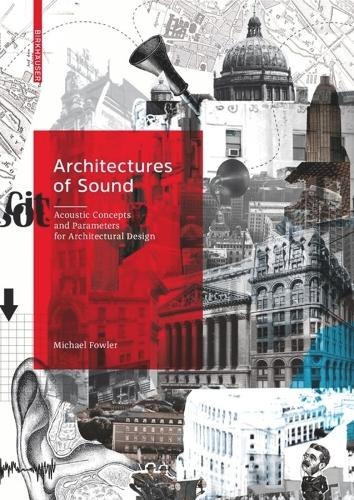
Architects are used to designing visually. In order to expand their basic design tools, this book explores the interactions between sound, space, hearing, and architecture. To this end, the author uses contemporary and historic buildings and projects, but also fictional, philosophical, and theoretical approaches – the idea is not only to define sound as a source, but also as an instrument of architectural space.
When one listens to music at home, one would like to have an acoustic impression close to that of being in the concert hall. Until recently this meant elaborate multi-channelled sound systems with 5 or more speakers. But head-related stereophony achieves the surround-sound effect in living rooms with only two loudspeakers. By virtue of their slight directivity as well as an electronic filter the limitations previously common to two-speaker systems can be overcome and this holds for any arbitrary two-channel recording. The book also investigates the question of how a wide and diffuse sound image can arise in concert halls and shows that the quality of concert halls decisively depends on diffuse sound images arising in the onset of reverberation. For this purpose a strong onset of reverberation is modified in an anechoic chamber by electroacoustic means.

سوريا - اتستراد درعا - غباغب
+963-15 2050 - 15 860 380 /1/2/3 - 11 662 3900