



الصفحة 1
الصفحة 1

Sustainable healthcare architecture
Shows us how critical our green building mission is to the future of human health and secures a lasting legacy that will continue to challenge and focus the green building movement, the healthcare industry, and the world for years to come. Includes: 55 new project case studies, including comparisons of key sustainability indicators for general and specialty hospitals, sub-acute and ambulatory care facilities, and mixed-use buildings. New and updated guest contributor essays spanning a range of health-focused sustainable design topics. Evolving research on the value proposition for sustainable healthcare buildings. Profiles of five leading healthcare systems and their unique sustainability journeys, including the UK National Health Service, Kaiser Permanente, Partners HealthCare, Providence Health & Services, and Gundersen Health System. Focus on the intersection of healthcare, resilience, and a health promotion imperative in the face of extreme weather events. Comparison of healthcare facility-focused green building rating systems from around the world

Smart healthcare system design : Security and privacy aspects
Discusses the major challenges and issues for security and privacy aspects of smart health-care systems. Helps achieve a better integration between the work of researchers and practitioners in a single medium for capturing state-of-the-art IoT solutions in healthcare applications, and to address how to improve the proficiency of wireless sensor networks (WSNs) in healthcare. It explores possible automated solutions in everyday life, including the structures of healthcare systems built to handle large amounts of data, thereby improving clinical decisions. The 14 separate chapters address various aspects of the IoT system, such as design challenges, theory, various protocols, implementation issues, as well as several case studies.

Semantic Web for Effective Healthcare Systems
Summarizes the trends and current research advances in web semantics, delineating the existing tools, techniques, methodologies, and research solutions. Analyzes the current status on how the semantic web is used to solve health data integration and interoperability problems, and how it provides advanced data linking capabilities that can improve search and retrieval of medical data. Chapters analyze the tools and approaches to semantic health data analysis and knowledge discovery. The book discusses the role of semantic technologies in extracting and transforming healthcare data before storing it in repositories. It also discusses different approaches for integrating heterogeneous healthcare data. This book offers: The first of its kind and highlights only the ontology driven information retrieval mechanisms and techniques being applied to healthcare as well as clinical information systems ; Presents a comprehensive examination of the emerging research in areas of the semantic web ; Discusses studies on new research areas including ontological engineering, semantic annotation and semantic sentiment analysis ; Helps readers understand key concepts in semantic web applications for the biomedical engineering and healthcare fields ; Includes coverage of key application areas of the semantic web.

Pharmacotherapy of Obesity
Obesity has become a major epidemic that now rivals smoking as a risk to public health. The ensuing epidemics of diabetes, vascular disease and other complications are set to overwhelm the healthcare systems of wealthy and poorer nations alike. The need for effective pharmacotherapy has never been greater. This book takes a new look at the many potential targets for drug development for regulation of body weight, placing them in the context of the chequered history of drug development for obesity and currently available therapies. Potential peripheral and central nervous system targets are discussed in detail by authors with extensive knowledge and research experience in the science of body weight regulation, and its translation into effective therapies that will benefit patients. This book is of interest to clinicians, researchers in the field and members of the pharmaceutical industry who are interested in learning more about the current state of the art and future directions in the pharmacotherapy of obesity.

M-Health : Emerging Mobile Health Systems
M-health: Emerging Mobile Health Systems presents recent advances in this area and explores future trends in the applications of current and emerging wireless communication and network technologies for healthcare delivery and new wireless telemedical services. This work also evaluates the impact of the synergies between the 2.5G and 3G systems and beyond for healthcare applications and explores the augmentation of these technologies for the next generation of m-health services. M-health is commonly defined as the ‘emerging mobile communications and network technologies for healthcare systems’.

IoT-enabled Smart Healthcare Systems, Services and Applications
In IoT-Enabled Smart Healthcare Systems, Services and Applications, an accomplished team of researchers delivers an insightful and comprehensive exploration of the roles played by cutting-edge technologies in modern healthcare delivery. The distinguished editors have included resources from a diverse array of learned experts in the field that combine to create a broad examination of a rapidly developing field.

Informatics for the Clinical Laboratory : A Practical Guide
This series is directed to healthcare professionals who are leading the tra- formation of health care by using information and knowledge. Launched in 1988 as Computers in Health Care, the series offers a broad range of titles: some addressed to specific professions such as nursing, medicine, and health administration; others to special areas of practice such as trauma and radi- ogy. Still other books in the series focus on interdisciplinary issues, such as the computer-based patient record, electronic health records, and networked healthcare systems. Renamed Health Informatics in 1998 to reflect the rapid evolution in the discipline now known as health informatics, the series will continue to add titles that contribute to the evolution of the field. In the series, eminent - perts, serving as editors or authors, offer their accounts of innovations in health informatics. Increasingly, these accounts go beyond hardware and so- ware to address the role of information in influencing the transformation of healthcare delivery systems around the world. The series also increasingly focuses on “peopleware” and the organizational, behavioral, and societal changes that accompany the diffusion of information technology in health services environments.

Improving Health Care in Low- and Middle-Income Countries : A Case Book
This book is a collection of 12 case studies capturing decades of experience improving health care and outcomes in low- and middle-income countries. Each case study is written by healthcare managers and providers who have implemented health improvement projects using quality improvement methodology, with analysis from global health experts on the practical application of improvement methods.

Handbook of research on nano-drug delivery and tissue engineering : Guide to strengthening healthcare systems
Provides an important and valuable collection of research accomplishments in nanomedicine, drug delivery, tissue engineering, processing, formulations, and their applications. Addresses topical issues in nano-drug delivery and nanotechnological approaches to tissue engineering. The first section offers research on a variety of diverse nano-based drug delivery systems, along with discussions of their efficacy, safety, toxicology, and applications for different purposes. Focusing on nanotechnology approaches to tissue engineering, part two of the volume considers the use of hydrogel systems, nanoceria and micro- and nano-structured biomaterials for bone tissue engineering, mesenchymal stem cells, and more. This volume is a systematic scientific reference of the novel research developments specifically in this area. The editors give special emphasis on the new trends and developments in the field of nanomedicine that will be very helpful for pharmaceutical and medical researchers, scientists, faculty, and students.

Future data and security engineering : Big data, security and privacy, smart city and industry 4.0 applications ; 7th International Conference, FDSE 2020, Quy Nhon, Vietnam, November 25–27, 2020, Proceedings
This book constitutes the proceedings of the 7th International Conference on Future Data and Security Engineering, FDSE 2020, held in Quy Nhon, Vietnam, in November 2020.* The 29 full papers and 8 short were carefully reviewed and selected from 161 submissions. The selected papers are organized into the following topical headings: big data analytics and distributed systems; security and privacy engineering; industry 4.0 and smart city: data analytics and security; data analytics and healthcare systems; machine learning-based big data processing; emerging data management systems and applications; and short papers: security and data engineering.

Deep Learning, Machine Learning and IoT in Biomedical and Health Informatics : Techniques and Applications
Examines and demonstrates state-of-the-art approaches for IoT and Machine Learning based biomedical and health related applications. This book aims to provide computational methods for accumulating, updating and changing knowledge in intelligent systems and particularly learning mechanisms that help us to induce knowledge from the data. It is helpful in cases where direct algorithmic solutions are unavailable, there is lack of formal models, or the knowledge about the application domain is inadequately defined. In the future IoT has the impending capability to change the way we work and live. These computing methods also play a significant role in design and optimization in diverse engineering disciplines. With the influence and the development of the IoT concept, the need for AI (artificial intelligence) techniques has become more significant than ever.

Cyber Security : Critical Infrastructure Protection
Focus on critical infrastructure protection. The chapters present detailed analysis of the issues and challenges in cyberspace and provide novel solutions in various aspects. The first part of the book focus on digital society, addressing critical infrastructure and different forms of the digitalization, strategic focus on cyber security, legal aspects on cyber security, citizen in digital society, and cyber security training. The second part focus on the critical infrastructure protection in different areas of the critical infrastructure. The chapters cover the cybersecurity situation awareness, aviation and air traffic control, cyber security in smart societies and cities, cyber security in smart buildings, maritime cyber security, cyber security in energy systems, and cyber security in healthcare. The third part presents the impact of new technologies upon cyber capability building as well as new challenges brought about by new technologies. These new technologies are among others are quantum technology, firmware and wireless technologies, malware analysis, virtualization.
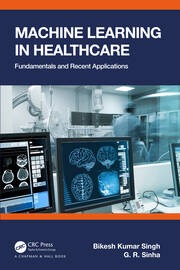
Machine learning in healthcare : Fundamentals and recent applications
Discusses how to build various ML algorithms and how they can be applied to improve healthcare systems. Healthcare applications of AI are innumerable: medical data analysis, early detection and diagnosis of disease, providing objective-based evidence to reduce human errors, curtailing inter- and intra-observer errors, risk identification and interventions for healthcare management, real-time health monitoring, assisting clinicians and patients for selecting appropriate medications, and evaluating drug responses. Extensive demonstrations and discussion on the various principles of machine learning and its application in healthcare is provided, along with solved examples and exercises.

Knowledge Management for Health Care Procedures ; From Knowledge to Global Care, AIME 2007 Workshop K4CARE 2007, Amsterdam, The Netherlands, July 7, 2007, Revised Selected Papers
The incursion of information and communication technologies (ICT) in health care entails evident bene?ts at the levels of security and efciency that improve not only the quality of life of the patients, but also the quality of the work of the health care professionals and the costs of national health care systems. Leaving research approaches aside, the analysis of ICT in health care shows an evo- tion from the initial interest in representing and storing health care data (i. e. , electronic health care records) to the current interest of having remote access to electronic health care systems, as for example HL7 initiatives or telemedicine. This sometimes imperceptible evolution can be interpreted as a new step of the progress path of health care informatics.

Brilliantguard : AI-powered healthcare prototype for mobile & automotive integration
Brilliantguard is an AI-powered healthcare and safety prototype designed to support individuals with special needs, the elderly users, and patients with chronic conditions such as alzheimer’s disease. The system integrates augmented reality (AR), an AI based chatbot, and bitcoin-based payments into a unified platform combining mobile apps, smartwatches, and automotive sensors. It enables real-time health monitoring, predictive alerts with preliminary health suggestions, medication reminders, initial fault detection, and geofencing-based tracking for alzheimer’s patients. Emergency alerts are automatically triggered in response to abnormal health readings or car crashes.

Advanced computational intelligence paradigms in healthcare 2
Computational intelligence paradigms offer many advantages in maintaining and enhancing the field of healthcare. This volume presents seven chapters selected from the rapidly growing application areas of computational intelligence to healthcare systems, including intelligent synthetic characters, man-machine interface, menu generators, analysis of user acceptance, pictures archiving and communication systems.This book will serve as a useful resource for the health professionals, professors, students, and the computer scientists, who are working on or interested in learning healthcare systems, to overview the current stat-of-the-art of diverse applications of computational intelligence to healthcare practice.
