


تحسين النتائح
ترتيب حسب
من
الى

Marine, coastal and wetland habitats are threatened, not only through exploitation, but also by the prospect of climate change – as ocean currents change course, sea levels rise, and rainfall patterns change. Even the once-common cod is now under threat from the combined effects of over-fishing and a dramatic change-induced decrease in the plankton that cod larvae feed on. Meanwhile, coral reefs remain especially vulnerable to rapid sea-level changes exacerbated by the effects of tourism and disease. This book gathers together a wide range of papers reporting on key research into the biodiversity conservation of these critical and increasingly threatened habitats. Collectively these papers provide a snap-shot of the types of problems they are experiencing, and offer a wealth of topical examples which render this volume especially valuable to teachers of courses in marine, freshwater and wetlands ecology, biological conservation and ecological restoration.
This book describes how man-made litter, primarily plastic, has spread into the remotest parts of the oceans and covers all aspects of this pollution problem from the impacts on wildlife and human health to socio-economic and political issues. Marine litter is a prime threat to marine wildlife, habitats and food webs worldwide. The book illustrates how advanced technologies from deep-sea research, microbiology and mathematic modelling as well as classic beach litter counts by volunteers contributed to the broad awareness of marine litter as a problem of global significance. The authors summarise more than five decades of marine litter research, which receives growing attention after the recent discovery of great oceanic garbage patches and the ubiquity of microscopic plastic particles in marine organisms and habitats.
Recognizes the critical roles of disturbance ecology, landscape ecology, ecological assembly, invasion biology, ecosystem health, and historical ecology in habitat restoration and argues that restoration within a successional context will best utilize the lessons from each of these disciplines.
Describes 226 species of 32 families of medicinal plants, which are commonly used in Chinese medicine. The most important species are Aquilaria sinensis and Daphne genkwa of Thymelaeaceae; Benincasa hispida, Siraitia grosvenorii, Trichosanthes kirilowii and Trichosanthes rosthornii of Cucurbitaceae; Camellia sinensis of Theaceae; Cleistocalyx operculatus, Eugenia caryophyllata and Rhodomyrtus tomentosa of Myrtaceae; Osbeckia chinensis of Melastomataceae; Quisqualis indica and Terminalia chebula of Combretaceae; Hypericum japonicum of Hypericaceae; Microcos paniculata of Tiliaceae; Hibiscus mutabilis of Malvaceae; Croton crassifolius, C. lachnocarpus, C. tiglium, Euphorbia humifusa, E. lathyris, E. pekinensis, Phyllanthus emblica and Sauropus spatulifolius of Euphorbiaceae. In each specie, it introduces the scientific names, medicinal names, morphologies, habitats, distributions, acquisition and processing methods of these medicinal plants, the content of medicinal properties, therapeutic effects, usage and dosage of these medicinal plants, and attaches unedited color pictures and pictures of part herbal medicines of each species.
Describes 256 species of medicinal plants from 5 families, which are commonly used in Chinese medicine. The most important species are Agrimonia pilosa, Amygdalus persica, Armeniaca mume, Armeniaca vulgaris, Armeniaca sibirica, Chaenomeles sinensis, Eriobotrya japonica of Rosaceae; Chimonanthus praecox of Calycanthaceae;Albizia julibrissin, Archidendron clypearia, Entada phaseoloides, Bauhinia championii of Mimosoideae; Caesalpinia sappan, Cassia tora, Gleditsia sinensis of Caesalpiniaceae; Abrus cantoniensis, Astragalus membranaceus, Astragalus membranaceus, Dalbergia odorifera, Desmodium caudatum, Desmodium styracifolium, Erythrina variegata, Euchresta japonica, Flemingia prostrata, Glycyrrhiza uralensis, Glycyrrhiza inflata, Glycyrrhiza glabra, Lablab purpureus, Sophora japonica and Spatholobus suberectus of Butterflyaceae. In each specie, it introduces the scientific names, medicinal names, morphologies, habitats, distributions, acquisition and processing methods of these medicinal plants, the content of medicinal properties, therapeutic effects, usage and dosage of these medicinal plants, and attaches unedited color pictures and pictures of part herbal medicines of each species. This book series has 10 volumes in total, which covers over 2000 kinds of Chinese medicines that are commonly used. These volumes not only introduce the efficacy function and some prescriptions of the medicines, but also introduce the biological characteristics of them in detail with clear photos of the habitats, so that readers can identify them in the field. Apart from the growing environment, the books expound the distribution areas and other information to facilitate researches and other applications. The volumes are targeted at readers of general interests and it is also of high referential value for scientific researcher and teachers. It can be used as a guide to researchers, clinical doctors, and students in the department of pharmaceutics and traditional Chinese medicine.
Contains 231 species of 40 families of medicinal plants. The most important family of which are Magnoliaceae, such as Magnolia officinalis and Magnolia officinalis subsp. biloba; Schisandra chinensis of Schisandraceae; Cinnamomum aromaticum of Lauraceae, Coptis chinensis Franch., Coptis omeiensis and Coptis teeta of Berberidaceae; Isatis indigotica, Lepidium apetalum and Raphanus sativus of Cruciferae; Rheum palmatum, Rheum officinale and Rheum taguticum of Polygonaceae, etc. In each specie, it introduces the scientific names, herbal medicine names, characteristics, habitats, distributions, Acquisition and processing methods, medicinal traits, tastes, functions, use and dosages, and other information of medicinal plants, and attaches unedited color pictures and pictures of part herbal medicines for each species. This book series has totally 10 volumes, which covers 2000 kinds of Chinese medicines that are commonly seen or used. These volumes not only introduce the efficacy, function and some prescriptions of the medicines, but also introduce the biological characteristics of them in detail with clear photos of the habitats, so that readers can identify them in the field. Apart from the growing environment, the books expound the distribution areas and other information to facilitate researches and other applications. The volumes are targeted at readers of general interests and it is also of high referential value for scientific researcher and teachers. It can be used as a guide to researchers, clinical doctors, and students in the department of pharmaceutics and traditional Chinese medicine.
This book comes after several decades of outstanding and successful research that has helped ameliorate some of the most important and controversial fisheries issues in the world – those associated with the unwanted wastage of fish from by-catch and discarding. The 8 chapters encompass contributions from 27 of the world’s leading experts in by-catch reduction. They take the reader through most aspects of the field at a variety of scales and viewpoints. They examine the methodologies used to develop by-catch reduction techniques and provide new avenues for assisting and broadening such work. Case studies are provided that encompass most of the world’s fishing techniques and regions.
This volume focuses on reclamation, management, and utilization of salt-affected soils, their sustainable use, and evaluation of plants inhabiting naturally occurring saline habitats. It is of interest to scientists and students as well as to agricultural institutions and farmers and will undoubtedly raise the scientific community's awareness of, and interest in salinity issues.
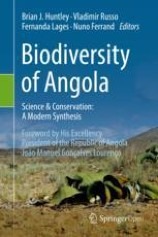
The book identifies Angola as one of the most biologically diverse countries in Africa, but notes that its fauna, flora, habitats and the processes that drive the dynamics of its ecosystems.
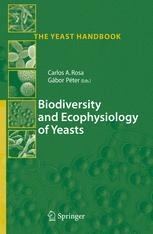
In the last few decades more and more yeast habitats that were not investigated earlier, spanning cold climates to tropical regions and dry deserts to rainforests, have been explored. As a result, a large body of ecological data has been accumulated and the number of known yeast species has increased rapidly. This book provides an overview of the biodiversity of yeasts in different habitats. The recent advances achieved by the application of molecular biological methods in the field of yeast taxonomy and ecology are also incorporated in the book. Wherever possible, the interaction between yeasts and the surrounding environment is discussed.
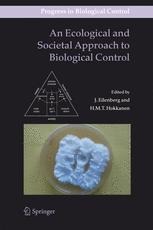
Biological control is among the most promising methods for control of pests (including vectors), diseases and weeds. In this book ecological and societal aspects are for the first time treated together. In an ecological approach the aim is to evaluate the significance of certain biological properties like biodiversity and natural habitats. Also, it is important to see biological control from an organic (or ecological) farming point of view. In a societal approach terms like ‘consumer’s attitude’, ‘risk perception’, ‘learning and education’ and ‘value triangle’ are recognised as significant for biological production and human welfare.
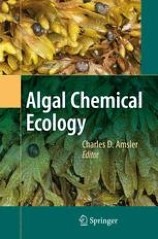
This is the first ever book devoted entirely to the chemical ecology of algae. Algae from both marine and freshwater habitats are covered, as are macroalgae (seaweeds) and microalgae (including phytoplankton). While its main emphasis is on the ecological rather than chemical aspects of the field, the book also includes a unique introductory chapter intended as a primer on algal natural products chemistry for ecologists. It elucidates the roles of chemical defenses in various regions and habitats, of DMSP, oxidative burst responses, and herbivore offense. Topics such as algal sensory chemical ecology and defenses against ultraviolet radiation are also treated, and an introduction to the chemical ecology of phytoplankton is provided.
This book complements “Halophilic Microorganisms”, edited by A. Ventosa and published by Springer-Verlag (2004), “Halophilic Microorganism and their Environments” by A. Oren (2002), published by Kluwer Academic Publishers as volume 5 of “Cellular Origins, Life in Extreme Habitats and Astrobiology” (COLE), and “Microbiology and Biogeochemistry of Hypersaline Environments” edited by A. Oren, and published by CRC Press, Boca Raton (1999).
A Sea Change in a Changing Sea The oceans, seas and coastal areas encompass over 70% of the earth’s surface. They are a critical driver of the earth’s hydrologic cycle and climate system, important for c- merce, transport, and tourism, a source of economically important living marine resources, minerals such as hydrocarbons, as well as new pharmaceutical compounds. The marine environment provides essential habitats for thousands of marine living 1 2 resources, which in turn contribute significantly to global food security, employment, 3 and trade. Overall, the sea’s contribution to human welfare, in terms of market and non-market resources and environmental services, has been estimated at US$21 trillion/year (Costanza, 2000). However, despite the importance of the ocean realm to humans, there is a growing sense that human impacts are destabilizing this system. Some experts believe that current fishing levels are approaching or exceeding the total 4 productivity of the ocean ecosystem (National Research Council, 1999).
Despite the social, nutritional, economical and environmental importance of Tanzanian coastal areas, yet they are vulnerable to both over-exploitation and degradation of their habitats. Using the data from two coastal villages and econometric methods as well as Stochastic Production Frontier techniques, the book demonstrates the extent which various socio-economic dimensions of rural coastal households influence livelihood pathways, production efficiency and attitudes towards conservation initiatives. Thus, attention to differential patterns of rural coastal households presents more viable possibilities for coastal villages to have conservation-development policies/programs that lead to poverty reduction.
Residential Buildings are normally the first design projects encountered by the student in his or her training. The focus at this point is on the different conceptual possibilities that allow one to take the first step toward an actual idea. Themes: concepts and kinds of cohabitation and dwelling residential functions the creation of living space design in housing construction This book is intended to help readers to find an easy way into the complex subject of housing design, explaining fundamental concepts, the way the individual living areas can cohere, and building form variations.
Initiates a fresh discussion of affordability in rural housing set in the context of the rapidly shifting balance between rural and urban populations. It conceptualises affordability in rural housing along a spectrum that is interlaced with cultural and social values integral to rural livelihoods at both personal and community level. Developed around four intersecting themes: explaining houses and housing in rural settings; exploring affordability in the context of aspirations and vulnerability; rural development agendas involving housing and communities; and construction for resilience in rural communities, the book provides an overview of some of the little understood and sometimes counter-intuitive best practices on rural affordability and affordable housing that have emerged in developing economies over the last thirty years.
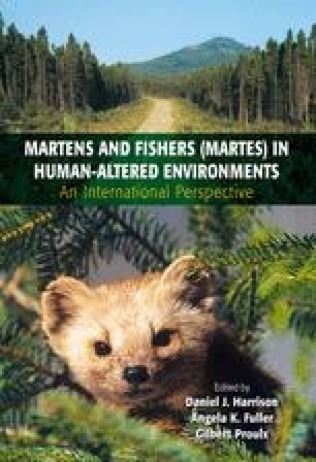
Examines the conditions where humans and martens are compatible and incompatible, and promotes land use practices that allow Martes to be representatively distributed and viable. All Martes have been documented to use forested habitats and 6 species (excluding the stone marten) are generally considered to require complex mid- to late-successional forests throughout much of their geographic ranges. All species in the genus require complex horizontal and vertical structure to provide escape cover protection from predators, habitat for their prey, access to food resources, and protection from the elements. Martens and the fisher have high metabolic rates, have large spatial requirements, have high surface area to volume ratios for animals that often inhabit high latitudes, and often require among the largest home range areas per unit body weight of any group of mammals. Resulting from these unique life history characteristics, this genus is particularly sensitive to human influences on their habitats, including habitat loss, stand-scale simplification of forest structure via some forms of logging, and landscape-scale effects of habitat fragmentation. Given their strong associations with structural complexity in forests, martens and the fisher are often considered as useful barometers of forest health and have been used as ecological indicators, flagship, and umbrella species in different parts of the world. Thus, efforts to successfully conserve and manage martens and fishers are associated with the ecological fates of other forest dependent species and can greatly influence ecosystem integrity within forests that are increasingly shared among wildlife and humans.We have made great strides in our fundamental understanding of how animals with these unique life history traits perceive and utilize habitats, respond to habitat change, and how their populations function and perform under different forms of human management and mismanagement.
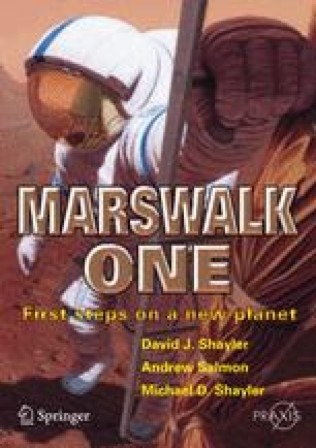
MARSWALK ONE: First Steps on a New Planet addresses the question of why we should embark on a journey to Mars, documenting what the first human crew will do when they place their feet in the red dust of the planet. The book also addresses why we need to carry out these tasks and, more importantly, what a human crew could achieve that an automated mission could not. Understanding the clear benefits of sending a human crew to the surface of Mars, and how these benefits can be seen back on Earth, is the key to sustained long-term public and political support for the programme in terms of cash and commitment. The book accepts that the journey will be made, but does not specify precisely when. Flight time, and how to get to and from the planet are discussed briefly, to understand why the suggested duration spent at Mars is reasonable. The main objective of the work is to look at what science will be done on the surface – supported by orbital operations – and what hardware and technology will be employed to achieve the mission objectives. This analysis is drawn from previous experiences in manned and unmanned space programmes, including Apollo, Skylab, Salyut/Mir, Shuttle and ISS, Viking, Luna/Lunokhod, and recent Mars missions such as Pathfinder and Global Surveyor.
Draws parallels with the settlement of terrestrial frontiers to investigate how new space propulsion techniques may help future space settlers exploit extraterrestrial resources to establish independence from the Earth. "Living Off the Land in Space," a collaboration among two space scientists and an artist, is illuminated with many NASA-derived computer-generated images, including drawings, and presents the human (as well as the technological) side of space settlement. It will be an inspiring and indispensible source for those wishing to share in this great adventure.

سوريا - اتستراد درعا - غباغب
+963-15 2050 - 15 860 380 /1/2/3 - 11 662 3900