


تحسين النتائح
ترتيب حسب
من
الى


A fuzzy system is, in a very broad sense, any fuzzy logic-based system where fuzzy logic can be used either asthebasisfor the representation of different forms of system knowledge or the model for the interactions and relationships among the system variables. Fuzzy systems have proven to be an important tool for modeling complex systems for which, due to complexity or imprecision, classical tools are unsuccessful. There have been diverse fields of applications of fuzzy technology from medicine to management, from engineering to behavioral science, from vehicle control to computational linguistics, and so on. Fuzzy modeling is a conjunction to understand the s- tem’s behavior and build useful mathematical models. Different types of fuzzy models have been proposed in the literature, among which the Takagi-Sugeno (T-S) fuzzy model is a rule-based one suitable for the accurate approximation and identi?cation of a wide class of nonlinear systems.
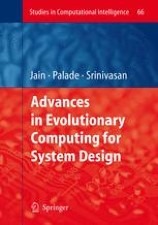
Evolutionary computing paradigms offer robust and powerful adaptive search mechanisms for system design. This book includes thirteen chapters covering a wide area of topics in evolutionary computing and applications including: -Introduction to evolutionary computing in system design - Evolutionary neuro-fuzzy systems - Evolution of fuzzy controllers - Genetic algorithms for multi-classifier design -Evolutionary grooming of traffic -Evolutionary particle swarms -Fuzzy logic systems using genetic algorithms - Evolutionary algorithms and immune learning for neural network-based controller design - Distributed problem solving using evolutionary learning -Evolutionary computing within grid environment -Evolutionary game theory in wireless mesh networks - Hybrid multiobjective evolutionary algorithms for the sailor assignment problem - Evolutionary techniques in hardware optimization

Addresses the problem by introducing a dynamic, on-line fuzzy inference system. In this system membership functions and control rules are not determined until the system is applied and each output of its lookup table is calculated based on current inputs. The tuning process is a major focus in this volume because it is the most difficult stage in fuzzy control application. Using new methods such as µ-law technique, histogram equalization and the Bezier-based method, all detailed here, the tuning process can be significantly simplified and control performance improved. The other great strength of this book lies in the range and contemporaneity of its applications and examples which include: laser tracking and control; robot calibration; image processing and pattern recognition; medical engineering; audio systems; autonomous underwater vehicles and data mining.
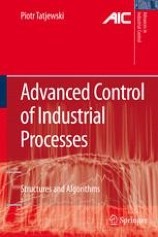
Advanced Control of Industrial Processes presents the concepts and algorithms of advanced industrial process control and on-line optimisation within the framework of a multilayer structure. Relatively simple unconstrained nonlinear fuzzy control algorithms and linear predictive control laws are covered, as are more involved constrained and nonlinear model predictive control (MPC) algorithms and on-line set-point optimisation techniques.Advances in Industrial Control aims to report and encourage the transfer of technology in control engineering. The rapid development of control technology has an impact on all areas of the control discipline. The series offers an opportunity for researchers to present an extended exposition of new work in all aspects of industrial control.

سوريا - اتستراد درعا - غباغب
+963-15 2050 - 15 860 380 /1/2/3 - 11 662 3900