



الصفحة 1
الصفحة 1

Novel food grade enzymes : Applications in food processing and preservation industries
Covers all the aspects of food-grade enzymes, including their classification, kinetics, microbial production, biosynthetic pathways, commodity-wise industrial applications, and downstream processing strategies. The broad focus of this book is on the application of various classes of enzymes in dairy, fruits and vegetables, cereals and oilseeds, meat and poultry, and brewing and food packaging industries. Certain recent areas such as nanotechnological perspective in enzyme immobilization, infusion strategies as well as its efficient usage in food packaging and preservation are some of the salient highlights of this book. This book also discusses the aspects related to application of enzymes in functional food development and shelf life extension of various commodities food products.

Mycotoxins in Foodstuffs
Due to the serious spoilage and health issues the presence of mycotoxins can cause, it’s imperative that the food industry has a basic understanding fungi and their corresponding mycotoxins. An indispensable resource, Mycotoxins in Foodstuffs gives an in depth overview by listing the degree of contamination, concentration and country of origin/detection for each case of mycotoxin contamination for each commodity. In addition, the book shows whether or not food is predisposed for mycotoxin contamination.

Handbook of plant and animal toxins in food : Occurrence, toxicity, and prevention
Focuses on various selected toxins in foods derived from plants as well as animals. The prominent plant toxins include solanine and chaconine, mushroom toxins, phytates, tannins, oxalates, goitrogens, gossypol, phytohemagglutinins, erucic acid, saponins, cyanogenic glycosides, enzyme inhibitors, BOAA (lathyrogens), toxic amino acids and toxic fatty acids. The prominent animal toxins covered in the book include various seafood toxins, shellfish toxins and biogenic amines. Presents complete information about a plethora of toxins Provides quick and easy access to data on major plant and animal toxins Covers distribution of toxins in the plant and animal kingdom Provides comprehensive information on chemistry, safety and precautions of each toxin

Fundamentals of Food Process Engineering
While continuing the tradition of expansive coverage, Fundamentals of Food Process Engineering, Third Edition, has been fully updated and revised. The new edition of this classic text emphasizes problem solving, including technological principles that form the basis for a process so that the process can be better understood and the selection of processing parameters to maximize product quality and safety can be made more effective. In addition, the book contains new, hard-to-find data needed to conduct food process engineering calculations.

Functional Foods
Functional Foods Presenting cutting-edge information on new and emerging food engineering processes, Functional Foods, the second volume in the groundbreaking new series, “Bioprocessing in Food Science,” is an essential reference on the modeling, quality, safety, and technologies associated with food processing operations today.

Food Engineering : Integrated Approaches
Food Engineering: Integrated Approaches presents an up-to-date review of important food engineering concepts, issues and recent advances in the field. Distinguished food engineers and food scientists from key institutions worldwide have contributed chapters that provide a deep analysis of their particular subjects. At the same time, each topic is framed within the context of a broader more integrated approach, demonstrating its relationship and interconnectedness to other areas. The premise of this work, therefore, is to offer both a comprehensive understanding of food engineering as a whole and a thorough knowledge of individual subjects. This approach appropriately conveys the basic fundamentals, state-of-the-art technology, and applications of the involved disciplines.
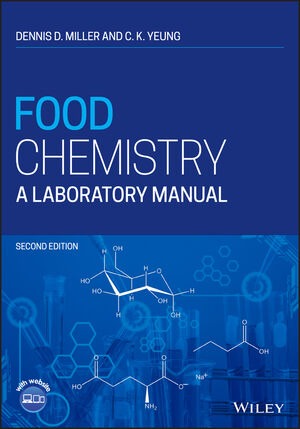
Food chemistry : A laboratory manual
FOOD CHEMISTRY A manual designed for Food Chemistry Laboratory courses that meet Institute of Food Technologists undergraduate education standards for degrees in Food Science Every chapter offers introductory summaries of key methodological concepts and interpretations of the results obtained from food experiments. The book provides a supplementary online Instructor’s Guide useful for adopting professors that includes a Solutions Manual and Preparation Manual for laboratory sessions.

Food allergies processing technologies for allergenicity reduction
Provides an authoritative source of information on the relationship between food processing technologies and food allergens with a greater variety of studied allergens including peanuts, tree nuts, cow’s milk, eggs, sesame, lupine, soy, wheat, mustard, mushroom, fish and shellfish, as well as the importance of processing these when producing hypoallergenic foods.

Electromagnetic Technologies in Food Science
Electromagnetic Technologies in Food Science examines various methods employed in food applications that are based on the entire electromagnetic (EM) spectrum. Focusing on recent advances and challenges in food science and technology, this is an up-to-date volume that features vital contributions coming from an international panel of experts who have shared both fundamental and advanced knowledge of information on the dosimetry methods, and on potential applications of gamma irradiation, electron beams, X-rays, radio and microwaves, ultraviolet, visible, pulsed light, and more.

Chemical components in some winter vegetables and their effectiveness in treating diseases
Cruciferous (Brassicaceae) vegetables comprise many important species cultivated worldwide and utilized traditionally for culinary and medicinal purposes in different cultures. In the last couple of decades, growing scientific evidence has suggested that consumption of cruciferous vegetables has a preventive role against a variety of human diseases. This prompted the development of nutritional ingredients derived from these vegetables and their use as dietary supplements in different formulations that contain complete plant extracts or specific compounds...
Application of microbes in environmental and microbial biotechnology
Discusses the innovative approaches and investigation strategies, as well as provides a broad spectrum of the cutting-edge research on the processing, properties and technological developments of microbial products and their applications. Microbes finds very important applications in our lives including industries and food processing. They are widely used in the fermentation of beverages, processing of dairy products, production of pharmaceuticals, chemicals, enzymes, proteins and biomaterials / conversion of biomass into fuel, fuel cell technology, health and environmental sectors. Some of these products are produced commercially, while others are potentially valuable in biotechnology. Microorganisms are considered invaluable in research as model organisms. This is a useful compilation for students and researchers in microbiology, biotechnology and chemical industries.

Advances in microwave and radio frequency processing ; Report from the 8th International conference on microwave and high-frequency heating held in Bayreuth, Germany, September 3-7, 2001
Recent applications of microwave and high-frequency radiation in the field of materials processing, chemical synthesis, food processing and in the biomedical area are presented. The book also covers fundamentals of matter radiation interaction, modeling of processes, hardware development, measurement techniques as well as current regulations for industrial applications of microwave and radio frequency heating.
