



الصفحة 1
الصفحة 1

Growing Plantation Forests
Plantation forests are grown to supply wood and to provide environmental benefits, such as waste disposal, rehabilitation of degraded sites, enhancement of regional biodiversity and reduction of logging in native forests. In a highly readable fashion, this book describes the scientific principles which are used throughout the world to ensure rapid, healthy plantation growth. It is written for a world-wide audience, from forestry professionals and scientists through to small plantation growers, to describe how plantations may be grown responsibly and profitably.

Environmental and Resource Valuation with Revealed Preferences : A Theoretical Guide to Empirical Models
Environmental and Resource Valuation with Revealed Preferences: A Theoretical Guide to Empirical Models provides a systematic review of those economic approaches for valuing the environment and natural resources that use information on what people do, not what they say.
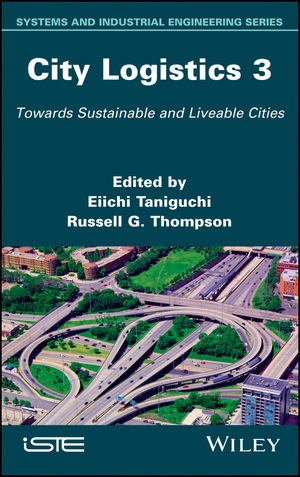
City Logistics 3 : Towards sustainable and liveable cities
Presents recent advances in modelling, planning and evaluating city logistics for sustainable and liveable cities based on the application of ICT (Information and Communication Technology) and ITS (Intelligent Transport Systems). It highlights modelling the behaviour of stakeholders who are involved in city logistics as well as planning and managing policy measures of city logistics including cooperative freight transport systems in public-private partnerships. Case studies of implementing and evaluating city logistics measures in terms of economic, social and environmental benefits from major cities around the world are also given.
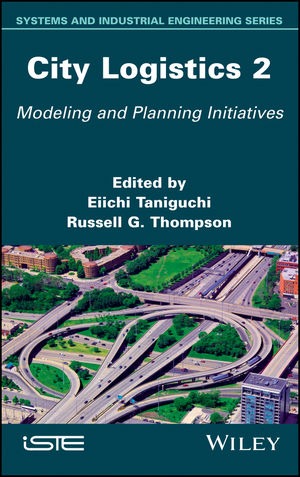
City Logistics 2 : Modeling and Planning Initiatives
Presents recent advances in modelling, planning and evaluating city logistics for sustainable and liveable cities based on the application of ICT (Information and Communication Technology) and ITS (Intelligent Transport Systems). It highlights modelling the behaviour of stakeholders who are involved in city logistics as well as planning and managing policy measures of city logistics including cooperative freight transport systems in public-private partnerships. Case studies of implementing and evaluating city logistics measures in terms of economic, social and environmental benefits from major cities around the world are also given.
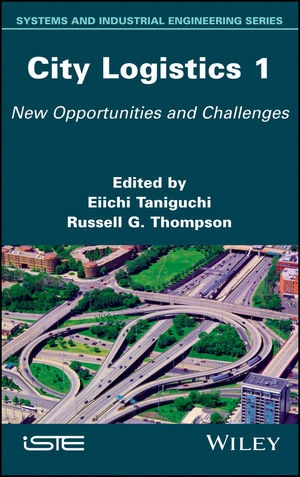
City Logistics 1 : New opportunities and challenges
Presents recent advances in modelling, planning and evaluating city logistics for sustainable and liveable cities based on the application of ICT (Information and Communication Technology) and ITS (Intelligent Transport Systems). It highlights modelling the behaviour of stakeholders who are involved in city logistics as well as planning and managing policy measures of city logistics including cooperative freight transport systems in public-private partnerships. Case studies of implementing and evaluating city logistics measures in terms of economic, social and environmental benefits from major cities around the world are also given.
Advances in Digital Terrain Analysis
Terrain analysis has been an active study field for years and attracted research studies from geographers, surveyors, engineers and computer scientists. With the rapid growth of Geographical Information System (GIS) technology, particularly the establishment of high resolution Digital Elevation Models (DEM) at national level, the challenge is now focused on delivering justifiable socio-economical and environmental benefits. The contributions in this book represent the state of the art of terrain analysis methods and techniques in areas of digital representation, morphological and hydrological models, uncertainty and applications of terrain analysis.
