



الصفحة 1
الصفحة 1

Neo-Liberalism, State Power and Global Governance
Part One explores the pattern of national differences in the exercise of state power in a variety of industrialized and developing economies, despite the pressure to converge towards the dominant neo-liberal paradigm. Part Two analyses a variety of trans-national policy prescriptions for neo-liberalism and state power. Part Three explores whether the governance of labour markets is a special case in the global economy. Part Four sets out the need for institutional reform of the neo-liberal order in trade and finance. The volume concludes that there is the prospect of a more plural approach to state power and global governance, and one that recognizes the importance of the public domain of citizenship for delivering the global public goods of security, prosperity and environmental sustainability in the twenty-first century.

Greening the Industrial Facility : Perspectives, Approaches, and Tools
This book fills a critical gap as a textbook and reference book on the comprehensive environmental impacts of industrial organizations. It is intended for both upper-level undergraduate and beginning graduate students in environmental studies or engineering, and, more broadly, for practicing managers and engineers seeking to improve industrial processes. Nineteen chapters, each focusing on an industrial sector, from resource extraction through fabrication and manufacturing to recycling, evaluate the sector’s inherent "potential to pollute" by providing an overview of typical sector operations and their environmental implications. Beyond outlining and providing frameworks for assessing industrial facilities’ contemporary interactions with the environment (energy and water use, material throughput and hazard, and pollution potential), the book provides forward-looking analyses concerning how new technologies and practices can transform environmentally degrading effects of industry. It also addresses how managers can navigate these changes and move their industrial organizations towards environmental sustainability over the long term.

Economic evaluation of sustainable development
This book presents methods to evaluate sustainable development using economic tools. The focus on sustainable development takes the reader beyond economic growth to encompass inclusion, environmental stewardship and good governance. Sustainable Development Goals (SDGs) provide a framework for outcomes. In illustrating the SDGs, the book employs three evaluation approaches: impact evaluation, cost-benefit analysis and objectives-based evaluation.

Eating, Drinking: Surviving : The International Year of Global Understanding - IYGU
This publication addresses the global challenges of food and water security in a rapidly changing and complex world. The essays highlight the links between bio-physical and socio-cultural processes, making connections between local and global scales, and focusing on the everyday practices of eating and drinking, essential for human survival. Written by international experts, each contribution is research-based but accessible to the general public.

Dimensions of the Sustainable City
The CityForm consortium’s latest book, Dimensions of the Sustainable City, is the first book to report on an empirical multi-disciplinary study specifically designed to address urban sustainability. Drawing together the various dimensions of sustainability – economic, social, transport, energy and ecological – the book examines their relationships both to each other and to urban form. The book investigates the sustainability dimensions of cities through a series of projects based on a common list of elements of urban form, and which draw on the consortium’s latest research to review the sustainability issues of each dimension. The elements of urban form include density, land use, location, accessibility, transport infrastructure and characteristics of the built environment.

Digital platforms in finance and supply chain management : Governance, ethics, and industry 5.0
A comprehensive analysis of digital platforms as the driving force of the modern economy, exploring their evolution, governance, and integration across financial and supply chain ecosystems. It presents a synthesis of theories, strategic models, and empirical insights to address the complexities of platform economies, making it an essential resource for scholars, policymakers, and industry practitioners. It is structured around core principles of digital platforms, including their definition, key features, and transformative impact on value creation. It delves into governance and ethical considerations, examining global regulatory frameworks and the emerging paradigms of Industry 5.0, where digital platforms intersect with economic, social, and environmental sustainability. The theoretical foundations are rooted in network effects, New Economic Geography, Platform Economics, Agency Theory, and Systems Theory, offering a robust analytical framework for understanding scalability, competition, and strategic decision-making in platform ecosystems. Two important areas -finance and supply chains-are explored in depth.

Digital innovation management : People, process, platforms and policy
Shows how digital innovation management practices can facilitate project coordination aimed at business success while prioritizing environmental and social responsibility. structured around the four pillars of digital innovation (people, process, platforms, and policy), the book illustrates how digital and physical elements of innovation management can be integrated to create new marketing offerings, organizational processes, and business models that align with sustainability and human centric ideals. the book supports a theoretical framing of digital innovation management with case studies of creative digital ecosystems such as smart cities, which leverage integrated digital systems to advance research, innovation, and education. finally, the book provides an analysis of emerging technologies, such as artificial intelligence and blockchain, that may introduce significant digital innovations to make smarter organizations and territories.

Design for Environmental Sustainability
Design for Environmental Sustainability is a technical and operative contribution to the United Nations "Decade on Education for Sustainable Development" (2005-2014), aiding the development of a new generation of designers, responsible and able in the task of designing environmentally sustainable products.

Creating Healthy and Sustainable Buildings : An Assessment of Health Risk Factors
The book discusses human health and wellbeing within the context of built environments. It provides a comprehensive overview of relevant sources of literature and user complaints that clearly demonstrate the consequences of lack of attention to health in current building design and planning. Current designing of energy-efficient buildings is mainly focused on looking at energy problems and not on addressing health. Therefore, even green buildings that place environmental aspects above health issues can be uncomfortable and unhealthy, and can lead to public health problems. They point to the need for public health specialists, engineers and planners to come together and review built environments for human wellbeing and environmental sustainability. The authors therefore present a tool for holistic decision-making processes, leading to short- and long-term benefits for people and their environment.

Managing change for sustainability at higher education sector in Syria : The case of private university
Provides an overview of sustainability in higher education, emphasizing its significance in the scope of environmental, social, and economic initiatives. A clarification between an old and new paradigm is examined, highlighting the challenges, which face the higher education sector. The research review classical model of change drawing on the importance of action research model. The research provides a case example on sustainability in higher education in the South Mediterranean region, drawing on the case of Syrian higher education...
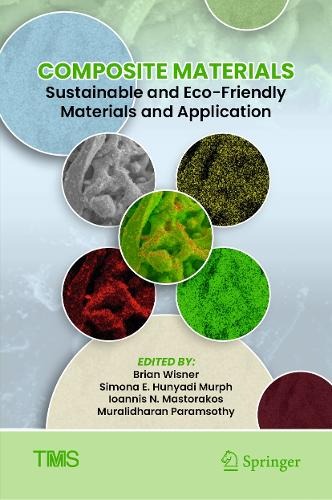
Composite materials : sustainable and eco-friendly materials and application
Covers innovations in the field of composite materials with a specific focus on eco-friendly and environmentally sustainable systems. All composite fields are explored, including polymer, metal, and ceramic matrix composites with an emphasis on sourcing raw materials in a sustainable way as well as the development of composite materials for environmental sustainability.

Asia-Pacific fishing livelihoods
Where fishing livelihoods come from and where they are going are simple questions with no simple answers. Using examples of small-scale fisheries in Asia-Pacific, Fabinyi and Barclay offer eloquent analyses of how fishing livelihoods are shaped, resting on a relational approach idea

Accounting for social and environmental sustainability : A multi-capital approach
Offers an in‑depth examination of multi‑capital accounting, which has already been integrated within the corporate sustainability reporting directive and will follow on from sustainability reporting. the LIFTS model (limits and foundations towards sustainability accounting model) used in this book combines various scientific and practical contributions to develop budgets for environmental impacts and social obligations on an organisational scale. it proposes an accounting mechanism that enables an organization to manage each of its budgets and measure variances between forecast and actual. it provides an introduction to the principles of this model and its conditions of application and describes its implementation in numerous companies.
