


تحسين النتائح
ترتيب حسب
من
الى

There are several crucial feedbacks from forests to the climate system. The mechanisms for those feedbacks are elaborated in the book: they involve changes in the carbon cycle, albedo, N2O emissions and the production of aerosols. Much of this work is new and the feedback relationships have not yet been incorporated into models of the climate system. The book will be an important introduction for students and climate modellers alike, providing conceptual tools and ideas that are broadly applicable to terrestrial systems.
This open access book presents a comprehensive analysis of biofuel use strategies from an interdisciplinary perspective using sustainability science. This interdisciplinary perspective (social science-natural science) means that the strategies and policy options proposed will have significant impacts on the economy and society alike. Biofuels are expected to contribute to reducing greenhouse gas emissions, revitalizing economies in agricultural communities and alleviating poverty. However, despite these anticipated benefits, international organizations such as the FAO, OECD and UN have published reports expressing concerns that biofuel promotion may lead to deforestation, water pollution and water shortages. The impacts of biofuel use are extensive, cross-sectoral and complex, and as such, comprehensive analyses are required in order to assess the extent to which biofuels can contribute to sustainable societies.
Sounds that are actually produced by healthy ears allow researchers and clinicians to study hearing and cochlear function noninvasively in both animals and humans. Active Processes and Otoacoustic Emissions in Hearing presents the first serious review of the biological basis of these otoacoustic emissions. Active processes, such as those in hair cells that produce emissions, represent a burgeoning and important area of sensory research. By providing a basis for understanding how and why otoacoustic emissions testing works through a basic understanding of general hearing processes, this volume will also interest clinicians, particularly otolaryngologists and audiologists.
Introduces AI-based Lagrange optimization techniques that can enable more rational engineering decisions for concrete structures while conforming to codes of practice. It shows how objective functions including cost, CO2 emissions, and structural weight of concrete structures are optimized either separately or simultaneously while satisfying constraining design conditions using an ANN-based Lagrange algorithm. Any design target can be adopted as an objective function. Many optimized design examples are verified by both conventional structural calculations and big datasets. Uniquely applies the new powerful tools of AI to concrete structural design and optimization Multi-objective functions of concrete structures optimized either separately or simultaneously Design requirements imposed by codes are automatically satisfied by constraining conditions Heavily illustrated in color with practical design examples
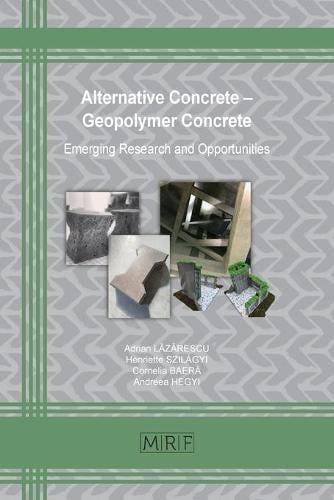
Focuses on fly ash-based alkali-activated geopolymer concrete, its production and characteristic properties. The re-use of waste materials and industrial by-products, such as fly ash, is not only economically of interest but also helps to reduce carbon dioxide emissions. The carbon footprint of these materials is much lower than that of concrete using ordinary Portland cement. They thus offer new sustainable solutions to the construction industry.
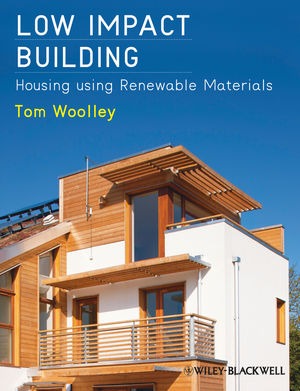
Guides to the designs, technologies and materials that really make green buildings work will help architects, specifiers and clients make informed choices, based on reliable technical information. Low Impact Building: Housing using Renewable Materials is about changing the way we build houses to reduce their 'carbon' footprint and to minimise environmental damage. One of the ways this can be done is by reducing the energy and environmental impact of the materials and resources used to construct buildings by choosing alternative products and systems. In particular, we need to recognise the potential for using natural and renewable construction materials as a way to reduce both carbon emissions but also build in a more benign and healthy way.

Sets out the essential elements of low-energy architecture in a fresh, intuitive way. Where ever-changing technology and complex legislation can cloud the designer’s thought-process, this book equips you with the fundamentals you need to minimise CO2 emissions, design for low-energy use and work with, not against, the forces of nature.
This book asks just how climate-smart our food really is. It follows an average day's worth of food and drink to see where it comes from, how far it travels, and the carbon price we all pay for it. From our breakfast tea and toast, through breaktime chocolate bar, to take-away supper, Dave Reay explores the weather extremes the world’s farmers are already dealing with, and what new threats climate change will bring. Readers will encounter heat waves and hurricanes, wildfires and deadly toxins, as well as some truly climate-smart solutions. In every case there are responses that could cut emissions while boosting resilience and livelihoods. Ultimately we are all in this together, our decisions on what food we buy and how we consume it send life-changing ripples right through the global web that is our food supply.
This book introduces a multi-disciplinary and comprehensive research on China's long-term low-carbon emission strategies and pathways. After comprehensively considering China’s own socioeconomic conditions, policy design, energy mix, and other macro-development trends and needs, the research team has proposed suggestions on China’s low-carbon development strategies and pathways until 2050, with required technologies and policies in order to realize the goals of building a great modern socialist country and a beautiful China.
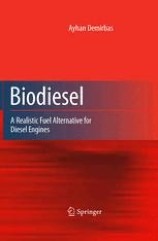
Environmental and political concerns are generating a growing interest in alternative engine fuels such as biodiesel. Biodiesel is a renewable energy source produced from natural oils and fats, which can be used as a substitute for petroleum diesel without the need for diesel engine modification. In addition to being biodegradable and non-toxic, biodiesel is also essentially free of sulfur and aromatics, producing lower exhaust emissions than conventional gasoline whilst providing similar properties in terms of fuel efficiency.
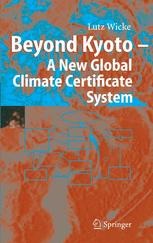
This book shows how humankind can ‘prevent dangerous interference with the c- mate system’ without dangerous interference with the global economic system. In the two underlying studies on behalf of the Ministry of Environment and Transport of i the German federal state of Baden-Württemberg, the results have been elaborated through scientific evaluation of different climate protection systems and intensive developmental work on an efficient climate protection system. The results will be presented in nine chapters according to the following nine basic R&D steps: 1. Quantifying the ‘ultimate climate objective’ of the world community in order ‘to prevent dangerous interference with the climate system,’ thus achieving climate sustainability; 2. Development of a comprehensive standard system for evaluating the prospect of success for different climate protection systems; 3. Based on this scientific standard system, evaluation of the current Kyoto system and of the most important proposals for ‘incremental regime evolution’ of the Kyoto system. Unfortunately, it must be noted that these systems are incapable of achi- ing climate sustainability; 4. Evaluating three proposals for ‘structural regime change’ of the Kyoto system. Following this objective evaluation process and numeric comparison of the diff- ent proposals, 5. Description of the eight basic elements of GCCS and its in-depth ‘critical asse- ment;’ 6.

The book summarizes international progress over the last few decades in upper atmosphere airglow research. Measurement methods, theoretical concepts and empirical models of a wide spectrum of upper atmospheric emissions and their variability are considered. The book contains a detailed bibliography of studies related to the upper atmosphere airglow.
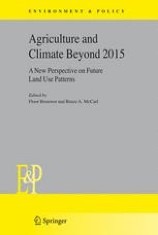
Interactions between agriculture, climate and patterns of land use are complex. Major changes in agriculture, and land use patterns are foreseen in the next couple of decades in response to shifts in climate, greenhouse gas management initiatives, population growth and other forces. The book explores key interactions between changes in agriculture, patterns of land use and efforts to reduce greenhouse emissions from agriculture. The volume is based on inter-disciplinary science and policy interactions, exploring the way land use may aid in addressing or be affected by the onset of climate change and alterations in food demand. Future forces shaping land use decisions are examined, and its sensitivity to climate change is highlighted. Patterns of land use and the agricultural role in climate change mitigation are explored. Also, policy and social responses to the new perspectives on future land use patterns are identified. The perspective of the book is beyond the year 2015.

Environmental issues continued to loom large in the last decade of the twentieth century,especially environmental problems related to rising levels of CO emissions and 2 other greenhouse gases on the planet’s average temperatures and, subsequently, storm patterns. Floods and droughts, in combination with unseasonably high and low temperatures became the norm rather than the exception for large expanses of Africa,Asia and Oceania. Even large areas of Europe and NorthAmerica were s- jected to recurrent floods and droughts and experienced unseasonable extremes of hot and cold temperatures associated with man-made intrusions into the natural environment. And, still, a global plan of action to haltman-related patterns of def- estation, desertification, and over-fishing of the seas has yet to come into being. At the same time, the number of regional conflicts and civil wars increased and, with them, the lives of many women, children, old people and other n- combatants were lost in these conflicts.

As is now generally accepted mankind’s burning of fossil fuels has resulted in the mass transfer of greenhouse gases to the atmosphere, a modification of the delicately-balanced global carbon cycle, and a measurable change in world-wide temperatures and climate. Although not the most powerful greenhouse gas, carbon dioxide (CO) drives climate 2 change due to the enormous volumes of this gas pumped into the atmosphere every day. Produced in almost equal parts by the transportation, industrial and energy-generating sectors, atmospheric CO concentrations have 2 increased by about 50% over the last 300 years, and according to some sources are predicted to increase by up to 200% over pre-industrial levels during the next 100 years. If we are to reverse this trend, in order to prevent significant environmental change in the future, action must be taken immediately.
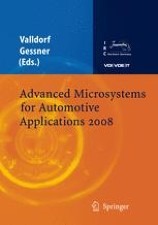
With the total number of vehicles steadily increasing and soon approaching one billion, the world is facing serious challenges in terms of both safety of road transport and sustainability. Consequently the two major persistent issues for the automotive industry are improved safety and reduced emissions. The book in hand is a showroom of activities, the International Forum on Advanced Microsystems for Automotive Applications (AMAA) has been known for during the last 12 years.
This book about Proceedings of the NATO Advanced Workshop “Advanced Combustion and Aerothermal Technologies: Environmental Protection and Pollution Reductions” was held in Kiev (Ukraine) from 15 to 19 May 2006 and was organized by the Institute of Engineering Thermophysics (Ukraine) and Cardiff University (UK). These subjects to cover the critical areas of combustion and aerothermal research and development where rapid progress is needed to improve performance in terms of efficiency, compactness, and emissions. This was a very timely and successful Workshop which brought together experts from the NATO and other countries to discuss increasing concerns about emissions.
This book is the result of a conference held biannually at the Goodwin-Niering Center for Conservation Biology and Environmental Studies at Connecticut College.is a collection of essays that blends the research findings and the policy analyses of individuals from different academic disciplines with the positions advanced by representatives of NGOs. Acid in the Environment: Lessons Learned and Future Prospects presents a broad approach to the study of acid deposition, exposing readers with a scientific background to significant policy issues and those with a policy orientation to important ecological impacts. The book raises important questions that will serve as a springboard for discussion between diverse groups of teachers and students, concerned citizens and legislators, and scientists and policy makers.

سوريا - اتستراد درعا - غباغب
+963-15 2050 - 15 860 380 /1/2/3 - 11 662 3900