



الصفحة 1
الصفحة 1

M-Health : Emerging Mobile Health Systems
M-health: Emerging Mobile Health Systems presents recent advances in this area and explores future trends in the applications of current and emerging wireless communication and network technologies for healthcare delivery and new wireless telemedical services. This work also evaluates the impact of the synergies between the 2.5G and 3G systems and beyond for healthcare applications and explores the augmentation of these technologies for the next generation of m-health services. M-health is commonly defined as the ‘emerging mobile communications and network technologies for healthcare systems’.

Informatics for the Clinical Laboratory : A Practical Guide
This series is directed to healthcare professionals who are leading the tra- formation of health care by using information and knowledge. Launched in 1988 as Computers in Health Care, the series offers a broad range of titles: some addressed to specific professions such as nursing, medicine, and health administration; others to special areas of practice such as trauma and radi- ogy. Still other books in the series focus on interdisciplinary issues, such as the computer-based patient record, electronic health records, and networked healthcare systems. Renamed Health Informatics in 1998 to reflect the rapid evolution in the discipline now known as health informatics, the series will continue to add titles that contribute to the evolution of the field. In the series, eminent - perts, serving as editors or authors, offer their accounts of innovations in health informatics. Increasingly, these accounts go beyond hardware and so- ware to address the role of information in influencing the transformation of healthcare delivery systems around the world. The series also increasingly focuses on “peopleware” and the organizational, behavioral, and societal changes that accompany the diffusion of information technology in health services environments.

Implementing an Electronic Health Record System
"Implementing an Electronic Health Record System" addresses the range of issues and opportunities that implementing an electronic health records system (EHR) poses for any size of medical organization - from the small one-man operation to a large healthcare system. The book is divided into sections on preparation, support, implementation and a summary and prospects section, enabling the clinician to define the framework necessary to implement and evaluate a clinically effective EHR system. With the increasing involvement of clinicians in the day-to-day running of the practice, interest is now focused on EHR as a key area for improving clinical efficiency. This book uniquely provides the guidance a clinical team needs to plan and execute an effective EHR system within any clinical setting. Practical in its scope and coverage, the authors have provided a tool-kit for the medical professional in the often complex field of medical informatics. Designed for senior clinicians, decision-makers and EHR teams, the book is of use to anyone involved in the efficient management of clinical records.

Health information systems : Technological and management perspectives
Details a variety of scenarios in the context of both health and heath care, including where prevention and wellness are related, such as the treatment of both acute and chronic diseases. Stakeholder requirements are also described to provide perspectives for describing the architectures and management techniques associated with health information systems, enabling the reader to develop a detailed holistic overview of the subject. Health Information Systems: Technological and Management Perspectives features a detailed overview of how information systems in health care can be managed and is a vital resource for medical informatics students seeking an up-to-date text on the topic.

Digitization of healthcare data using blockchain
Gives a detailed description of the integration of blockchain technology for Electronic Health Records and provides the research challenges to consider in various disciplines such as supply chain, drug discovery, and data management. he aim of the book is to investigate the concepts of blockchain technology and its association with the recent development and advancements in the medical field. Moreover, it focuses on the integration of workflow strategies like NLP, and AI which could be adopted for boosting the clinical documentation and electronic healthcare records (EHR) usage by bringing down the physician EHR data entry. Also, the book covers the usage of smart contracts for securing patient records. Digitization of Healthcare Data Using Blockchain presents the practical implementations that deal with developing a web framework for building highly usable healthcare applications, a simple blockchain-powered EHR system.
Machine learning for brain disorders
Organized into five parts. Part One presents the fundamentals of ML. Part Two looks at the main types of data used to characterize brain disorders, including clinical assessments, neuroimaging, electro- and magnetoencephalography, genetics and omics data, electronic health records, mobile devices, connected objects and sensors. Part Three covers the core methodologies of ML in brain disorders and the latest techniques used to study them. Part Four is dedicated to validation and datasets, and Part Five discusses applications of ML to various neurological and psychiatric disorders.
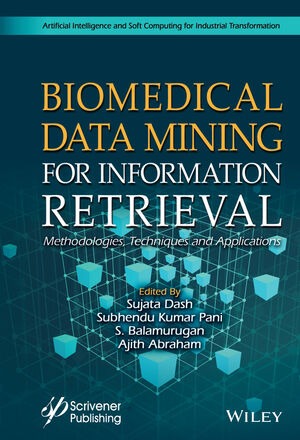
Biomedical data mining for information retrieval : Methodologies, techniques, and applications
Discusses data mining, biomedical image processing, information retrieval with broad coverage of basic scientific applications. covers the topic of mining biomedical text, images and visual features towards information retrieval. Biomedical and health informatics is an emerging field of research at the intersection of information science, computer science, and healthcare and brings tremendous opportunities and challenges due to easily available and abundant biomedical data for further analysis. The aim of healthcare informatics is to ensure the high-quality, efficient healthcare, better treatment and quality of life by analyzing biomedical and healthcare data including patient’s data, electronic health records (EHRs) and lifestyle. Previously, it was a common requirement to have a domain expert to develop a model for biomedical or healthcare; however, recent advancements in representation learning algorithms allows us to automatically to develop the model. Biomedical image mining, a novel research area, due to the vast amount of available biomedical images, increasingly generates and stores digitally.
Agents and peer-to-peer computing ; 5th International workshop, AP2PC 2006, Hakodate, Japan, May 9, 2006, Revised and Invited Papers
This book constitutes the thoroughly refereed post-workshop proceedings of the 5th International Workshop on Agents and Peer-to-Peer Computing, AP2PC 2006, held in Hakodate, Japan, in May 2006, in the context of the 5th International Joint Conference on Autonomous Agents and Multi-Agent Systems, AAMAS 2006.

Advanced Web and Network Technologies, and Applications ; APWeb 2008 International Workshops : BIDM, IWHDM, and DeWeb Shenyang, China, April 26-28, 2008. Revised Selected Papers
Constitutes the thoroughly refereed joint post-workshop proceedings of three international workshops held in conjunction with the 10th Asia-Pacific Web Conference, APWeb 2008, in Shenyang, China, in April 2008.
