



الصفحة 1
الصفحة 1

Space, Movement, and Visibility in Pompeian Houses
Examines the pivotal role of movement, visibility, and experience within Pompeian houses as a major factor determining house form; the use of space; and the manner, meaning, and modalities of domestic daily life, through the application of GIS-based analysis. Through close consideration of ancient literature, detailed explanations of methodology, and exploration of results, Michael Anderson provides new perspectives on Pompeian domestic space including room types and household activities that rarely feature in the discussion of ancient housing. Readers gain a better understanding of priorities in the design of Pompeian houses, the degree to which daily life was interrupted by earthquake damage in the site’s final years, and evolving motivations behind wall painting decoration. The volume not only explores how Pompeian houses reflected the needs of everyday life as imagined by their architects, but also how these spaces served to influence and control daily activities and ultimately how they were transformed by the spatial and visual requirements of domestic life.

Post-earthquake fire assessment of buildings : evaluation framework
Provides background for the analysis, design, and assessment of building structural systems under fire following earthquakes

Earthquake Early Warning System
The book provides information on the major EEW systems in operation and on the state of the art of the different blocks forming an EW system: the rapid detection and estimation of the earthquake’s focal parameters, the signal transmission, the engineering interface and the information reliability/false alarm problem.
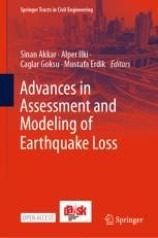
Advances in Assessment and Modeling of Earthquake Loss
Originates from an international workshop organized by Turkish Natural Catastrophe Insurance Pool (TCIP) in November 2019 that gathered renown researchers from academia, representatives of leading international reinsurance and modeling companies as well as government agencies responsible of insurance pricing in Turkey. The book includes chapters related to post-earthquake damage assessment, the state-of-art and novel earthquake loss modeling, their implementation and implication in insurance pricing at national, regional and global levels, and the role of earthquake insurance in building resilient societies and fire following earthquakes. The rich context encompassed in the book makes it a valuable tool not only for professionals and researchers dealing with earthquake loss modeling but also for practitioners in the insurance and reinsurance industry.
