



الصفحة 1
الصفحة 1

Migration and Environmental Change in Morocco : In search for Linkages Between Migration Aspirations and (Perceived) Environmental Changes
This book studies the migration aspirations and trajectories of people living in two regions in Morocco that are highly affected by environmental change or emigration, namely Tangier and Tinghir, as well as the migration trajectories of immigrants coming from these regions currently living in Belgium

International Organizations in Global Social Governance
This book enhances and systematizes our understanding of IOs in global social governance. It provides studies on a variety of social policy fields in which different, but also the same, International Organizations (IOs) operate.

Interdisciplinary mathematics education : A state of the art
This book provides an essential introduction to the state-of the-art in interdisciplinary Mathematics Education. First, it begins with an outline of the field’s relevant historical, conceptual and theoretical backgrounds, what “discipline” means and how inter-, trans-, and meta-disciplinary activities can be understood. Relevant theoretical perspectives from Marx, Foucault and Vygotsky are explained, along with key ideas in theory, e.g. boundaries, discourses, identity, and the division of labour in practice. Second, the book reviews research findings of mainly empirical studies on interdisciplinary work involving mathematics in education, in all stages of education that have become disciplined. For example, it reports that a common theme in studies in middle and high schools is assessing the motivational benefits for the learner of subsuming disciplinary motives and even practices to extra-academic problem-solving activities; this is counter-balanced by the effort needed to overcome the disciplinary boundaries in academic institutions, and in professional identities. These disciplinary boundaries are less obviously limitations in middle and primary schools, and in some vocational courses. Third and finally, it explores selected case studies that illustrate these concepts and findings, both in terms of the motivational benefits for learners and the institutional and other boundaries involved.

Impossible Bodies, Impossible Selves : Exclusions and Student Subjectivities
This book looks inside the school to examine how every-day, school-level processes act to place particular students 'outside' the educational endeavour and argues for new strategies for thinking critically about and interrupting educational exclusions and inequalities.The book uses tools offered by post-structural theory to read ethnographic data and show how the discourses that circulate inside schools at once mobilize and elide gender, sexuality, social class, ability, disability, race, ethnicity, religious and cultural belongings at the same time as they open up and close down 'who' students can be as learners.

Implementing responsible research and innovation : Organisational and national conditions
we give an overview of the book and the RRI-Practice study. The book is an analysis of data collected in the RRI-Practice study. It comprises an organizational analysis and an analysis of national discourses, thus analysing conditions for the uptake of RRI in research funding and research performing organisations in the science system.

Food Anxiety in Globalising Vietnam
This book approaches the anxieties inherent in food consumption and production in Vietnam. The country’s rapid and recent economic integration into global agro-food systems and consumer markets spurred a new quality of food safety concerns, health issues and distrust in food distribution networks that have become increasingly obscured. This edited volume further puts the eating body centre stage by following how gendered body norms, food taboos, power structures and social differentiation shape people’s ambivalent relations with food. It uncovers Vietnam’s trajectories of agricultural modernisation against which consumers and producers manoeuvre amongst food self-sufficiency, security and abundance. It provides social science perspectives on anxieties related to food and surrounding discourses that travel between the local and the global, the individual and society and into the body. Therefore, the book’s lens of food anxiety matters for social theory and for understanding the embeddedness and discontinuities of food globalizations in Vietnam and beyond.

Ethical Traceability and Communicating Food
This book draws on philosophical discourses (like ethics, political philosophy and philosophy of law) around food ethics and empirical research in three important food chains (UK bread, Danish bacon and Greek olive oil) to argue that ethical traceability systems could be used to communicate food information to consumers, allowing them not only to make food choices consistent with their own values, but also to play a more informed role in the way food is produced and distributed.

Ethical Dimensions of the Economy : Making Use of Hegel and the Concepts of Public and Merit Goods
This book reflects philosophically about the socio-political dimension of economics. Part I provides normative reflections on the economy: Section I reflects on the interconnections between the multiple discourses on the economy, section II presents Hegel's claim that the economic order is an ethical institution and defends his ontological view of the economy against the one of Adam Smith. Section III dialogues with economists about their concepts of public and merit goods. This section defends a Hegelian ontology of the economy through an analysis of technical concepts used by economists. Part II provides applications derived from the normative analysis: Section I presents the views of authors in different academic disciplines pointing to failures in late capitalism, in particular failures of American capitalism and section II asks the question: " What must one pay attention to in a transition from a command economy to a free market?" Section III draws attention to an overlap of ideas found in Catholic Social Thought and in the publications of some recent Nobel prize winners in economics (Buchanan, Sen, Stiglitz).

Environmental Governance in Latin America
The multiple purposes of nature – livelihood for communities, revenues for states, commodities for companies, and biodiversity for conservationists – have turned environmental governance in Latin America into a highly contested arena. In such a resource-rich region, unequal power relations, conflicting priorities, and trade-offs among multiple goals have led to a myriad of contrasting initiatives that are reshaping social relations and rural territories. This edited collection addresses these tensions by unpacking environmental governance as a complex process of formulating and contesting values, procedures and practices shaping the access, control and use of natural resources. Contributors from various fields address the challenges, limitations, and possibilities for a more sustainable, equal, and fair development. In this book, environmental governance is seen as an overarching concept defining the dynamic and multi-layered repertoire of society-nature interactions, where images of nature and discourses on the use of natural resources are mediated by contextual processes at multiple scales.

Education and Social Inequality in the Global Culture
The book critically examines the overall interplay between globalisation, social inequality and education. It draws upon recent studies in the areas of globalisation, educational inequalities and the role of the State. It explores conceptual frameworks and methodological approaches applicable in the research covering the State, globalisation, social stratification and education. It demonstrates the neo-liberal ideological imperatives of education and policy reforms, and illustrates the way the relationship between the State and education policy affects current models and trends in education reforms and schooling globally. Various book chapters critique the dominant discourses and debates pertaining to the newly constructed and re-invented models of neo-liberal ideology in education, set against the current climate of growing social stratification and unequal access to quality education for all.

Dynamic Capabilities and Relationships : Discourses, Concepts, and Reflections
Building on the seminal work of David Teece, Kathleen Eisenhardt, Jeffrey Martin, and others, this volume applies the concept of dynamic capabilities to help readers understand how organizations can be successful in highly dynamic environments. The contributions, written by researchers who participated in the research program "Dynamic Capabilities and Relationships" and international researchers who participated in the program’s international conference (both funded by the Dieter Schwarz Foundation), highlight state-of-the-art research on dynamic capabilities and relationships. They also put forward an integrated management approach for the purpose of understanding, analyzing, and managing the successful creation and adaptation of capabilities and relationships.

Decentralisation and Privatisation in Education : The Role of the State
The book examines the overall interplay between privatisation, decentralisation and the role of the state. The authors draw upon recent studies in the areas of decentralisation, privatisation and the role of the state in education. By referring to Bourdieu’s call for critical policy analysts to engage in a ‘critical sociology’ of their own contexts of practice, and poststructuralist and postmodernist pedagogy, this collection of book chapters demonstrate how central discourses surrounding the debate of privatisation, decentralisation and the role of the state are formed in the contexts of dominant ideology, power, and culturally and historically derived perceptions and practices.
Lifelong Learning - Signs, Discourses, Practices
This text explores the different ways in which the various social practices in which people participate becomes signed as learning, how and why that occurs and with what consequences. It takes seriously the linguistic turn in social theory to draw upon semiotics and poststructuralism through which to explore the significance of lifelong learning as an emerging discourse in education. The text explores the different ways in which learning conveys meaning and is given meaning. Given this, lifelong learning therefore is a way, and a significant way, in which learning is fashioned. The text then explores the notion that, if learning is lifelong and lifewide, what precisely is learning as distinct from other social practices and how those practices are given meaning as learning.
Learning the language of dentistry : disciplinary corpora in the teaching of English for specific academic purposes
Explores the affordances of disciplinary corpora for the teaching and learning of the language of dentistry, within the field of English for Specific Academic Purposes (ESAP). We extract disciplinary register features and vocabulary from three key genres of the dentistry discipline (published experimental research articles, case reports, and novice/professional research reports within the Dental Public Health domain), before integrating these features into ESAP pedagogy in the form of corpus-based ESAP materials that promote student-led direct engagement with disciplinary corpora – an approach known as 'data-driven learning'. This book is a timely and relevant addition to the field of corpus linguistics and ESAP, and is especially targeted at ESAP professionals who are required to teach disciplinary discourses but who may struggle to know what to teach as non-experts of the target discipline.

Landscapes of Lifelong Learning Policies across Europe : Comparative Case Studies
This book explores different landscapes of Lifelong Learning policies (LLP), producing case-based examinations of their institutional, discursive, and relational dimensions. Across Europe, young people develop their life courses amidst diverse living conditions and are confronted with a variety of institutional and structural arrangements that impact on their opportunities in education and labour. Considering the relevance of LLP in shaping those opportunities, the chapters draw from multi-level, mixed-methods research and offer original insights on the interplay of discourses and governance patterns in the processes of policy-making and deliverance. The book yields noteworthy insights into the widely differing realities across the European landscape, and also into the diverging ways young people deal with and actively participate in LLP.
Cities between competitiveness and cohesion : Discourses, realities and implementation
The book shows that spatial and urban policy continues to be a key site of policy intervention and experimentation. Different national welfare systems, political cultures, and socio-economic conditions combine and recombine to address policy problems and opportunities. Collectively, the authors argue that the examined policy initiatives reflect and reproduce these broader changes and shifting ways of thinking about the appropriate relationships between citizens, businesses, and the state.
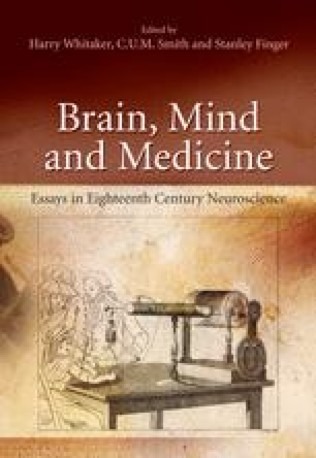
Brain, Mind and Medicine : Essays in Eighteenth-Century Neuroscience
Ideas we associate with the 18th century are clearly seen in work published from the latter decades of the 17th century through the first decades of the 19th century. This is the "long 18th century", a period which exhibits multiple discourses in medicine, brain science and philosophy. The editors have deliberately adopted a "presentist" subtitle, "neuroscience", to emphasize that this collection of essays reflect a range of current thought about 18th century-studies of the nervous system in isolation and in context. There are six sections, each preceded by a short introduction.
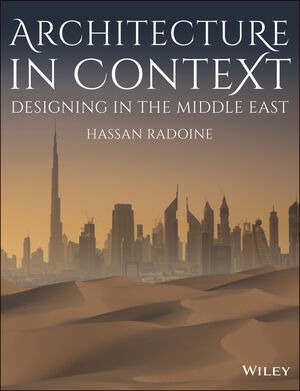
Architecture in context : Designing in the Middle East
Provides a foundation for understanding the critical context of architecture and design in this region. It does this by: presenting a practical overview of architectural know-how in the Middle East, and its potential for cultivating a sense of place introducing local architectural vocabularies and styles, and how they can still be reactivated in contemporary design exploring the cultural and contextual meaning of forms as references that may influence contemporary architecture discussing important discourses and trends in architecture that allow a rethinking of the current global/local dichotomy.
