


تحسين النتائح
ترتيب حسب
من
الى

includes contributions originating from a conference held at Chapman University during November 14-19, 2017. It presents original research by experts in signal processing, linear systems, operator theory, complex and hypercomplex analysis and related topics.

This book presents a comprehensive survey of modern operator techniques for boundary value problems and spectral theory, employing abstract boundary mappings and Weyl functions.
The simultaneous availability of large datasets and high-performance computing capability in recent years has enabled the rapid development of powerful machine learning algorithms. On the one hand, state-of-the-art machine learning techniques have transformed many areas of science and engineering; on the other hand, theoretical discoveries in mathematical algorithms, differential equations, and statistical inferences, to name a few, have provided the foundation for the exploration of new multidisciplinary models for solving practical problems. This Special Issue endeavors to continue the journey that started in our previous Special Issue (Applied Mathematics and Computational Physics) by providing a platform for researchers from both academia and industry, as well as government, to present their new computational methods that have engineering and physics applications.
A comprehensive treatment of ordinary differential equations, concisely presenting basic and essential results in a rigorous manner. Including various examples from physics, mechanics, natural sciences, engineering and automatic theory, Differential Equations is a bridge between the abstract theory of differential equations and applied systems theory.
Image registration is an emerging topic in image processing with many applications in medical imaging, picture and movie processing. The classical problem of image registration is concerned with ?nding an appropriate transformation between two data sets. This fuzzy de?nition of registration requires a mathematical modeling and in particular a mathematical speci?cation of the terms appropriate transformations and correlation between data sets. Depending on the type of application, typically Euler, rigid, plastic, elastic deformations are considered. The variety of similarity p measures ranges from a simpleL distance between the pixel values of the data to mutual information or entropy distances. This goal of this book is to highlight by some experts in industry and medicine relevant and emerging image registration applications and to show new emerging mathematical technologies in these areas. Currently, many registration application are solved based on variational prin- ple requiring sophisticated analysis, such as calculus of variations and the theory of partial differential equations, to name but a few. Due to the numerical compl- ity of registration problems ef?cient numerical realization are required. Concepts like multi-level solver for partial differential equations, non-convex optimization, and so on play an important role. Mathematical and numerical issues in the area of registration are discussed by some of the experts in this volume.

This book describes the evolution of several socio-biological systems using mathematical kinetic theory. Specifically, it deals with modeling and simulations of biological systems—comprised of large populations of interacting cells—whose dynamics follow the rules of mechanics as well as rules governed by their own ability to organize movement and biological functions. The authors propose a new biological model for the analysis of competition between cells of an aggressive host and cells of a corresponding immune system.Because the microscopic description of a biological system is far more complex than that of a physical system of inert matter, a higher level of analysis is needed to deal with such complexity. Mathematical models using kinetic theory may represent a way to deal with such complexity, allowing for an understanding of phenomena of nonequilibrium statistical mechanics not described by the traditional macroscopic approach. The proposed models are related to the generalized Boltzmann equation and describe the population dynamics of several interacting elements (kinetic population models).The particular models proposed by the authors are based on a framework related to a system of integro-differential equations, defining the evolution of the distribution function over the microscopic state of each element in a given system. Macroscopic information on the behavior of the system is obtained from suitable moments of the distribution function over the microscopic states of the elements involved. The book follows a classical research approach applied to modeling real systems, linking the observation of biological phenomena, collection of experimental data, modeling, and computational simulations to validate the proposed models. Qualitative analysis techniques are used to identify the prediction ability of specific models.
Proposing a wide range of mathematical models that are currently used in life sciences may be regarded as a challenge, and that is precisely the challenge that this book takes up. Of course this panoramic study does not claim to offer a detailed and exhaustive view of the many interactions between mathematical models and life sciences. This textbook provides a general overview of realistic mathematical models in life sciences, considering both deterministic and stochastic models and covering dynamical systems, game theory, stochastic processes and statistical methods. Each mathematical model is explained and illustrated individually with an appropriate biological example. Finally three appendices on ordinary differential equations, evolution equations, and probability are added to make it possible to read this book independently of other literature.

Based on lecture notes of two summer schools with a mixed audience from mathematical sciences, epidemiology and public health, this volume offers a comprehensive introduction to basic ideas and techniques in modeling infectious diseases, for the comparison of strategies to plan for an anticipated epidemic or pandemic, and to deal with a disease outbreak in real time. It covers detailed case studies for diseases including pandemic influenza, West Nile virus, and childhood diseases. Models for other diseases including Severe Acute Respiratory Syndrome, fox rabies, and sexually transmitted infections are included as applications. Its chapters are coherent and complementary independent units. In order to accustom students to look at the current literature and to experience different perspectives, no attempt has been made to achieve united writing style or unified notation.

Mathematical Control Theory: An Introduction presents, in a mathematically precise manner, a unified introduction to deterministic control theory. With the exception of a few more advanced concepts required for the final part of the book, the presentation requires only a knowledge of basic facts from linear algebra, differential equations, and calculus. In addition to classical concepts and ideas, the author covers the stabilization of nonlinear systems using topological methods, realization theory for nonlinear systems, impulsive control and positive systems, the control of rigid bodies, the stabilization of infinite dimensional systems, and the solution of minimum energy problems.

The purpose of the volume is to provide a support for a first course in Mathematical Analysis, along the lines of the recent Programme Specifications for mathematical teaching in European universities. The contents are organised to appeal especially to Engineering, Physics and Computer Science students, all areas in which mathematical tools play a crucial role. Basic notions and methods of differential and integral calculus for functions of one real variable are presented in a manner that elicits critical reading and prompts a hands-on approach to concrete applications. The layout has a specifically-designed modular nature, allowing the instructor to make flexible didactical choices when planning an introductory lecture course. The book may in fact be employed at three levels of depth. At the elementary level the student is supposed to grasp the very essential ideas and familiarise with the corresponding key techniques.

The book is divided into three parts. The first part introduces the basic ideas of linear and metric spaces, including the Jordan canonical form of matrices and the spectral theorem for self-adjoint and normal operators. The second part examines the role of general topology in the context of metric spaces and includes the notions of homotopy and degree. The third and final part is a discussion on Banach spaces of continuous functions, Hilbert spaces and the spectral theory of compact operators.
While the original works on Malliavin calculus aimed to study the smoothness of densities of solutions to stochastic differential equations, this book has another goal. It portrays the most important and innovative applications in stochastic control and finance, such as hedging in complete and incomplete markets, optimisation in the presence of asymmetric information and also pricing and sensitivity analysis. In a self-contained fashion, both the Malliavin calculus with respect to Brownian motion and general Lévy type of noise are treated. Besides, forward integration is included and indeed extended to general Lévy processes. The forward integration is a recent development within anticipative stochastic calculus that, together with the Malliavin calculus, provides new methods for the study of insider trading problems.

Modern control theory and in particular state space or state variable methods can be adapted to the description of many different systems because it depends strongly on physical modeling and physical intuition. The laws of physics are in the form of differential equations and for this reason, this book concentrates on system descriptions in this form. This means coupled systems of linear or nonlinear differential equations. The physical approach is emphasized in this book because it is most natural for complex systems. It also makes what would ordinarily be a difficult mathematical subject into one which can straightforwardly be understood intuitively and which deals with concepts which engineering and science students are already familiar.
This significantly expanded fourth edition is designed as an introduction to the theory and applications of linear PDEs. The authors provide fundamental concepts, underlying principles, a wide range of applications, and various methods of solutions to PDEs. In addition to essential standard material on the subject, the book contains new material that is not usually covered in similar texts and reference books, including conservation laws, the spherical wave equation, the cylindrical wave equation, higher-dimensional boundary-value problems, the finite element method, fractional partial differential equations, and nonlinear partial differential equations with applications.
This introduction to the ideas and methods of linear functional analysis shows how familiar and useful concepts from finite-dimensional linear algebra can be extended or generalized to infinite-dimensional spaces. Aimed at advanced undergraduates in mathematics and physics, the book assumes a standard background of linear algebra, real analysis (including the theory of metric spaces), and Lebesgue integration, although an introductory chapter summarizes the requisite material. The initial chapters develop the theory of infinite-dimensional normed spaces, in particular Hilbert spaces, after which the emphasis shifts to studying operators between such spaces. Functional analysis has applications to a vast range of areas of mathematics; the final chapters discuss the particularly important areas of integral and differential equations.
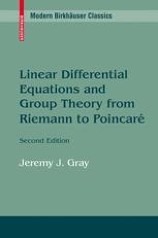
A study of how a particular vision of the unity of mathematics, often called geometric function theory, was created in the 19th century. The central focus is on the convergence of three mathematical topics: the hypergeometric and related linear differential equations, group theory, and on-Euclidean geometry. The text for this second edition has been greatly expanded and revised, and the existing appendices enriched with historical accounts of the Riemann–Hilbert problem, the uniformization theorem, Picard–Vessiot theory, and the hypergeometric equation in higher dimensions. The exercises have been retained, making it possible to use the book as a companion to mathematics courses at the graduate level.
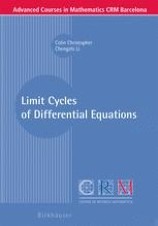
Contains the lecture series originally delivered at the "Advanced Course on Limit Cycles of Differential Equations" in the Centre de Recerca Matemàtica Barcelona in 2006.The topics covered are the center-focus problem for polynomial vector fields, and the application of abelian integrals to limit cycle bifurcations. Both topics are related to Hilbert's sixteenth problem. In particular, the book will be of interest to students and researchers working in the qualitative theory of dynamical systems.
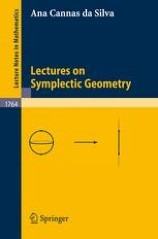
Provides a fast introduction to symplectic geometry for graduate students with some knowledge of differential geometry, de Rham theory and classical Lie groups. This text addresses symplectomorphisms, local forms, contact manifolds, compatible almost complex structures, Kaehler manifolds, hamiltonian mechanics, moment maps, symplectic reduction and symplectic toric manifolds. It contains guided problems, called homework, designed to complement the exposition or extend the reader's understanding.
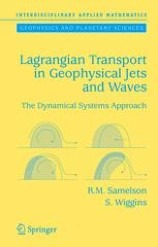
This book provides an accessible introduction to a new set of methods for the analysis of Lagrangian motion in geophysical flows. These methods were originally developed in the abstract mathematical setting of dynamical systems theory, through a geometric approach to differential equations. Despite the recent developments in this field and the existence of a substantial body of work on geophysical fluid problems in the dynamical systems and geophysical literature, this is the first introductory text that presents these methods in the context of geophysical fluid flow. The book is organized into seven chapters; the first introduces the geophysical context and the mathematical models of geophysical fluid flow that are explored in subsequent chapters. The second and third cover the simplest case of steady flow, develop basic mathematical concepts and definitions, and touch on some important topics from the classical theory of Hamiltonian systems. The fundamental elements and methods of Lagrangian transport analysis in time-dependent flows that are the main subject of the book are described in the fourth, fifth, and sixth chapters. The seventh chapter gives a brief survey of some of the rapidly evolving research in geophysical fluid dynamics that makes use of this new approach. Related supplementary material, including a glossary and an introduction to numerical methods, is given in the appendices.
Lacroix and the Calculus is the first major study of Lacroix’s large Traité. It uses the unique and massive bibliography given by Lacroix to explore late 18th-century calculus, and the way it is reflected in Lacroix’s account. Several particular aspects are addressed in detail, including: the foundations of differential calculus, analytic and differential geometry, conceptions of the integral, and types of solutions of differential equations (singular/complete/general integrals, geometrical interpretations, and generality of arbitrary functions).

سوريا - اتستراد درعا - غباغب
+963-15 2050 - 15 860 380 /1/2/3 - 11 662 3900