


تحسين النتائح
ترتيب حسب
من
الى


A diversified firm’s withdrawal from a business unit, i.e. business exit, is a significant phenomenon in management practice. Although divestitures are highly relevant in practice, the acquisition of business units attracts much more attention in strategic management research. Carolin Decker develops and empirically applies a framework in which business exits serve the purpose of re-establishing a firm’s previously harmed legitimacy. She suggests four types of legitimacy needs that are to be satisfied with the divestiture of a business unit and the simultaneous pursuit of strategic reorientation. The author tests the theoretical framework with secondary data on 213 business exits. Her findings support the idea that legitimacy needs drive the likelihood of fit-enhancing business exits in divesting firms.
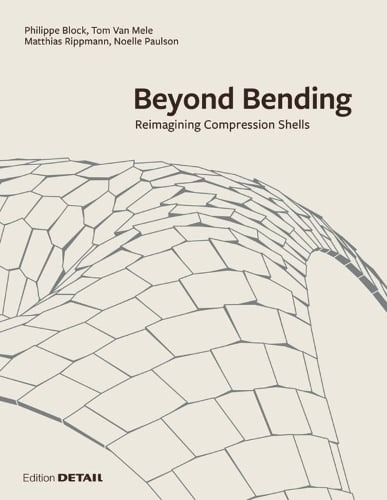
The examination of old construction principles in combination with the development of new digital graphic construction methods leads to unusual ways in the design of self-supporting structures. Based on its Armadillo Vault, which was awarded at the Venice Biennale 2016, the Block Research Group of ETH Zurich describes development processes and visions of resource-saving, refined load-bearing structures without steel. The intensive examination of principles is fundamental.

The book presents how language shapes communicative and cognitive processes but at the same time is also shaped by those processes. The chapters put forward a number of disciplinary and methodological perspectives encompassing insights from cognitive and social psychology, (critical) discourse analysis, cognitive linguistics, corpus linguistics and sociolinguistics. Both intralingual as well as contrastive, each chapter also engages with qualitative and quantitative methods.
Focuses on exploratory data analysis, learning of latent structures in datasets, and unscrambling of knowledge. Coverage details a broad range of methods from multivariate statistics, clustering and classification.

سوريا - اتستراد درعا - غباغب
+963-15 2050 - 15 860 380 /1/2/3 - 11 662 3900