


تحسين النتائح
ترتيب حسب
من
الى

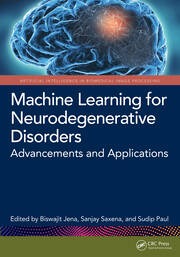
Explores the application of machine learning to the understanding, early diagnosis, and management of neurodegenerative disorders. With a specific focus on its role in ongoing clinical trials, the book covers essential topics such as data collection, pre-processing, feature extraction, model development, and validation techniques. It delves into the applications of neuroimaging techniques like magnetic resonance imaging (MRI), computed tomography (CT), and positron emission tomography (PET) in the diagnosis and understanding of neurodegenerative disorders. Additionally, the book examines various machine-learning algorithms employed for biomarker discovery in neurodegenerative disorders. It highlights the role of neuroinformatics and big data analysis in advancing the understanding and management of neurodegenerative disorders. Furthermore, the book reviews future prospects and presents the ethical considerations and regulatory challenges associated with implementing machine learning approaches in the diagnosis, treatment, and prevention of neurodegenerative disorders.

Computational and Statistical Approaches to Genomics, 2nd Edition, aims to help researchers deal with current genomic challenges. During the three years after the publication of the first edition of this book, the computational and statistical research in genomics have become increasingly more important and indispensable for understanding cellular behavior under a variety of environmental conditions and for tackling challenging clinical problems. In the first edition, the organizational structure was: data à analysis à synthesis à application. In the second edition, the same structure remains, but the chapters that primarily focused on applications have been deleted.
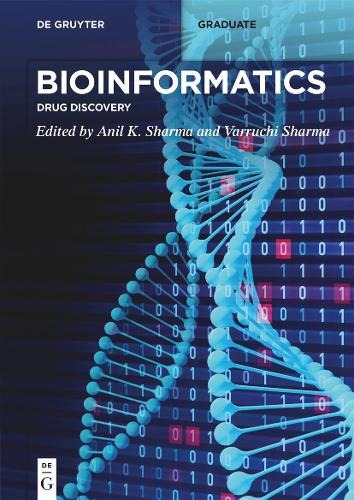
Quantitative tools are becoming increasingly important in order to understand complex cascade of signal transduction events, pathways or biochemical reactions. The book showcases how computational techniques and algorithms are applied to biological data analysis, interpretation, and modelling. It covers applications in drug design and discovery, immune systems, phylogenetic analysis and protein structures.
This book provides students and researchers in the life sciences with essential practical information on how to quantitatively analyze data images. It refrains from focusing on theory, and instead uses practical examples and step-by step protocols to familiarize readers with the most commonly used image processing and analysis platforms such as ImageJ, MatLab and Python.
Medical researchers including doctors, nurses, medical students and allied health professionals are required to undertake a period of research as part of their career pathway. Basic Science Techniques in Clinical Practice covers the main areas, allowing anyone to set up and complete research projects and this information can easily be translated to clinical projects. Written by international authors to provide a flavor from many institutions, the book’s appeal is cross-sectional, both at hospital and primary care levels worldwide.

Brings together new and updated methods to explore the structure and function of bacterial chromatin from molecular to the cellular scale. Chapters detail experimental protocols of in vivo and in vitro approaches, approaches to genome structure modeling, and data analysis. Written in the highly successful Methods in Molecular Biology series format, chapters include introductions to their respective topics, lists of the necessary materials and reagents, step-by-step, readily reproducible laboratory protocols, and key tips on troubleshooting and avoiding known pitfalls.
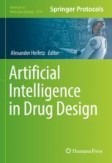
Looks at applications of artificial intelligence (AI), machine learning (ML), and deep learning (DL) in drug design. The chapters in this book describe how AI/ML/DL approaches can be applied to accelerate and revolutionize traditional drug design approaches such as: structure- and ligand-based, augmented and multi-objective de novo drug design, SAR and big data analysis, prediction of binding/activity, ADMET, pharmacokinetics and drug-target residence time, precision medicine and selection of favorable chemical synthetic routes. How broadly are these approaches applied and where do they maximally impact productivity today and potentially in the near future.
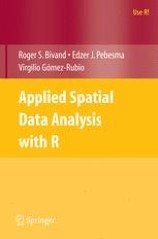
Applied Spatial Data Analysis with R is divided into two basic parts, the first presenting R packages, functions, classes and methods for handling spatial data, The second part showcases more specialised kinds of spatial data analysis, including spatial point pattern analysis, interpolation and geostatistics, areal data analysis and disease mapping.
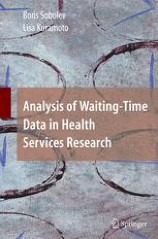
Analysis of Waiting-Time Data in Health Services Research asks critical questions linking waiting times to health care outcomes. Generously illustrated with charts and tables, the book places this type of data collection, analysis, and reporting firmly in the context of health services research, the study of outcomes of health care delivery to a population.
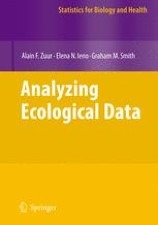
This book provides a practical introduction to analysing ecological data using real data sets collected as part of postgraduate ecological studies or research projects. The first part of the book gives a largely non-mathematical introduction to data exploration, univariate methods (including GAM and mixed modelling techniques), multivariate analysis, time series analysis (e.g. common trends) and spatial statistics. The second part provides 17 case studies, mainly written together with biologists who attended courses given by the first authors. The case studies include topics ranging from terrestrial ecology to marine biology.
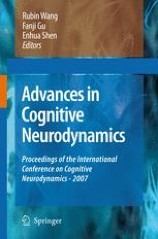
Contains the Proceedings of the 1st International Conference on Cognitive Neurodynamics held in Shanghai, November 17-21, 2007. The participants were treated to an exciting and stimulating conference that left everyone with an enthusiastic vision for the future of the field. The latest important progress was covered by 13 mini-symposia including: Models of Mental Disorders; Cognitive Machines; Dynamics in learning and memory; Central nervous system synchronization; Neuroinformatics; Cognitive Computational Modeling of Human Language Processing; Cognitive Neurodynamics of Attention; Bottom-Up and Top-Down; Brain Networks; From Anatomy to Dynamics; Translational Cognitive Neuroimaging; K-sets; Theory and Applications; Advanced Signal Processing Techniques for Brain Data Analysis; Visual cortex: information processing and dynamics; Dynamics of Firing Patterns and Synchronization in Neuronal Systems.
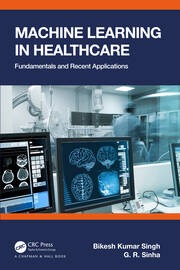
Discusses how to build various ML algorithms and how they can be applied to improve healthcare systems. Healthcare applications of AI are innumerable: medical data analysis, early detection and diagnosis of disease, providing objective-based evidence to reduce human errors, curtailing inter- and intra-observer errors, risk identification and interventions for healthcare management, real-time health monitoring, assisting clinicians and patients for selecting appropriate medications, and evaluating drug responses. Extensive demonstrations and discussion on the various principles of machine learning and its application in healthcare is provided, along with solved examples and exercises.
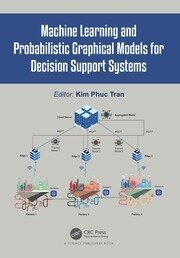
Presents recent advancements in research, a review of new methods and techniques, and applications in decision support systems (DSS) with Machine Learning and Probabilistic Graphical Models, which are very effective techniques in gaining knowledge from Big Data and in interpreting decisions. It explores Bayesian network learning, Control Chart, Reinforcement Learning for multicriteria DSS, Anomaly Detection in Smart Manufacturing with Federated Learning, DSS in healthcare, DSS for supply chain management, etc. Researchers and practitioners alike will benefit from this book to enhance the understanding of machine learning, Probabilistic Graphical Models, and their uses in DSS in the context of decision making with uncertainty. The real-world case studies in various fields with guidance and recommendations for the practical applications of these studies are introduced in each chapter.
These two fields, ML and turbulent combustion, have large body of work and knowledge on their own, and this book brings them together and explain the complexities and challenges involved in applying ML techniques to simulate and study reacting flows. This is important as to the world’s total primary energy supply (TPES), since more than 90% of this supply is through combustion technologies and the non-negligible effects of combustion on environment. Although alternative technologies based on renewable energies are coming up, their shares for the TPES is are less than 5% currently and one needs a complete paradigm shift to replace combustion sources. The book covers the current state of the art in these two topics and outlines the challenges involved, merits and drawbacks of using ML for turbulent combustion simulations including avenues which can be explored to overcome the challenges.
Approaches ML as the computational implementation of the scientific principle. This principle consists of continuously adapting a model of a given data-generating phenomenon by minimizing some form of loss incurred by its predictions. Trains readers to break down various ML applications and methods in terms of data, model, and loss, thus helping them to choose from the vast range of ready-made ML methods.
This book covers two major classes of mixed effects models—linear mixed models and generalized linear mixed models—and it presents an up-to-date account of theory and methods in analysis of these models as well as their applications in various fields. It offers a systematic approach to inference about non-Gaussian linear mixed models. Furthermore, it discusses the latest developments and methods in the field, incorporating relevant updates since publication of the first edition. These include advances in high-dimensional linear mixed models in genome-wide association studies (GWAS), advances in inference about generalized linear mixed models with crossed random effects, new methods in mixed model prediction, mixed model selection, and mixed model diagnostics.
The 6th International Symposium on Biological and Medical Data Analysisaimed to become a place where researchersinvolved in these diverse but increas-ingly complementary areas could meet topresent and discuss their scientificresults.The papers in this volume discuss issues from statistical models to archi-tectures and applications to bioinformatics and biomedicine. They cover bothpractical experience and novel research ideas and concepts.
Solving modern biological problems requires advanced computational methods. Bioinformatics evolved from the active interaction of two fast-developing disciplines, biology and information technology. The central issue of this emerging field is the transformation of often distributed and unstructured biological data into meaningful information. This book describes the application of well-established concepts and techniques from areas like data mining, machine learning, database technologies, and visualization techniques to problems like protein data analysis, genome analysis and sequence databases. Chen has collected contributions from leading researchers in each area. The chapters can be read independently, as each offers a complete overview of its specific area, or, combined, this monograph is a comprehensive treatment that will appeal to students, researchers, and R&D professionals in industry who need a state-of-the-art introduction into this challenging and exciting young field.
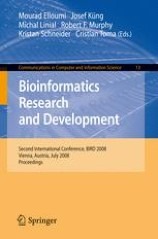
This book constitutes the refereed proceedings of the Second International Bioinformatics Research and Development Conference, BIRD 2008, held in Vienna, Austria in July 2008.
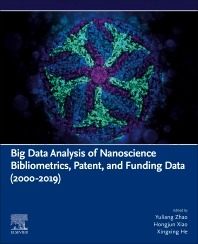
Presents an evaluation of nanotechnologies outputs (academic outputs and patents) and their impact from 2000-2019. The evaluation uses Elsevier’s Scopus (the largest abstract and citation database of peer-reviewed literature), SciVal (a scientific research analysis platform), Funding Institutional (a funding database), and PatentSight (a patent analysis platform). It covers four key topics regarding nanoscience research, including: 1) An overview of nano-related scholarly output, 2) Nanoscience and its contribution to basic science, 3) Nanoscience and its impact on and collaboration with industry partners, and 4) Key factors that promote the development of nanoscience.

سوريا - اتستراد درعا - غباغب
+963-15 2050 - 15 860 380 /1/2/3 - 11 662 3900