


تحسين النتائح
ترتيب حسب
من
الى

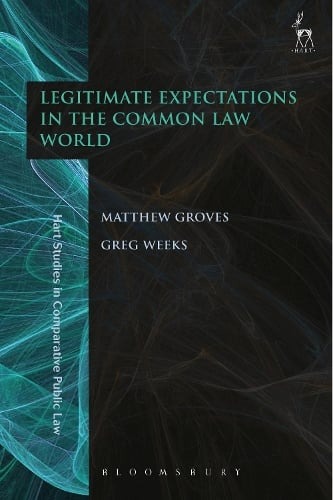
The sceptical and critical reception to Coughlan outside England is a striking contrast to the reception the case received within the UK. This book provides a detailed scholarly analysis of these issues and considers the doctrine of legitimate expectations both in England and elsewhere in the common law world. Volume 12 in the series Hart Studies in Comparative Public Law

The Nature of Comparative and International Criminal JusticeThe Purpose of Comparative and International Criminal Justice Systems; Crime and Criminal Law: Global PerspectiveCrime: International and Comparative;Overview of Model Criminal Justice Systems

Investigates the use of duress as a defence in international criminal law, specifically in cases of child soldiers. The prosecution of children for international crimes often only focuses on whether children can and should be prosecuted under international law. However, it is rarely considered what would happen to these children at the trial stage. This work offers a nuanced approach towards international prosecution and considers how children could be implicated and defended in international courts.

Building the Judiciary uncovers the causes and consequences of judicial institution-building in the United States from the commencement of the new government in 1789 through the close of the twentieth century.Explaining why and how the federal judiciary became an independent, autonomous, and powerful political institution.

In recent years the question of the legitimacy of international law has been discussed quite intensively. Such questions are, for example, whether international law lacks legitimacy in general; whether international law or a part of it has yielded to the facts of power; whether adherence to international legal commitments should be subordinated to self-defined national interests; whether international law or particular rules of it – such as the prohibition of the use of armed force – have lost their ability to induce compliance (compliance pull); and what is the relevance of non-enforcement or failure to obey for the legitimacy of that particular international norm? This book contains fresh perspectives on these questions, offered at an international and interdisciplinary conference hosted by the Max Planck Institute for Comparative Law and International Law.

Talks about how the regulatory agencies and courts in the United States, European Union and India are dealing with the rising allegations of anti-competitive behaviour by standard essential patent (SEP) holders. It also discusses the role of standards setting organizations / standards developing organizations (SSO/SDO) and the various players involved in implementing the standards that influence practices and internal dynamics in the ICT sector. The book includes discussions on fair, reasonable and non-discriminatory (FRAND) licensing terms and the complexities that arise when both licensors and licensees of SEPs differ on what they mean by “fair”, “reasonable” and “non-discriminatory” terms. It also addresses topics such as the appropriate royalty base, calculation of FRAND rates and concerns related to FRAND commitments and the role of Federal Trade Commission (FTC) in collaborative standard setting process.

In this work Dr. Taylor surveys the federal countries of the world and asks how they divide power among the constituent units of the federation. In so doing, he considers not only the formal constitutional text, but, far more importantly, the case law that has grown up around it as the Courts develop approaches to interpreting provisions for the distribution of powers. This enables conclusions to be drawn about the effectiveness of various structural and interpretative approaches to the distribution of powers within federations.

As part of its review of competition law that started in the late 1990s, the European Commission proposes to revise its interpretation and application of the Treaty’s prohibition of abuses of dominant positions. Also, it has instigated a debate about the promotion of private enforcement of EC competition law. The chapters in this volume critically appraise the Commission’s proposals, including the most recent ones. The authors also highlight the repercussions of the proposed ‘more economic approach’ to abuses of dominant positions on private litigants’ opportunities to bring damages actions in national courts for such abuses.

سوريا - اتستراد درعا - غباغب
+963-15 2050 - 15 860 380 /1/2/3 - 11 662 3900