



الصفحة 1
الصفحة 1

Industrial competitiveness : Cost reduction
The objectives of industrial management are: - Implementation of the policy adopted by the owners or the board of directors - Optimum return on investment - Efficient utilization of Men, Machine and Money. In other words, industry must make profit. Manufacturing represents only one aspect of the activities of industrial management. Present-day manufacturing methodology does not consider making profit as their primary objective. The manufacturing process requires the knowledge of many disciplines, such as design, process planning, costing, marketing, sales, customer relations, costing, purchasing, bookkeeping, inventory control, material handling, shipping, and so on.

Improving operating leverage using hyperautomation : Unlock strategic advantages across banking and non-banking financial institutions
Delving in depth into enterprise non-interest operating cost management and operating leverage. operating Leverage is about managing a bank's capabilities and its capacity to deliver its products and services efficiently. it is not limited to managing operational costs but includes the operational support for the growth of business and for improving profitability. the reader can learn to improve risk adjusted operational effectiveness by implementing a nuanced approach to managing performance, risk, control, and cost simultaneously, at the process level. the book explains why hyperautomation, a technology that intelligently automates business processes is a more advanced and comprehensive way to manage these factors in a holistic and integrated way.

Cost-Efficient Design
This is the first English edition of an established work on cost-driven product design and development. It offers tried and tested methods for understanding, influencing and reducing product costs. The methodology and organization of cost management, as well as the effects on each type of cost are described. Using this knowledge the product developer can assume responsibility for costs. The numerous examples and detailed derivation of results provide the practical user with problem solutions and hints. Methods such as Target Costing and Simultaneous Engineering are discribed. Thus the book will also help the specialist who does not have the overview of the complex interrelationships in the enterprise. The work is also suited for students, as well as for practicing engineers.
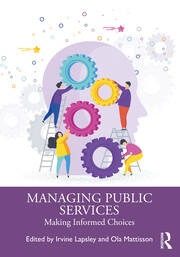
Managing public services : Making informed choices
Chapters provide a valuable frame of reference for the 21st-century manager of public services by assessing the renewal of existing practices such as strategic costing, performance management, digitization and procurement and innovations in management practices, including branding, Lean Management, resilience and risk management. The book suggests that, as the management of public services is imbued with financial, social, economic and political uncertainties, management needs to be flexible and responsive to new ideas and practices to fulfil its purpose. This book ultimately supports the reflective manager, those who think about their job and are open to new ideas on how their job can be done better, by revisiting existing practices and examining innovations in public management.
