


تحسين النتائح
ترتيب حسب
من
الى

Presents the most interesting talks given at ISSE 2006 - the forum for the interdisciplinary discussion of how to adequately secure electronic business processes. The topics include: Smart Token and e-ID-Card Developments and their Application - Secure Computing and how it will change the way we trust computers - Risk Management and how to quantify security threats - Awareness raising, Data Protection and how we secure corporate information. Adequate information security is one of the basic requirements of all electronic business processes. It is crucial for effective solutions that the possibilities offered by security technology can be integrated with the commercial requirements of the applications. The reader may expect state-of-the-art: best papers of the Conference ISSE 2006.
Tells the Tesla story and then presents chapters that address, in order: corporate governance and project stakeholder or communication management, project portfolios as strategic corporate portfolios, and an executive-level review of the best-practice project management paradigm, as applied to capital projects.
Topicality of Asian economy has refused to fade for almost four decades; if anything it has been levitating. The Asian economy has changed markedly since the economic and financial crisis of 1997-1998 and is continuing to evolve. As a scholarly subject matter, Asian economy has not stopped attracting academicians, policy mandarins, decision makers in the arena of business and students of Asian economy. The Asian crisis was a cataclysmic event for the region and brought to the surface several systemic limitations, like those in the financial sector, corporate governance, regulatory oversight, legal framework, and exchange rate management. Managers of Asian economy need to get to the bottom of these acutely problematical systemic issues. Additionally, Asian economies need to change with the demands of time and devise their post-crisis development strategy. Asia’s growth model, that served it so well for four decades, is overdue for renewal so that it can re-strengthen its bonds with the ever-evolving regional and global economic reality. The old growth model is likely to be less relevant and effective in the post-crisis future of the Asian economies. It is sure to run into the wall of diminishing returns.

Offers an in‑depth examination of multi‑capital accounting, which has already been integrated within the corporate sustainability reporting directive and will follow on from sustainability reporting. the LIFTS model (limits and foundations towards sustainability accounting model) used in this book combines various scientific and practical contributions to develop budgets for environmental impacts and social obligations on an organisational scale. it proposes an accounting mechanism that enables an organization to manage each of its budgets and measure variances between forecast and actual. it provides an introduction to the principles of this model and its conditions of application and describes its implementation in numerous companies.
Much has been written about the economic and political problems of countries that are in the process of changing from centrally planned systems to market systems. Most studies have focused on the economic, legal, political and sociological problems these economies have had to face during the transition period. However, not much has been written about the dramatic changes that have to be made to the accounting and financial system of a transition economy. This book was written to help fill that gap. Using Russia as a case study the authors examined all the major aspects of accounting reform, starting with problems of implementation. They also examined the current state of auditing in Russia. They also devote chapters to corporate governance issues, the Russian tax system and the problems Russian enterprises face when they try to attract foreign direct investment.
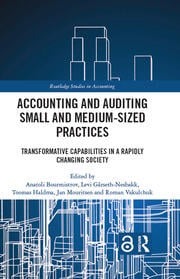
Addresses recent trends, developments, and future of accounting and auditing of small and medium-sized practices (AASMPs) in the public and private sectors.the book has three main objectives: firstly, to provide an analysis of how different societal trends, including digitalization, impact AASMPs and what role education and training play in proactive adaptation to those trends; secondly, to outline major scenarios for global AASMP development by 2035; and thirdly, to offer a conceptual framework for better understanding of AASMPs' dynamic and transformative capabilities that are necessary to create sustained competitive advantage in a rapidly changing society. beyond presenting a conceptual framework, this book also offers a discussion of future scenarios for AASMPs' development and their role in the global economic development.
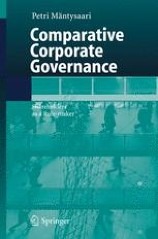
It is fairly easy for a Finnish Jurist to understand German Company law. On the other hand, UK Company law seems very confusing. What is even more confusing is that the UK corporate govemance model is often regarded as one of the best in the World. Clearly German law cannot be as bad as it is often said to be. This books results from these kinds of thoughts and an interest in comparative law, Company law and securities markets law. I wanted to find out whether the functional method would give anything new to say about the regulation of corpo rate govemance in Germany and the UK. As I have been lecturing on Company law and corporate govemance myself, I also wanted to write a book that I could use as a textbook in my courses. For this reason, I focused on one of the key questions in corporate govemance: the regula tion of shareholder activism.

سوريا - اتستراد درعا - غباغب
+963-15 2050 - 15 860 380 /1/2/3 - 11 662 3900