


تحسين النتائح
ترتيب حسب
من
الى

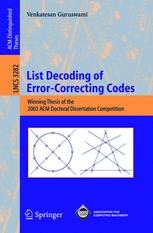
Presents some spectacular new results in the area of decoding algorithms for error-correcting codes. Specifically, it shows how the notion of “list-decoding” can be applied to recover from far more errors, for a wide variety of err- correcting codes, than achievable before. A brief bit of background : error-correcting codes are combinatorial str- tures that show how to represent (or “encode”) information so that it is - silient to a moderate number of errors. Speci?cally, an error-correcting code takes a short binary string, called the message, and shows how to transform it into a longer binary string, called the codeword, so that if a small number of bits of the codewordare ?ipped, the resulting string does not look like any other codeword. The maximum number of errorsthat the code is guaranteed to detect, denoted d, is a central parameter in its design. A basic property of such a code is that if the number of errors that occur is known to be smaller than d/2, the message is determined uniquely. This poses a computational problem, called the decoding problem : compute the message from a corrupted codeword, when the number of errors is less than d/2.
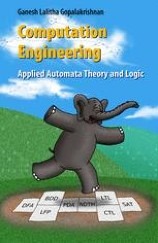
This book covers automata in depth, providing good intuitions along the way, and culminating with applications that are used every day in the field. In this respect, it is a departure from the conventional textbooks on complexity and computability, although these 'tradtional' aspects remain well represented.
Modern cryptology employs mathematically rigorous concepts and methods from complexity theory. Conversely, current research in complexity theory often is motivated by questions and problems arising in cryptology. This book takes account of this trend, and therefore its subject is what may be dubbed "cryptocomplexity,'' some sort of symbiosis of these two areas. This textbook is suitable for undergraduate and graduate students of computer science, mathematics, and engineering, and can be used for courses on complexity theory and cryptology, preferably by stressing their interrelation. Starting from scratch, it is an accessible introduction to cryptocomplexity and works its way to the frontiers of current research. It provides the necessary mathematical background, has numerous figures, exercises, and examples, and presents some central, up-to-date research topics and challenges. Due to its comprehensive bibliography and subject index, it is also a valuable source for researchers, teachers, and practitioners working in these fields.
Complexity theory is the theory of determining the necessary resources for the solution of algorithmic problems and, therefore, the limits of what is possible with the available resources. An understanding of these limits prevents the search for non-existing efficient algorithms. This textbook considers randomization as a key concept and emphasizes the interplay between theory and practice: New branches of complexity theory continue to arise in response to new algorithmic concepts, and its results - such as the theory of NP-completeness - have influenced the development of all areas of computer science. The topics selected have implications for concrete applications, and the significance of complexity theory for today's computer science is stressed throughout.
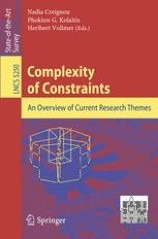
This state-of-the-art survey contains the papers that were invited by the organizers after conclusion of an International Dagstuhl-Seminar on Complexity of Constraints, held in Dagstuhl Castle, Germany, in October 2006.
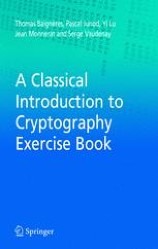
A Classical Introduction to Cryptography Exercise Book for A Classical Introduction to Cryptography: Applications for Communications Security covers a majority of the subjects that make up today's cryptology, such as symmetric or public-key cryptography, cryptographic protocols, design, cryptanalysis, and implementation of cryptosystems. Exercises do not require a large background in mathematics, since the most important notions are introduced and discussed in many of the exercises.
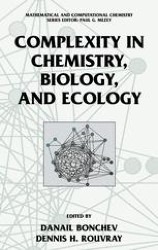
This book, written by an international team of experts, introduces the reader to various aspects of complexity theory and its applications. It illustrates the latest trends in science to go beyond the mechanistic Newtonian view of the world by shifting the focus to self-organization, adaptation, and emergent phenomena. The authors discuss these properties of complex systems in biology, ecology and chemistry along with the structure and interconnectedness of the "layers" of complexity. The qualitative description is complemented by a discussion of methods for complexity quantification. Networks are covered in detail as a universal language of the complex world.
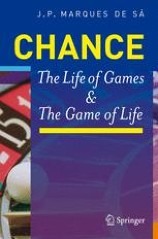
With its many easy-to-follow mathematical examples, this book takes the reader on an almost chronological trip through the fascinating and amazing laws of chance, omnipresent in the natural world and in our daily lives. Along the route many fascinating topics are discussed, such as: challenging probability paradoxes; "paranormal" coincidences; game odds; causes and effects; interpretation of opinion polls; winning chances as a game proceeds; the nature of randomness; entropy and randomness; randomness in life; algorithmic complexity and the undecidability of randomness; possibilities and limitations of learning the laws of a Universe immersed in chance events. This charming book will inform and entertain the scientist and non-scientist alike.
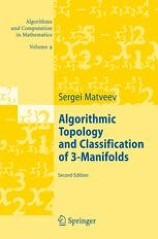
This book provides a comprehensive and detailed account of different topics in algorithmic 3-dimensional topology. The book is intended to combine the pedagogical approach of a graduate textbook with the completeness and reliability of a research monograph.

سوريا - اتستراد درعا - غباغب
+963-15 2050 - 15 860 380 /1/2/3 - 11 662 3900